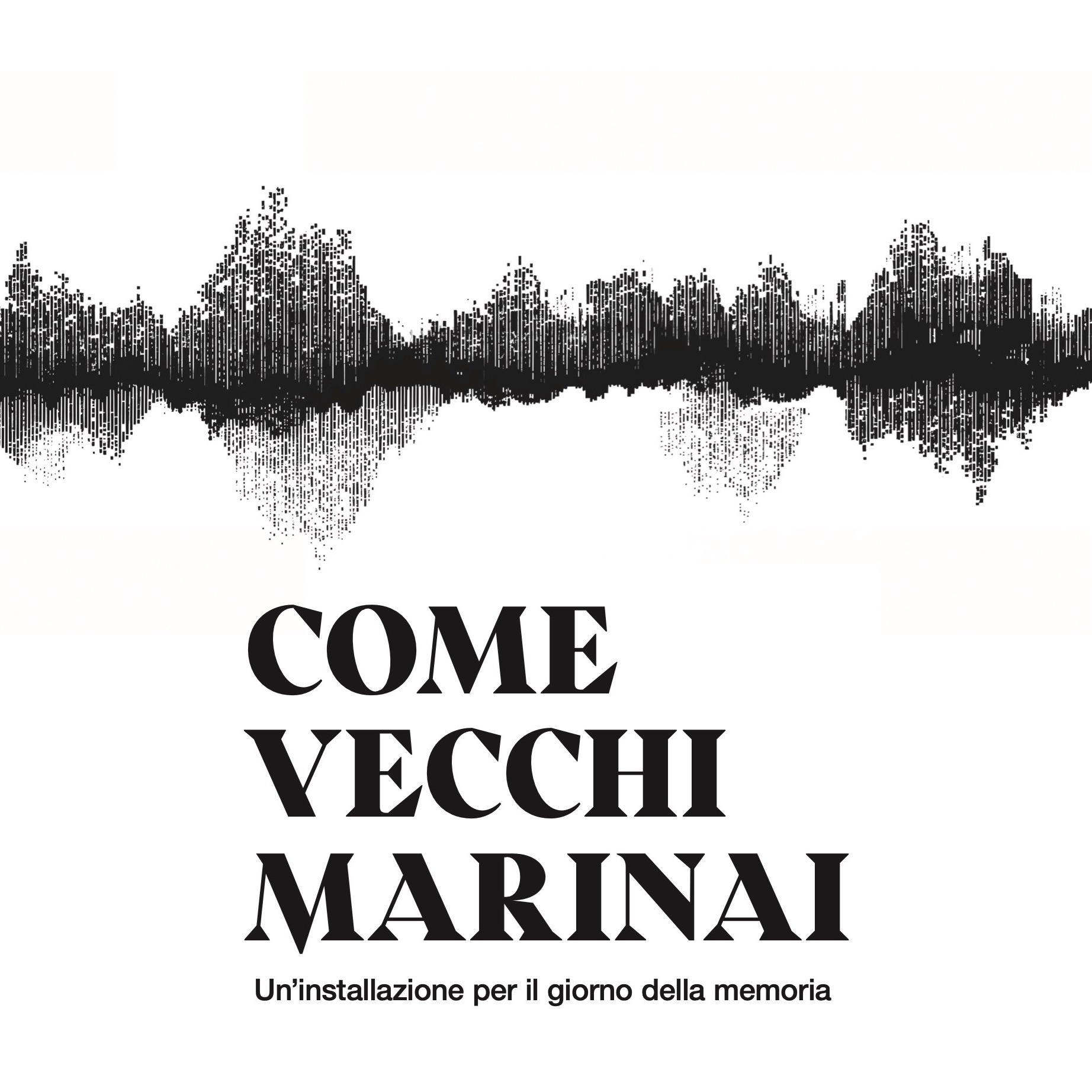
- 06. Gianfranco Maris - Come vecchi marinai
English below
Pasolini, in una delle sue tragedie, “Pilade”, evoca l’inferno dei campi di sterminio.
Atena profetizza a Oreste che un giorno, lontano nel tempo, vi sarà uno sterminio di dimensioni e crudeltà sconosciute prima.
Oreste sgomento chiede: “come si potrà sopportare tutto ciò?”
Ma Atena lo disillude: “non solo lo si potrà sopportare, ma poi lo si potrà dimenticare”.
Non apro con una nota di pessimismo il mio ricordo…
Apro questo ricordo con la voce della ragione, con gli occhi sbendati, con la consapevolezza che la conoscenza di un immenso crimine non può di per sé garantire che nessuno mai lo ripeterà.
La consapevolezza che qualsiasi storia, anche la più infame, può ripetersi deve renderci vigili, anche sulle speranze, ricordandoci che non saranno mai raggiunte senza l’azione che ne garantisca il raggiungimento.
Sì, il vaticinio di Atena fu esatto, perché l’inferno dei campi di sterminio si è ripetuto.
Gli uomini sanno macinare, nei secoli, montagne di dolore e ricostruire sempre più forti ragioni di vita e speranze di pace.
Lo si è potuto sopportare, ma non lo si dovrà dimenticare.
Molti, tanti, troppi vorrebbero confondere le ragioni di tutti i morti della terra in un unico grande dolore, per poi dimenticarlo.
I sommersi
prima di spegnersi
prima
prima
cessavano di sapere
da loro né voce né memoria
I salvati sono la loro voce
noi siamo la loro voce
e ricordandoli
diamo voce al loro “messaggio”
Noi, i salvati che
sognavano
e
sognano mondi
e società di immutabili
e antichi rapporti
Io, un salvato che
sognava
e
sogna mondi
società
futuro
Gianfranco Maris, sopravvissuto a Mauthausen
Biografia
Gianfranco Maris (1921-2015), giovane studente al Liceo Beccaria, vive la pressione della violenza della dittatura fascista. Attraverso un compagno di scuola incontra Salvatore Di Bendetto: “diventare comunisti, per molti di noi, fu allora una scelta di dignità, di libertà, di giustizia.” A questa scelta Maris rimane fedele tutta la vita. Con il Partito Comunista si unisce alla Resistenza ed è catturato il 20 gennaio del 1944 a Lecco dalle SS. Prigioniero nelle carceri di Bergamo e di San Vittore a Milano, è trasferito a Fossoli e poi a Bolzano e successivamente deportato a Mauthausen e a Gusen. Nel dopoguerra diventa avvocato e parlamentare dal 1963 al 1972. Impegnato a difendere la memoria della Deportazione, fa parte dell’Aned dall’inizio degli anni Sessanta e ne diventa presidente nel 1978. Della sua carriera di penalista si ricordino almeno i processi a Theodor Saevecke e a Michael Seifert e quello della Risiera di San Sabba. Diviene anche membro del Consiglio Superiore della Magistratura e insieme ai compagni dell’Aned sogna e poi fonda, grazie all’aiuto del compagno di deportazione Aldo Ravelli, la Fondazione Memoria della Deportazione, di cui è presidente fino alla morte.
I testi letti sono inediti, trovati tra le carte del suo studio.
______________________________________________________________________________
Gianfranco Maris
Pasolini, in one of his tragedies, Pilade, evokes the hell of the extermination camps.
Athena prophesies to Orestes that one day, far in the future, there will be an extermination of unprecedented scale and cruelty.
Orestes asks in dismay, 'How will it be possible to bear all this?
But Athena disillusions him: “Not only will it be possible to bear it, but it will also be possible to forget it”.
I am not opening my recollection with a note of pessimism...
I am opening this recollection with the voice of reason, with my eyes wide open, with the awareness that knowledge of an immense crime cannot in itself guarantee that no one will ever repeat it.
The awareness that any story, even the most infamous, can be repeated must make us vigilant, even about our hopes, reminding us that they will never be achieved without the action that guarantees their achievement.
Yes, Athena's prediction was accurate, because the hell of the extermination camps has been repeated.
Over the centuries, human beings have been able to grind down mountains of pain and rebuild ever stronger reasons for living and hopes for peace.
It was possible to endure it, but it must not be forgotten.
Many, too many, would like to confuse the reasons for all the deaths on earth into one great pain, and then forget it.
The submerged
before fading away
before
before
they ceased to know
from them neither voice nor memory
The saved are their voice
we are their voice
and by remembering them
we give voice to their 'message'
We, the saved who
dreamed
and
dream of worlds
and societies of unchanging
and ancient relationships
I, a saved man who
dreamed
and
dreams of worlds
societies
the future
Gianfranco Maris, survivor of Mauthausen
Biography
Gianfranco Maris (1921-2015), a young student at Liceo Beccaria, experienced the pressure of violence under the Fascist dictatorship. Through a school friend, he met Salvatore Di Bendetto: ‘Becoming Communists, for many of us, was a choice of dignity, freedom and justice.’ Maris remained faithful to this choice throughout his life. With the Communist Party, he joined the Resistance and was captured by the SS on 20 January 1944 in Lecco. Imprisoned in Bergamo and San Vittore in Milan, he was transferred to Fossoli and then to Bolzano, and later deported to Mauthausen and Gusen. After the war, he became a lawyer and member of parliament from 1963 to 1972. Committed to preserving the memory of the Deportation, he joined ANED in the early 1960s and became its president in 1978. His career as a criminal lawyer is remembered for the trials of Theodor Saevecke and Michael Seifert and that of the Risiera di San Sabba. He also became a member of the Superior Council of Magistrates and, together with his ANED comrades, dreamed of and then founded, with the help of his fellow deportee Aldo Ravelli, the Fondazione Memoria della Deportazione (Foundation for the Memory of the Deportation), of which he was president until his death.
The texts read are unpublished, found among the papers in his study.
2m - Jan 21, 2026 - 05. Maria Montuoro - Come vecchi marinai
English below
Maria Montuoro
Quando quel treno dalle lunghe tappe
e dalle lunghe soste
quel treno carico di gente come me
ansiosa solo di ritornare
arrivò nella grande città
confusa e indifferente
dove nessuno ci aspettava alla stazione
quella città della quale non ricordavo più
le vie e le case.
Quando ritrovai i volti che avevo sognati con spasimo
e ritrovai il mio letto
(il letto non era più quello, ma non importa
era pur sempre un letto,con lenzuola,
anche se la mia pelle troppo presto aveva dimenticato
l’aspro contatto con il saccone di paglia.)
Quando ritrovai gli esseri cari
(gli esseri cari non erano più quelli, ma non importa,
importava soltanto che ci fossimo ritrovati,
anche se il tempo, quel tempo terribile e singolare,
aveva scavato in loro zone d’ombra
e mi apparivano un poco come sconosciuti
che dovessi imparare a conoscere, […])
E quando mi ritrovai nel bel mezzo
della matassa imbrogliata della mia vita
(io non riuscivo ancora ad aderirvi
a sentirmici dentro,
a prenderla come fosse vera
[…])
Allora finalmente mi parve di capire
che non si può vivere e ricordare,
che bisognava essere di quella vita o di questa,
e non compresi
che cancellare il ricordo non era vivere
ma soltanto un modo di morire.
Io ho dimenticato il vostro volto,
compagne che non tornerete più.
Se potessi incontrarvi per la strada, forse,
non vi riconoscerei neppure, e voi
non riconoscereste la compagna
che si distingueva dalle altre
per la forma degli strappi, delle macchie
nell’abito consunto
e da mille piccoli altri segni
che dopo nel ricordo si smarriscono.
Pure, di voi, ancora son rimaste
alcune cose che non si cancellano
dalle vostre apparenze senza volto.
Di te ricordo Jole che avevi tanta paura,
tanta paura di morire, nel campo,
per eliminazione, tu
che poi in questo modo sei morta:
….. Ricordi, Jole, come eri brava
nel pettinare le nostre corte chiome
[….]
E tu, Nide, ricordi …..
Durante l’interrogatorio
ti avevano bastonata a sangue e con un pugno
slogata la mascella.
Ricordi, Nide, come eri bella e forte
quando attraversavi la lunga camerata
a Fossoli di Carpi, […]
Rivedo ancora
il mutamento nel tuo giovane volto
al nostro arrivo in campo di eliminazione
[….]
E tu Rosetta, o Rosetta, ricordi
Maria Montuoro, sopravvissuta a Ravensbruck
Maria Montuoro (1909-2001), palermitana, partecipa alla Resistenza in Lombardia ed è arrestata nel 1944; incarcerata a San Vittore, è deportata poi a Ravensbrück. Ha attraversato l'esperienza della prigionia e della deportazione con quella vitalità e carica ironica che protegge la vita dall’offesa della violenza fascista e nazista. I compagni di prigionia a San Vittore e a Fossoli ricordano le parodie delle canzoni allora in voga che scriveva per loro. L'ironia non è mai superficialità e la memoria della deportazione diventa per lei la radice di quella inquietudine che al ritorno impedisce di essere pacificati con sé stessi, ma tiene sveglia l'attenzione su di sé e su quello che succede nel mondo. Se è a lei che dobbiamo la traduzione italiana del Canto dei deportati, suoi sono alcuni testi di testimonianza ormai quasi dimenticati, ma ancora vivi nella volontà di raccontare tenendosi sempre lontana dalla retorica.
La poesia letta, rimasta a lungo inedita, è stata pubblicata per la prima volta nel catalogo Frida e le altre, a cura di E. Ruffini, Il filo di Arianna per la Fondazione Fossoli, Bergamo 20219 e oggi è raccolta in Boschi cantate per me, a cura di Anna Paola Moretti, Enciclopedia delle donne, 2025.
_______________________________________________________________________________
When that train with its long journeys
and long stops
that train full of people like me
eager only to return
arrived in the big city
confused and indifferent
where no one was waiting for us at the station
that city whose streets and houses I no longer remembered.
When I found the faces I had dreamed of with anguish
When I found the faces I had dreamed of with anguish
and found my bed
(the bed was no longer the same, but it didn't matter
it was still a bed, with sheets,
even if my skin had too quickly forgotten
the harsh contact with the straw mattress).
When I found my loved ones again
(my loved ones were no longer the same, but it didn't matter,
all that mattered was that we had found each other again,
even if time, that terrible and singular time,
had carved out areas of shadow in them
and they seemed a little like strangers to me
whom I had to get to know, [...])
And when I found myself in the middle
of the tangled mess of my life
(I still couldn't accept it
feel myself inside it,
take it as if it were real
[...])
Then I finally seemed to understand
that you can't live and remember,
that you had to be of that life or this one,
and I didn't understand
that erasing the memory was not living
but only a way of dying.
I have forgotten your faces,
companions who will never return.
If I could meet you on the street, perhaps,
I would not even recognise you, and you
would not recognise the companion
who stood out from the others
because of the shape of the tears, the stains
on her worn dress
and a thousand other small signs
that are now lost in memory.
Yet, of you, there are still
some things that cannot be erased
from your faceless appearances.
I remember you, Jole, how you were so afraid,
so afraid of dying in the camp,
by elimination, you
who then died in this way:...
Do you remember, Jole, how good you were
at combing our short hair
[....]
And you, Nide, do you remember ...
During the interrogation,
they beat you bloody and punched you,
dislocating your jaw.
Do you remember, Nide, how beautiful and strong you were
when you crossed the long dormitory
in Fossoli di Carpi, [...]
I can still see
the change in your young face
when we arrived at the extermination camp
[….]
And you, Rosetta, oh Rosetta, do you remember
Maria Montuoro, who survived Ravensbruck
Maria Montuoro (1909-2001), from Palermo, took part in the Resistance in Lombardy and was arrested in 1944. She was imprisoned in San Vittore and then deported to Ravensbrück. She endured imprisonment and deportation with a vitality and sense of humour that protected her life from the offensiveness of Fascist and Nazi violence. Her fellow prisoners in San Vittore and Fossoli remember the parodies of popular songs she wrote for them. Her irony was never superficial, and the memory of her deportation became the root of a restlessness that prevented her from finding peace within herself upon her return, but kept her alert to herself and to what was happening in the world. If we owe her the Italian translation of Canto dei deportati (Song of the Deportees), she also wrote some testimonies that are now almost forgotten but still alive in their desire to tell their story, always steering clear of rhetoric.
The poem, which remained unpublished for a long time, was published for the first time in the catalogue Frida e le altre, edited by E. Ruffini, Il filo di Arianna for the Fossoli Foundation, Bergamo 20219, and is now included in Boschi cantate per me, edited by Anna Paola Moretti, Enciclopedia delle donne, 2025.
2m - Jan 21, 2026 - 04. Lidia Beccaria Rolfi - Come vecchi marinai
English Below
Lidia Beccaria Rolfi
La sosta alla stazione del Brennero fu lunga [...] arrivammo a Pescantina, la stazione terminale della tradotta. Ci portarono, come sempre in camion, in un centro di raccolta, l’ultimo. C’erano delle tende, un caldo afoso e zanzare e moscerini dappertutto. [...]Quella notte dormii sotto le stelle, con lo zaino per cuscino, accucciata dietro la tenda di Mondovì. [...] le stelle italiane sembravano diverse da quelle tedesche, erano più luminose.
Il mattino dopo, alla stazione formammo due gruppi [...] noi salimmo sulla tradotta che andava a ovest destinazione Milano e Torino. Rividi il lago di Garda, seduta gambe penzoloni sulla porta della tradotta; all’andata lo avevo visto per la prima volta da una fessura del vagone piombato. Attraversammo molte stazioni e finalmente arrivammo a Milano. Era il capolinea. Da Milano ognuno doveva arrangiarsi per raggiungere la propria destinazione [...] c’era un treno per Torino che partiva verso le tre, non bisognava perderlo. Avevamo scoperto anche un centro di ristoro e un ufficio ricerca persone scomparse. In attesa del treno potevamo dare un’occhiata, c’erano anche molte fotografie di donne. [...] Le pareti erano tutte tappezzate di fotografie con il nome e il cognome, alcune avevano il nome presunto del Lager, altre riportavano la data di arresto e l’ultimo luogo di detenzione.
Osservavo i volti di tutte quelle donne scomparse: le fotografie le ritraevano in istantanee di vita familiare o in posa nello studio del fotografo di moda. Alcune erano giovani, eleganti, altre più anziane, molte decisamente vecchie. Quasi tutte erano ebree, stando ai nomi e cognomi. L’occhio mi cadde su una fotografia che conoscevo fin troppo bene: me l’aveva scattata il fotografo di Piazza nell’estate del 1943, come premio per il diploma.
[...] staccai la fotografia e me la misi in tasca, ma la mia operazione non sfuggì all'addetta che per tutto il tempo era rimasta seduta alla scrivania, immersa nella lettura di una rivista. Mi ingiunse con voce perentoria di restituirla e allora le feci notare che quella fotografia mi apparteneva, che ero io la persona ricercata e gliela porsi perché si convincesse. Per tutta risposta che quella della fotografia non ero io, non mi riconosceva, non c’era nessuna somiglianza.
Tirai fuori dal taschino della camicia il documento che mi aveva rilasciato il comando inglese: nome, cognome, data e luogo di nascita, tutto corrispondeva, ma le fotografie sembravano di persone diverse. Dovetti ammetterlo: anch’io stentavo a riconoscermi in quella fotografia di soli due anni prima, effettivamente sembravo una persona diversa, era cambiato anche lo sguardo, avevo gli occhi rimpiccioliti, il viso gonfio, invecchiato. Mi chiese dove fossi stata. “A Ravensbrück”. Il nome non le diceva niente, nessuna donna di Ravensbrück era transitata per l’ufficio, non aveva mai sentito il nome di quel Lager, non l’aveva nemmeno notato sotto alla fotografia. Conosceva solo Auschwitz, c’erano molte persone che si supponeva fossero arrivate da Auschwitz, ma Ravensbruck era nome nuovo. Non chiese di più, non era curiosa, solo dubbiosa: chissà se questo Lager di donne era veramente esistito, visto che non ero nemmeno ebrea. [...]
Nessuno sapeva, il nome non appariva da nessuna parte, i giornali parlavano di Mauthausen, Dachau, Flossenbürg, mai di Ravensbrück [...]
Capii che non avrei potuto raccontare. Non si racconta la fame, non si racconta il freddo, non si raccontano gli appelli, le umiliazioni, l’incomunicabilità, la disumanizzazione, il crematorio che fuma, l’odore di morte dei blocchi, la voglia di solitudine, il sudicio che entra nella pelle e ti incrosta. Tutti hanno avuto fame e freddo e sono stati sporchi almeno una volta e redono che fame, freddo e fatica siano uguali per tutti.
Non avrei raccontato, almeno per ora, forse avrei parlato dell’evacuazione, un avvenimento simile ad altri racconti di guerra come la ritirata di Caporetto, o la ritirata di Russia che altri avevano già raccontato e poteva servire di confronto. Avrei raccontato forse questo ai miei, avrebbero capito. Forse [...]
Lidia Rolfi, sopravvissuta a Ravensbruck
Biografia
Lidia Beccaria Rolfi (1925-1996) partecipa alla Resistenza nel cuneese ed è arrestata nell’aprile 1944. Trasferita a Saluzzo e quindi nelle carceri di Torino, è poi deportata a Ravensbrück. Nel dopoguerra vive sulla propria pelle la difficoltà di trovare un posto alla sua storia di sopravvissuta e di donna. Con tenacia, si impegna da una parte a vivere in una dimensione anticonformista capace di attenzione alle storie degli altri, dall' altra a far sentire la voce della deportazione femminile. Insieme ad A. M. Bruzzone pubblica nel 1978 Le donne di Ravensbrück, pietra miliare nella costruzione della memoria della deportazione delle donne e nel 1994, per l’Associazione nazionale ex deportati, di cui fa parte fin dalla fine degli anni 40, organizza il primo convegno sulla deportazione femminile che si tiene in Italia, una prima anche rispetto ad altre nazioni europee.
Il testo letto è tratto dal suo L’esile filo della memoria, Einaudi, Torino, 1996.
_______________________________________________________________________________
Lidia Beccaria Rolfi
The stop at Brenner station was long [...] we arrived at Pescantina, the terminus of the train. As always, they took us by lorry to a collection centre, the last one. There were tents, sweltering heat and mosquitoes and gnats everywhere. [...] That night I slept under the stars, with my rucksack as a pillow, crouched behind the Mondovì tent. [...] The Italian stars seemed different from the German ones; they were brighter.
The next morning, at the station, we formed two groups [...] we boarded the train heading west to Milan and Turin. I saw Lake Garda again, sitting with my legs dangling from the door of the train; on the way there, I had seen it for the first time through a crack in the sealed carriage. We passed through many stations and finally arrived in Milan. It was the terminus. From Milan, everyone had to find their own way to their destination [...] there was a train to Turin leaving at around three o'clock, and we couldn't miss it. We also discovered a refreshment centre and a missing persons office. While waiting for the train, we took a look around; there were also many photographs of women. [...] The walls were covered with photographs with names and surnames, some had the presumed name of the concentration camp, others showed the date of arrest and the last place of detention.
I looked at the faces of all those missing women: the photographs showed them in snapshots of family life or posing in a fashion photographer's studio. Some were young and elegant, others older, many decidedly old. Almost all of them were Jewish, judging by their first and last names. My eye fell on a photograph I knew all too well: it had been taken by the photographer in Piazza in the summer of 1943, as a reward for my diploma.
[...] I took the photograph and put it in my pocket, but my action did not escape the attention of the clerk, who had been sitting at her desk the whole time, immersed in reading a magazine. She ordered me in a peremptory voice to return it, so I pointed out that the photograph belonged to me, that I was the person she was looking for, and I handed it to her so she could see for herself. She replied that it was not me in the photograph, that she did not recognise me, that there was no resemblance.
I took the document issued to me by the British command out of my shirt pocket: name, surname, date and place of birth, everything matched, but the photographs looked like different people. I had to admit it: even I struggled to recognise myself in that photograph taken just two years earlier. I did indeed look like a different person; even my gaze had changed, my eyes had shrunk, my face was swollen and aged. She asked me where I had been. “In Ravensbrück”. The name meant nothing to her. No woman from Ravensbrück had ever passed through her office. She had never heard of that camp and hadn't even noticed the name under the photograph. She only knew Auschwitz. There were many people who were supposed to have come from Auschwitz, but Ravensbrück was a new name. She didn't ask any more questions, she wasn't curious, just doubtful: who knows if this women's camp really existed, since I wasn't even Jewish. [...]
No one knew, the name did not appear anywhere, the newspapers talked about Mauthausen, Dachau, Flossenbürg, but never about Ravensbrück [...]
I realised that I couldn't talk about it. You can't talk about hunger, you can't talk about the cold, you can't talk about the roll calls, the humiliation, the lack of communication, the dehumanisation, the smoking crematorium, the smell of death in the blocks, the desire for solitude, the filth that gets into your skin and crusts over. Everyone has been hungry and cold and dirty at least once, and I realise that hunger, cold and fatigue are the same for everyone.
I wouldn't have told the story, at least for now. Perhaps I would have talked about the evacuation, an event similar to other war stories such as the retreat from Caporetto or the retreat from Russia, which others had already recounted and could serve as a comparison. Perhaps I would have told this to my family, they would have understood. Perhaps [...]
Lidia Rolfi, survivor of Ravensbruck
Biography
Lidia Beccaria Rolfi (1925-1996) participated in the Resistance in the Cuneo area and was arrested in April 1944. Transferred to Saluzzo and then to prisons in Turin, she was later deported to Ravensbrück. After the war, she experienced first-hand the difficulty of finding a place for her story as a survivor and as a woman. With tenacity, she committed herself on the one hand to living an unconventional life, attentive to the stories of others, and on the other to making the voice of female deportees heard. Together with A. M. Bruzzone, she published Le donne di Ravensbrück (The Women of Ravensbrück) in 1978, a milestone in the construction of the memory of the deportation of women. In 1994, for the National Association of Former Deportees, of which she had been a member since the late 1940s, she organised the first conference on the deportation of women held in Italy, a first even compared to other European countries.
The text read is taken from her L'esile filo della memoria (The Thin Thread of Memory), Einaudi, Turin, 1996.
4m - Jan 21, 2026 - 03. Lodovico Barbiano di Belgiojoso - Come vecchi marinai
English below
Camminare camminare
senza filo spinato fra me e l’orizzonte
senza il compagno davanti che m’imbratti di fango
senza il compagno dietro che mi urti il calcagno.
Correre o sostare
senza che un urlo o la sferza mi facciano trasalire.
fermarmi, quando voglio, ad ascoltare
fa voce di un ruscello o il silenzio di un lago.
Mi porteranno tanto lontano
dove il ricordo del tempo passato
dove il ricordo del tempo passato non mi potrà seguire.
Sarò come uomo nuovo
ignaro di quello che fui
ma la melanconia mi sarà compagna
seduta sulla mia ombra.
Una grande casa
Piena di spazi,
con le finestre vuote
come occhiaie di un teschio
cui nessuno si affacci.
E dove il vento corra per le stanze
Cancellando le impronte dell’aria
Dei corpi e delle voci. Vagare
Per le camere vuote, rincorrendo
I ricordi e cercando
Di fissare il tempo.
Lodovico Barbiano di Belgiojoso, sopravvissuto a Mauthausen
Biografia
Lodovico Barbiano di Belgiojoso (1909 - 2004), milanese e discendente di una delle più antiche famiglie nobili dell’Italia settentrionale, è architetto. La sua biografia è strettamente legata a quella del gruppo di amici con cui fonda lo studio B.B.P.R: Gian Luigi Banfi, detto Giangio, (Milano 1910 – Mauthausen 1945), Enrico Peressutti (Pinzano al Tagliamento (PD) 1908 – Milano 1976) ed Ernesto Nathan Rogers (Trieste 1909 – Gardone, 1969). Se le leggi razziste del 1938 colpiscono Rogers, lo studio diventa un punto di riferimento per la Resistenza milanese e per il movimento Giustizia e Libertà. Catturato insieme a Giangio il 21 marzo 1944, è deportato a Mauthausen e poi a Gusen, dove l’amico muore il 22 aprile 1945. Dopo la Liberazione, lo studio viene riaperto senza Banfi, mantenendo però la sigla B.B.P.R. Saranno dello studio B.B.P.R. i più importanti memoriali dedicati alla deportazione italiana: si ricordi almeno il Monumento ai caduti nei campi di sterminio nazisti del cimitero Monumentale di Milano, il Museo Monumento al deportato politico e razziale di Carpi, il Memorial degli italiani caduti nei campi di sterminio nazisti di Auschwitz (oggi trasferito a Firenze).
Le poesie lette sono tratte dal suo Non mi avrete, Edizioni del Leone, 1986. Molti anni prima della loro pubblicazione erano state date in forma dattiloscritta a Julia Banfi, la moglie di Giangio.
________________________________________________________________________________
Walking, walking
without barbed wire between me and the horizon
without a companion in front of me to smear me with mud
without a companion behind me to bump into my heel.
Running or stopping
without a shout or a whip to make me jump.
Stopping when I want to listen
to the sound of a stream or the silence of a lake.
They will take me far away
where the memory of times past
where the memory of times past cannot follow me.
I will be like a new man
unaware of what I was
but melancholy will be my companion
sitting on my shadow.
A large house
Full of spaces,
with empty windows
like the eye sockets of a skull
that no one looks out of.
And where the wind runs through the rooms
Erasing the traces of air
Of bodies and voices. Wandering
Through the empty rooms, chasing
Memories and trying
To fix time.
Lodovico Barbiano di Belgiojoso, survivor of Mauthausen
Biography
Lodovico Barbiano di Belgiojoso (1909 - 2004), a Milanese architect and descendant of one of the oldest noble families in northern Italy. His biography is closely linked to that of the group of friends with whom he founded the B.B.P.R. studio: Gian Luigi Banfi, known as Giangio, (Milan 1910 - Mauthausen 1945), Enrico Peressutti (Pinzano al Tagliamento (PD) 1908 – Milan 1976) and Ernesto Nathan Rogers (Trieste 1909 – Gardone, 1969). Although the racist laws of 1938 affected Rogers, the studio became a reference point for the Milanese Resistance and for the Giustizia e Libertà movement. Captured together with Giangio on 21 March 1944, he was deported to Mauthausen and then to Gusen, where his friend died on 22 April 1945. After the Liberation, the studio reopened without Banfi, but retained the initials B.B.P.R. The B.B.P.R. studio designed the most important memorials dedicated to Italian deportation: notable examples include the Monument to the Victims of the Nazi Extermination Camps in Milan's Monumental Cemetery, the Museum Monument to Political and Racial Deportees in Carpi, and the Memorial to Italians Who Died in the Nazi Extermination Camps in Auschwitz (now transferred to Florence).
The poems read are taken from his Non mi avrete (You Will Not Have Me), Edizioni del Leone, 1986. Many years before their publication, they had been given in typescript form to Julia Banfi, Giangio's wife.
1m - Jan 21, 2026 - 02. Charlotte Delbo - Come vecchi marinai
English below
2. Charlotte Delbo
Quel poeta che ci aveva promesso rose
Ci saranno rose
sul nostro cammino
se ritorneremo
aveva detto.
Rose
il cammino era aspro e secco
quando siamo tornati
Il poeta forse aveva mentito?
No
i poeti vedono al di là delle cose
e questo era chiaroveggente
se rose non ci sono state
è che noi non siamo tornati
e per di più
perché rose?
non avevamo così grandi pretese
era amore di cui avremmo avuto bisogno
se noi fossimo ritornati
Vorreste sapere
porre domande
e non sapete quali domande
e non sapete come porre le domande
allora domandate
cose semplici
la fame
la paura
la morte
e noi non sappiamo rispondere
non sappiamo rispondere con le parole che usate voi
e le parole che usiamo noi
voi non le capite
allora domandate cose più semplici
diteci per esempio
come trascorreva una giornata
è così lunga una giornata
che voi non avreste la pazienza
e quando rispondiamo
non sapete come trascorreva una giornata
e credete che noi non sappiamo rispondere
Charlotte Delbo, sopravvissuta a Auschwitz Birkenau e Ravensbrück
Biografia
Charlotte Delbo (1913-1985), figlia dell’immigrazione italiana in Francia, partecipa alla Resistenza nelle file del Partito Comunista, è arrestata nel 1942 e, dopo la fucilazione del marito, deportata a Auschwitz-Birkenau. Assistente prima della guerra di Louis Jouvet, in Lager misura la forza della letteratura che diventa nel dopoguerra il suo modo di fare sentire la sua voce e tessere i legami “nella catena della storia e in quella degli esseri”. Dopo la fine della Seconda guerra mondiale, lavora per qualche tempo all’ONU in Svizzera, ma la guerra d'Algeria la riporta in Francia: l’urgenza di prendere posizione attraverso la scrittura contro la guerra e la tortura perpetrate dal suo paese la convice ad abbandonare un posto sicuro e ricominciare la sua carriera come bibliotecaria al CNRS. Diventerà con il tempo assistente di Henri Lefebvre e autrice di testi tesi a “portare a coscienza” l’esperienza vissuta, personalmente e collettivamente, sperimentando forme inedite per dirla.
I testi letti sono tratti dal suo Mesures de nos jour, Les Éditions de Minuit, 1970 (la traduzione in italiano è nostra).
_____________________________________________________________________________
2. Charlotte Delbo
That poet who promised us roses
There will be roses
on our path
if we return
he said.
Roses
the path was rough and dry
when we returned
Had the poet perhaps lied?
No
poets see beyond things
and this was clairvoyant
if there were no roses
it is because we did not return
and moreover
why roses?
we did not have such high expectations
it was love that we would have needed
if we had returned
You want to know
to ask questions
and you don't know what questions to ask
and you don't know how to ask the questions
so ask
simple things
hunger
fear
death
and we don't know how to answer
we don't know how to answer with the words you use
and the words we use
you don't understand
so ask simpler questions
tell us, for example
how a day passed
a day is so long
that you would not have the patience
and when we answer
you do not know how a day passed
and you believe that we do not know how to answer
Charlotte Delbo, survivor of Auschwitz Birkenau and Ravensbrück
Biography
Charlotte Delbo (1913-1985), daughter of Italian immigrants in France, joined the Resistance in the ranks of the Communist Party. She was arrested in 1942 and, after her husband was shot, deported to Auschwitz-Birkenau. Before the war, she was Louis Jouvet's assistant. In the camp, she realised the power of literature, which after the war became her way of making her voice heard and forging links “in the chain of history and in that of human beings”. After the end of the Second World War, she worked for a time at the UN in Switzerland, but the Algerian War brought her back to France: the urgent need to take a stand through her writing against the war and torture perpetrated by her country convinced her to leave a secure job and restart her career as a librarian at the CNRS. Over time, she became Henri Lefebvre's assistant and author of texts aimed at “bringing to consciousness” personal and collective experience, experimenting with new ways of expressing it.
The texts read are taken from his Mesures de nos jours, Les Éditions de Minuit, 1970 (the Italian translation is ours).
2m - Jan 21, 2026 - 01. Primo Levi - Come vecchi marinai
English Below
Mi pareva che mi sarei purificato raccontando, e mi sentivo simile al vecchio Marinaio di Coleridge, che abbranca in strada i convitati che vanno alla festa per infliggere loro la sua storia di malefizi.
1.Primo Levi
Il rigido gennaio 1946, quando ancora la carne e il carbone erano razionati, nessuno aveva l’automobile, e mai in Italia si era respirata tanta speranza e libertà.
Ma io ero ritornato dalla prigionia da tre mesi, e vivevo male. Le cose viste e sofferte mi bruciavano dentro; mi sentivo più vicino ai morti che ai vivi, e colpevole di essere uomo, perché gli uomini avevano edificato Auschwitz, ad Auschwitz aveva ingoiato milioni di esseri umani, e molti miei amici, ed una donna che mi stava nel cuore. Mi pareva che mi sarei purificato raccontando, e mi sentivo simile al vecchio Marinaio di Coleridge, che abbranca in strada i convitati che vanno alla festa per infliggere loro la sua storia di malefizi. Scrivevo poesie concise e sanguinose, raccontavo con vertigine, a voce e per iscritto [...] e mi sentivo ridiventare uomo, uno come tutti, né martire né infame né santo, uno di quelli che si fanno una famiglia, e guardano al futuro anziché al passato.
Poiché di poesie e di racconti non si vive, cercavo affannosamente un lavoro, e lo trovai nella grande fabbrica in riva al lago, ancora guasta per la guerra, assediata in quei mesi dal fango e dal ghiaccio. Nessuno si occupava molto di me: colleghi, direttore ed operai avevano altro da pensare, al figlio che non tornava dalla Russia, alla stufa senza legna, alle scarpe senza suole, ai magazzini senza scorte, alle finestre senza vetri, al gelo che spaccava i tubi, all’inflazione e alla carestia, ed alle virulente faide locali. Mi era stata benignamente concessa una scrivania zoppa in laboratorio, in un cantuccio pieno di fracasso e di correnti d’aria e di gente che andava e veniva con in mano stracci e bidoni, e non mi era stato assegnato alcun compito definito; io, vacante come chimico ed in stato di piena alienazione (ma allora non si chiamava così), scrivevo disordinatamente pagine su pagine di ricordi che mi avvelenavano, ed i miei colleghi mi guardavano di sottecchi come uno squilibrato innocuo.
Primo Levi, sopravvissuto a Auschwitz - Monowitz
Biografia
Primo Levi (1919-1987), testimone italiano per eccellenza dei Lager e della Shoah, è stato giovane studente universitario perseguitato dalla leggi razziste dell’Italia fascista. Ha cercato nella Bibbia prima, nella chimica e nella montagna poi il suo antifascismo, cercando un modo di vivere e guardare l’esperienza al di là della retorica, ma nel suo farsi concreto e vero. Unitosi a una banda in formazione, viene catturato a Brusson in Val d’Ayas, insieme a due compagni: si dichiara “ebreo” e viene trasferito a Fossoli.
Deportato a Auschwitz-Monowitz, il suo lavoro di chimico si rivela per lui una di quelle fortune che salvano: gli permette infatti di lavorare al caldo e lontano dai colpi dei Kapo. Rientrato in Italia, torna a fare il chimico e scrive: il suo Se questo è un uomo è stato scritto subito e pubblicato nel 1947, settimo libro apparso in Italia dedicato ad Auschwitz e primo di un lungo elenco di quelli scritti da Levi. Il suo scrivere di Auschwitz si intreccerà al raccontare a voce agli altri, in un impegno condiviso con i compagni dell’Associazione Nazionale ex deportati e radicato nell’urgenza di prendere la parola per dire che quando la difesa del privilegio e della disuguaglianza diventano verbo di una collettività alla fine c’è il Lager.
Il testo letto è tratto da Il sistema periodico, Einaudi, Torino, 1975
English
I felt that I would be purified by telling my story, and I felt like Coleridge's old sailor, who grabs guests on their way to a party in order to inflict his tale of evil deeds upon them.
1.Primo Levi
In the harsh January of 1946, when meat and coal were still rationed, no one had a car, and Italy had never breathed so much hope and freedom.
But I had been back from captivity for three months, and I was living badly. The things I had seen and suffered burned inside me; I felt closer to the dead than to the living, and guilty of being human, because humans had built Auschwitz, Auschwitz had swallowed millions of human beings, and many of my friends, and a woman who was dear to my heart. I felt that I would be purified by telling my story, and I felt like Coleridge's old sailor, who grabs guests on their way to a party in order to inflict his story of evil deeds upon them. I wrote concise and bloody poems, I told my story with vertigo, both verbally and in writing [...] and I felt myself becoming a man again, one like everyone else, neither martyr nor villain nor saint, one of those who start a family and look to the future rather than the past.
Since one cannot live on poetry and stories alone, I searched frantically for a job, and found one in the large factory on the lake shore, still damaged by the war and besieged by mud and ice in those months. No one paid much attention to me: my colleagues, the manager and the workers had other things to think about, such as their sons who had not returned from Russia, their stoves without wood, their shoes without soles, their warehouses without supplies, their windows without glass, the frost that broke the pipes, inflation and famine, and the virulent local feuds. I had been kindly given a rickety desk in the laboratory, in a corner full of noise and draughts and people coming and going with rags and bins in their hands, and I had not been assigned any specific task; I, vacant as a chemist and in a state of complete alienation (but it wasn't called that then), wrote disorderly pages upon pages of memories that poisoned me, and my colleagues looked at me sideways as if I were a harmless madman.
Primo Levi, survivor of Auschwitz - Monowitz
Biography
Primo Levi (1919-1987), Italy's foremost witness to the concentration camps and the Shoah, was a young university student persecuted by the racist laws of Fascist Italy. He sought his anti-fascism first in the Bible, then in chemistry and in the mountains, looking for a way to live and view his experience beyond rhetoric, but in a concrete and true way. After joining a band in formation, he was captured in Brusson in Val d'Ayas, together with two comrades: he declared himself “Jewish” and was transferred to Fossoli.
Deported to Auschwitz-Monowitz, his work as a chemist proved to be one of those strokes of luck that saved him: it allowed him to work in the warmth and away from the blows of the Kapos. Returning to Italy, he went back to work as a chemist and wrote: his If This Is a Man was written immediately and published in 1947, the seventh book to appear in Italy dedicated to Auschwitz and the first in a long list of those written by Levi. His writing about Auschwitz was intertwined with telling his story to others, in a commitment shared with his comrades in the National Association of Former Deportees and rooted in the urgent need to speak out and say that when the defence of privilege and inequality become the watchword of a community, the end result is the concentration camp.
The text read is taken from The Periodic Table, Einaudi, Turin, 1975.
2m - Jan 16, 2026