Scroll through any wellness community and hydrogen water keeps coming up. It's showing up in training centers, biohacker forums, and mainstream health podcasts. But what actually is it? Is it just expensive water, or is there something real going on? Let's take an honest look at the science and the story behind this increasingly popular drink.
A Quick Science Lesson on Molecular Hydrogen
Molecular hydrogen — written as H₂ — is the simplest and lightest molecule in the universe. Two hydrogen atoms bonded together. In its natural state, it's a gas. When you dissolve that gas into water, you get hydrogen water.
What makes this interesting isn't just the composition — it's the behavior. Because H₂ is so incredibly small, it moves through biological tissue with unusual ease. It doesn't get stuck at cell membranes or blocked by physiological barriers the way larger molecules do.
Why Antioxidants Matter Here
One of the main reasons hydrogen water gets attention is its antioxidant potential. Free radicals — specifically hydroxyl radicals — are unstable molecules that damage cells and contribute to aging, inflammation, and disease. Antioxidants neutralize these free radicals.
Hydrogen molecules appear to be particularly effective at neutralizing the most destructive free radicals while leaving beneficial reactive oxygen species alone. That selectivity is rare and valuable. Most broad-spectrum antioxidants don't make that distinction.
The Research Behind Hydrogen Water
There are now hundreds of published studies exploring hydrogen water's effects on everything from athletic performance to metabolic syndrome. Research suggests it may help reduce oxidative stress markers, support mitochondrial function, and ease inflammation. It's being studied in clinical settings for conditions ranging from Parkinson's disease to diabetes management.
This isn't fringe science — it's being taken seriously by researchers in Japan, South Korea, the United States, and Europe.
How Hydrogen Gets Into Your Water
Two main methods dominate the market. The first is electrolysis, which runs an electrical current through water to split molecules and dissolve extra H₂ into the liquid. The second is direct infusion under pressure, often used for pre-packaged products.
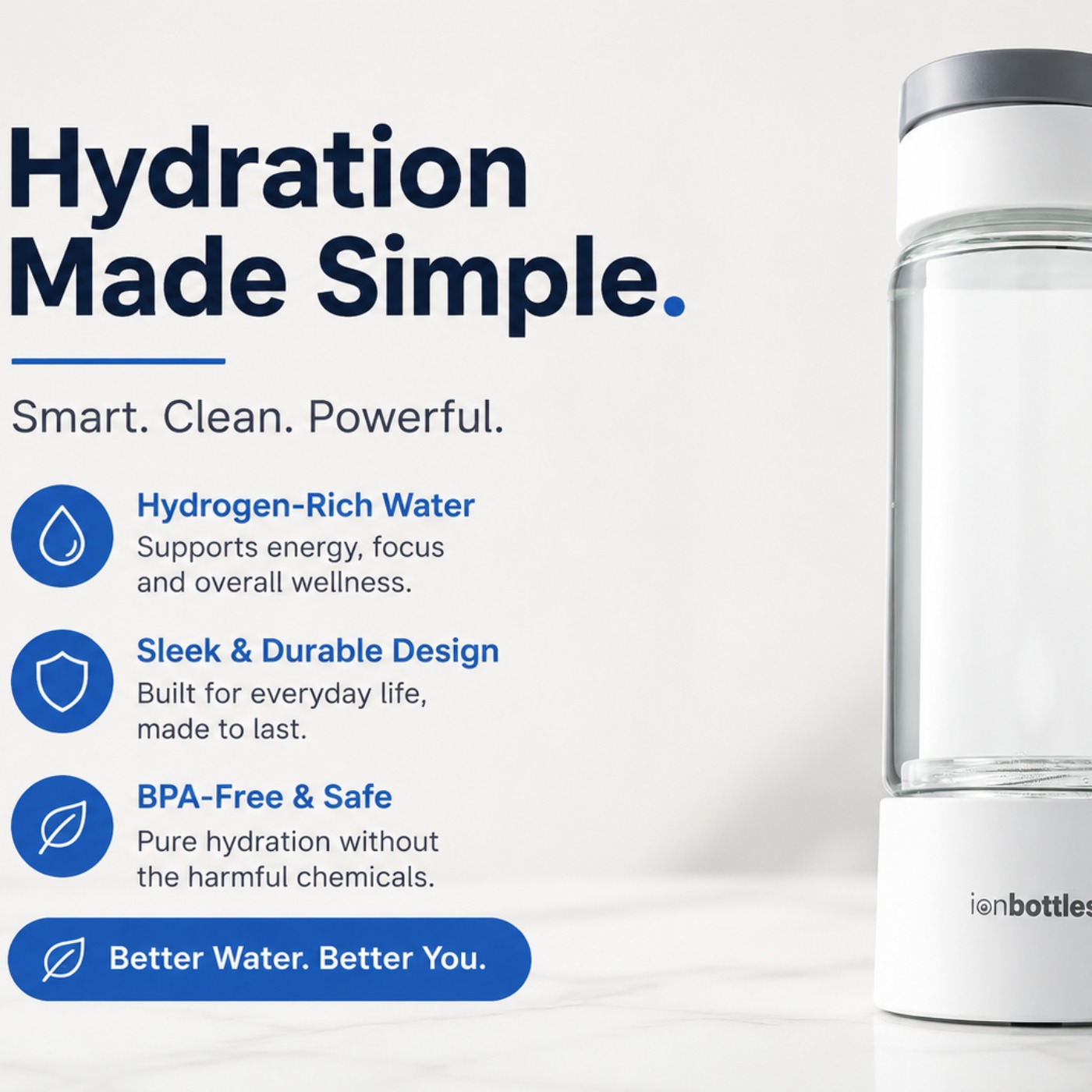
For home use, electrolysis-based bottles are the go-to. ION Bottles uses a PEM electrolysis system that produces high-concentration hydrogen water in minutes, without introducing ozone or chlorine as byproducts — a common problem with lower-quality devices.
What's the Concentration Sweet Spot?
Researchers typically use hydrogen water with a concentration of 1.0 to 1.6 parts per million (ppm) for studies showing measurable effects. Many consumer products fall short of this. It's worth knowing what concentration a product delivers before investing in it.
ION Bottles produces water in the therapeutic range, which is one reason their devices have earned loyal customers among athletes and wellness practitioners.
Conclusion
Hydrogen water occupies a unique space — it's scientifically interesting, practically accessible, and growing in mainstream acceptance. Whether you're a skeptic who wants the facts or an early adopter looking to deepen your understanding, the science is there and it's worth paying attention to. The more we learn about cellular health, the more molecular hydrogen seems to belong in that conversation.