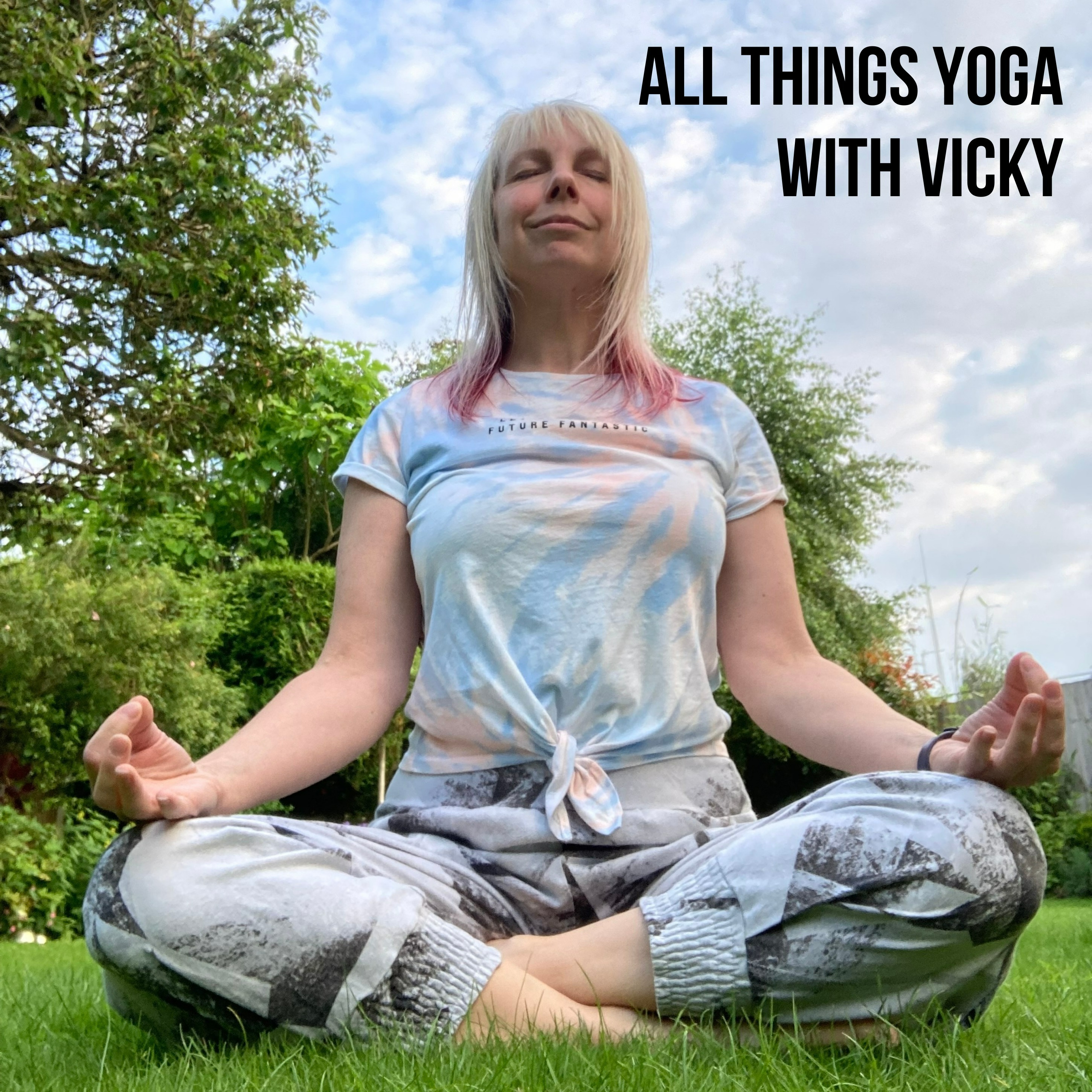
- Ishvarapranidhana: Surrender and Trust
Ishvarapranidhana, or surrender, is about letting go of control and trusting in a higher power—or simply the flow of life. In this episode, we explore how releasing attachment to outcomes, practicing faith, and staying open to the unknown can bring a sense of peace and freedom. Ishvarapranidhana teaches us to let go and let life unfold. Find me at https://www.eqyoga.co.uk/
Transcript
Hello, we’re at the final Niyama—Ishvarapranidhana. This one’s all about surrendering to something bigger than yourself, whether that’s the universe, a god, or just the flow of life. Let’s dive in
Ishvarapranidhana can feel abstract, but at its core, it’s about trust. It’s knowing that while we can control some things, there’s so much that’s out of our hands—and that’s okay.
In traditional yoga, this surrender is about devotion to the divine. But even if you’re not spiritual, Ishvarapranidhana can be about letting go of the need to control everything.
Have you ever had a plan fall apart, only to realize later that things worked out even better? That’s the magic of surrender. It doesn’t mean giving up; it means doing your best and then trusting the process.
In today’s fast-paced world, surrender might look like practicing mindfulness or even just breathing deeply when things feel overwhelming. For me, it’s a reminder to step back and let life unfold.
Another way to practice Ishvarapranidhana? Gratitude. When we focus on what’s good, we stop fighting against what is. Surrender becomes easier when we realize there’s so much to be thankful for.
How can you practice surrender this week? Maybe it’s letting go of a grudge or trusting that things will work out. Whatever it is, I hope it brings you peace. Thanks for joining me on this journey through the Yamas and Niyamas. See you soon for more yoga wisdom
S3E10 - 1m - Feb 22, 2025 - Svadhyaya: The Path of Self-Reflection
Svadhyaya, or self-study, encourages us to turn inward and explore who we are. This episode looks at how journaling, meditation, and studying wisdom texts can help us deepen our understanding of ourselves and our purpose. Svadhyaya reminds us that self-awareness is the key to personal and spiritual growth. Find me at https://www.eqyoga.co.uk/
Transcript
Welcome back to All Things Yoga with Vicky. Today’s Niyama is Svadhyaya, or self-study. This one’s all about getting curious about yourself—your habits, your thoughts, and even the deeper, spiritual you.
Traditionally, Svadhyaya involves studying sacred texts like the Bhagavad Gita or the Yoga Sutras. But in modern life, it’s also about turning inward and learning from your experiences.
Think about it—how often do we go through life on autopilot? Svadhyaya asks us to pause and reflect. Why did I react that way? What’s driving my choices?
For me, journaling is a big part of Svadhyaya. It’s like having a conversation with yourself—getting all your thoughts out and then seeing what they reveal. Meditation is another great tool for self-study. When you sit quietly, you can observe your mind without judgment.
And here’s a fun idea—self-study doesn’t have to be all serious. What about trying something new, like a hobby or class, to learn more about yourself? You might surprise yourself with what you’re capable of.
On a deeper level, Svadhyaya reminds us that we’re more than our thoughts or bodies. It’s about connecting with your true essence, your inner light.
So, how will you practice Svadhyaya this week? Maybe it’s journaling, meditating, or just reflecting on your day. Whatever it is, I hope it brings you closer to yourself. Next time, we’re wrapping up the Niyamas with Ishvarapranidhana
S3E9 - 2m - Feb 20, 2025 - Tapas: Building Inner Strength
Tapas, or discipline, is the fire that fuels transformation. In this episode, we discuss how embracing challenges, staying consistent with your goals, and cultivating resilience can lead to growth and self-discovery. Tapas is about showing up, even when it’s hard, and building the inner strength to move closer to your highest potential. Find me at https://www.eqyoga.co.uk/
Transcript
It’s Vicky, and today on All Things Yoga, we’re diving into Tapas. This Niyama is all about discipline, but before you groan, stick with me—Tapas isn’t just about working harder. It’s about working smarter and with intention
Tapas translates to ‘heat’ or ‘burning enthusiasm,’ and traditionally, it refers to the discipline needed to stay committed to your spiritual path. But let’s bring that into today’s world.
Tapas is about showing up for yourself consistently, even when it’s hard. Whether it’s rolling out your yoga mat on a day you’d rather sleep in, eating foods that nourish you, or staying focused on a long-term goal, Tapas is the fire that keeps you going.
But discipline doesn’t have to be harsh. In fact, Tapas is about balance—it’s the sweet spot between effort and ease.
Let’s talk about how this looks in modern life. Have you ever started a habit, like journaling or exercising, and then given up when it got tough? Tapas encourages us to push through that resistance—not out of guilt but because we know it’s good for us. You can't guilt yourself into change, but you can love yourself into change.
For me, practicing Tapas often means creating small, achievable goals. Like committing to ten minutes of yoga instead of an hour. Consistency beats intensity every time. Even 2 or 5 minutes of meditation is better than non at all.
Another way to think about Tapas is as self-respect. When we follow through on our commitments, we build trust in ourselves. That’s powerful.
Where can you bring more Tapas into your life? Maybe it’s sticking to a new habit or simply showing up with intention. Whatever it is, let that inner fire guide you. Next time, we’re talking about Svadhyaya
S3E8 - 2m - Feb 17, 2025 - Santosha: The Art of Contentment
Santosha, or contentment, is the practice of finding peace and gratitude in the present moment. This episode delves into how we can let go of comparison, embrace imperfection, and recognize the abundance we already have. Santosha shows us that happiness isn’t in the next achievement but in appreciating what’s right here, right now. Find me at https://www.eqyoga.co.uk/
Transcript
You’re listening to All Things Yoga with Vicky, and today’s Niyama is one of my favourites—Santosha, or contentment. Ah, doesn’t that sound nice?
But here’s the thing: contentment can feel tricky, especially in a world that constantly tells us we need more. More stuff, more success, more everything. So let’s unpack what Santosha really means and how we can embrace it.
Traditionally, Santosha is about finding peace and satisfaction with what you already have. It’s learning to appreciate the present moment instead of chasing after the next thing.
Sounds lovely, right? But let’s be real—it’s not always easy. How often do we say, ‘I’ll be happy when…’—when I get the promotion, lose the weight, or take that dream vacation? Santosha asks us to hit pause on that mindset and say, ‘What’s good about my life right now?’
In yoga, Santosha might mean being okay with where your body is today. Maybe you can’t nail that tricky pose yet, but you can still appreciate the strength and effort you’re bringing to your practice.
Off the mat, Santosha could look like practicing gratitude. Have you ever tried writing down three things you’re thankful for each day? It’s a simple way to shift your focus from what’s lacking to what’s abundant.
And here’s a modern twist—what if Santosha also meant unplugging from social media? It’s so easy to compare ourselves to others and feel like we’re falling short. But when we step back, we can reconnect with what really makes us happy.
So, how can you invite Santosha into your life this week? Maybe it’s savouring your morning coffee or taking a moment to appreciate a loved one. Whatever it is, I hope it fills you with peace. See you next time for Tapas
S3E7 - 2m - Feb 15, 2025 - Shaucha: Cleanse Your Space, Mind, and Soul
Shaucha, or cleanliness, goes beyond physical hygiene to include clarity in our thoughts, emotions, and surroundings. In this episode, we explore how decluttering your home, eating clean foods, and releasing mental negativity can create a sense of inner and outer purity. Shaucha is all about making space for positivity and growth in your life. Find me at https://www.eqyoga.co.uk/
Transcript
Welcome back to All Things Yoga with Vicky. Today, we’re kicking off the Niyamas—those inner practices that help us live more harmonious lives. And the first one we’re exploring is Shaucha, or cleanliness.
Now, I know what you’re thinking—‘Vicky, are you telling me I need to clean my room?’ Well… maybe! But Shaucha goes so much deeper than that.
Let’s start with the traditional interpretation. Shaucha is about keeping the body, mind, and environment clean. Sure, this includes physical hygiene—taking a shower, washing your yoga mat—but it also means clearing out the clutter in our minds and surroundings.
Think about how good it feels to walk into a tidy space or how refreshed you feel after a hot shower. That’s Shaucha in action—it’s not about perfection but creating an environment that feels light and supportive.
But Shaucha isn’t just external. Mental cleanliness is just as important. Have you ever noticed how negative thoughts or worry can feel like mental clutter? Practicing Shaucha might mean setting boundaries with toxic people, limiting the news you consume, or simply making time for mindfulness practices.
And here’s another layer—what about the food we eat? Nourishing your body with clean, healthy food is another way to honour Shaucha. It’s not about being extreme but about tuning into what makes you feel good.
In modern life, Shaucha might also mean decluttering your digital life. When was the last time you cleaned out your inbox or unfollowed accounts that don’t inspire you? Clearing that space can create more room for what truly matters.
So, this week, think about where you can invite more Shaucha into your life. Maybe start with something small, like clearing your desk or journaling to clear your mind. I promise it makes a difference. Thanks for tuning in, and I’ll see you next time to talk about Santosha
S3E6 - 2m - Feb 12, 2025 - Aparigraha: Letting Go
Aparigraha, or non-possessiveness, is the practice of releasing attachments—whether to material things, relationships, or limiting beliefs. This episode looks at how decluttering, embracing change, and cultivating gratitude can free us from unnecessary burdens. Aparigraha reminds us that when we let go, we make room for what truly matters. Find me at https://www.eqyoga.co.uk/
Transcript
You’re listening to All Things Yoga with Vicky, and today we’re diving into the final Yama—Aparigraha, which means non-possessiveness or non-attachment. This one is such a game-changer, especially in our consumer-driven world. Let’s unpack what it means and how we can bring it into our lives
Traditionally, Aparigraha is about letting go of the need to cling—whether to material things, relationships, or even ideas. In yoga philosophy, the idea is that attachment leads to suffering because nothing in life is permanent.
Let’s start with material possessions. Have you ever held onto something you don’t really use, just because you might need it ‘someday’? Or maybe you’ve felt like you need the latest gadget or fashion trend to be happy? Aparigraha invites us to ask: Do I really need this? Will it truly bring me joy, or is it just adding clutter to my life?
One way to practice Aparigraha is by decluttering your space. For example, take a look at your wardrobe. Are there clothes you haven’t worn in years? Letting go of those items can feel freeing—not just physically but emotionally too.
But Aparigraha isn’t just about physical stuff. It’s also about emotional attachment. Have you ever clung to a relationship or situation that wasn’t serving you, just because it felt familiar or safe? Practicing Aparigraha might mean letting go of that attachment and trusting that something better will come along.
And then there are the mental attachments. Are there beliefs or ideas you’re holding onto that no longer serve you? For example, the belief that you have to be perfect, or that success looks a certain way. Aparigraha asks us to let go of those limiting thoughts and make space for growth.
In modern life, Aparigraha can even apply to time. Are you hoarding your time, afraid to share it with others, or overcommitting because you feel like you ‘should’? Learning to say no and prioritize what really matters is a form of non-possessiveness.
And here’s a fun twist—Aparigraha can help us enjoy life more. When we stop clinging, we’re free to experience the present moment without worrying about losing it. Think about eating a delicious meal. If you’re worried about the last bite before you’ve even started, you miss the joy of the moment! Aparigraha reminds us to savour what we have, knowing it’s enough.
For me, one of the most powerful ways to practice Aparigraha is through gratitude. When we focus on what we already have, the need to cling to more starts to fade. Whether it’s appreciating your morning coffee, a good book, or the people you love, gratitude shifts your mindset from scarcity to abundance.
So, this week, try practicing Aparigraha. Maybe it’s decluttering your home, letting go of an old grudge, or just being mindful of your attachments. Whatever it looks like, I hope it brings you a sense of freedom. Thanks for joining me as we explored the Yamas, and I’ll see you next time as we dive into the Niyamas!
S3E5 - 3m - Feb 10, 2025 - Brahmacharya: Energy in Balance
Brahmacharya, or moderation, is all about managing our energy wisely—physically, emotionally, and mentally. In this episode, we explore how setting boundaries, practicing mindfulness, and finding balance in consumption can lead to a more sustainable, fulfilling life. Moderation isn’t about restriction; it’s about joy in balance. Find me at https://www.eqyoga.co.uk/
Transcript
Welcome back to All Things Yoga with Vicky. Today, we’re exploring Brahmacharya, the fourth Yama. Brahmacharya is often translated as ‘moderation’ or sometimes as ‘celibacy,’ but don’t worry—we’re not going to be talking about joining a monastery! This Yama is about how we use our energy—physically, emotionally, and mentally—and finding balance in all areas of life.
Traditionally, Brahmacharya was about controlling desires, particularly in the context of spiritual growth. In ancient times, it was linked to celibacy, as yogis believed conserving that energy could be channeled into spiritual pursuits. But for most of us modern practitioners, Brahmacharya has evolved to mean something broader: moderation in how we use our energy.
Let’s start with the obvious—how do you spend your physical energy? Are you overworking yourself or burning out? Maybe you’re doing the opposite and not moving your body enough. Practicing Brahmacharya might mean finding a middle ground—exercising in a way that feels sustainable or setting boundaries with your work schedule to avoid exhaustion.
Now, let’s talk about mental energy. Have you ever felt drained just from overthinking? Maybe you’re replaying an argument in your head or worrying about things that haven’t even happened. Brahmacharya asks us to manage that mental energy. For me, meditation and deep breathing are tools I use to slow down and refocus my mind.
What about emotional energy? Are there people or situations in your life that feel like they’re taking more than they give? Sometimes practicing Brahmacharya means saying no to things that drain you so you can say yes to what truly nourishes you.
And of course, there’s moderation in consumption—whether it’s food, social media, or Netflix. We’ve all had those nights where we binge-watch a series and wake up feeling groggy. Brahmacharya reminds us to enjoy life’s pleasures in balance. For example, rather than eating an entire bag of chips, savoring a handful mindfully can feel just as satisfying without overindulgence.
Here’s a modern twist: Brahmacharya is also about being intentional. Are you scrolling on your phone for hours, or are you engaging with content that inspires you? Are you spending time with people who uplift you or just filling your schedule out of obligation?
And one more layer—Brahmacharya isn’t about deprivation. It’s not about saying no to everything fun; it’s about finding joy in balance. You might love a glass of wine or a dessert, and that’s okay! The practice is to enjoy those things mindfully and not let them control you.
So, how can you practice Brahmacharya this week? Maybe it’s setting a timer to limit social media, saying no to an invitation you don’t feel excited about, or finding balance in your physical activities. Whatever it looks like for you, I hope it brings you more energy and peace. Thanks for tuning in, and I’ll see you next time for Aparigraha
S3E4 - 3m - Feb 8, 2025 - Asteya: Find an Abundance Mindset
Asteya, or non-stealing, is about more than just physical theft—it’s about recognizing when we take time, energy, or even opportunities from others or ourselves. This episode dives into how we can practice gratitude, avoid comparison, and find satisfaction with what we already have. Asteya teaches us that true abundance comes from appreciating the present moment. Find me at https://www.eqyoga.co.uk/
Transcript
Welcome back to All Things Yoga with Vicky. Today’s Yama is Asteya, which means non-stealing. Now, you might be thinking, ‘I’ve never stolen anything, so this one doesn’t apply to me.’ But Asteya is so much broader than just taking physical things—it’s about all the ways we ‘take’ without realizing it.
Traditionally, Asteya is about avoiding theft. But in a modern context, it’s about so much more. Let’s think about time. Have you ever been late to a meeting? Or scrolled on your phone during a conversation? That’s stealing someone’s time and attention.
Asteya also applies to energy. Are you taking too much from others without giving back? For example, venting about your problems but not being there for your friends when they need support.
And what about stealing from yourself? This can look like procrastinating or making choices that don’t serve your highest good. Maybe it’s staying up late scrolling on your phone and then feeling too tired to enjoy the next day.
In a consumer-driven world, Asteya can also be about rethinking our relationship with material things. Do we really need more stuff, or are we just filling a void? Decluttering and practicing gratitude for what you already have can be powerful ways to embrace Asteya.
For me, practicing Asteya is also about appreciating the little things. When we’re content with what we have, we stop feeling the need to take from others or the world. Gratitude is a big part of this practice.
So, this week, I invite you to reflect on Asteya. Notice where you might be taking more than you need—whether it’s time, energy, or even physical things—and see how you can shift towards giving instead. Thanks for listening, and I’ll see you next time for Brahmacharya
S3E3 - 2m - Feb 5, 2025 - Satya: Living Your Truth
Satya, or truthfulness, isn’t just about honesty—it’s about aligning your words, thoughts, and actions with kindness and authenticity. In this episode, we discuss how Satya can help us embrace our true selves, question the little lies we tell, and live in a way that feels genuine. Truthfulness and compassion go hand in hand in creating deeper connections with ourselves and others. Find me at https://www.eqyoga.co.uk/
Transcript
Welcome back to All Things Yoga. It’s Vicky here, and today we’re diving into the second Yama—Satya, which means truthfulness. Now, truthfulness sounds pretty straightforward, right? But, as with everything in yoga, there’s a deeper layer to it.
The traditional meaning of Satya is being truthful in your words, actions, and thoughts. It’s about living in alignment with your highest self. But here’s the catch—truthfulness in yoga is always paired with kindness.
Think about this: Have you ever said something brutally honest but hurtful? That’s not Satya—it’s just being blunt. Satya asks us to be truthful in a way that also honors Ahimsa, or non-violence. Truth and kindness go hand in hand.
In our modern lives, Satya is about more than just not lying. It’s about authenticity. Are you being honest with yourself about what you want? Are you living in a way that feels true to who you are? For example, maybe you’re working in a job that doesn’t align with your values or staying in a situation that doesn’t feel right. Practicing Satya might mean having those tough conversations or making a change to align your outer life with your inner truth.
And let’s talk about white lies for a second—you know, the little things we say to avoid conflict or make things easier. While those lies might seem harmless, they can add up and create a lack of trust over time. Satya encourages us to communicate honestly, even when it’s uncomfortable, as long as we do it with compassion.
There’s also a modern twist on Satya—how honest are you online? Social media is often about curating a perfect image, but what would it look like to share more authentically? That doesn’t mean oversharing, but maybe it’s about being okay with showing the messy, real parts of life too.
And here’s another layer: Truthfulness isn’t just about what we say—it’s also about what we think. How often do we tell ourselves stories that aren’t true? Like, ‘I’ll never be good enough’ or ‘I can’t handle this.’ Practicing Satya might mean questioning those stories and replacing them with kinder, more truthful thoughts.
So, this week, I encourage you to explore Satya. Maybe it’s being more honest in your conversations, reflecting on whether your actions align with your values, or questioning those negative stories in your mind. Remember, truthfulness and kindness always go together. See you next time for Asteya.
S3E2 - 3m - Feb 3, 2025 - Ahimsa: Kindness in Action
In this episode of "All Things Yoga," Vicky dives into the first yama, "ahimsa," which means non-violence. She explains that ahimsa goes beyond just avoiding physical harm—it includes being mindful of our words, thoughts, and actions. Vicky encourages us to practice kindness in our self-talk, interactions with others, and even in our environmental choices. She shares practical tips, like pausing before reacting in anger and making small sustainable changes. By incorporating ahimsa into our daily lives, we can foster greater harmony and well-being. This episode is part of a series exploring the eight limbs of yoga. Find me at https://www.eqyoga.co.uk
Transcript
Vicky 00:00:00 Welcome back to all things Yoga with Vicky. In the next few episodes, we're going to think about some yoga philosophy. So yoga is more than just poses on a mat. It's a way of living that helps us cultivate balance, kindness, and inner peace. At its core, yoga philosophy is rooted in ancient texts. One of them is the Yoga Sutras of Patanjali, which we are going to look at over the next few episodes. It's a foundational guide that outlines the eight limbs of yoga, a pathway to live in a meaningful and fulfilled life. Two of these limbs, the Yamas and Yamas. So the ethical disciplines and personal observances form the backbone of our journey into yoga beyond the physical practice. These ten principles are timeless guides for how we relate to ourselves, others, and the world around us.
In each of my episodes will explore the Yamas and the armas in a way that's relatable to modern life. Each of my episodes will dive into these teachings, offering practical ways to incorporate them into our daily routines. Whether you're new to yoga, practice, inquisitive or a seasoned Yogi, this guide will help you to apply the ancient principles to create a life filled with balance, intention, and joy.
Today we're diving into the first Yama Ahimsa. That Sanskrit word means non-violence. Now you might be thinking, Vicky, I don't hurt anyone, so I've got this covered. But trust me, Ahimsa goes a long way beyond the obvious. So let's start with maybe a traditional meaning. Hims is about avoiding harm physically, verbally, and even mentally. In ancient yogic texts, it's considered the foundation of the entire practice of yoga. If we're harming others or ourselves, it's hard to live in harmony.
So the obvious application of ahimsa is not physically hurting anyone. But let's take a step further. What about the words we use? Have you ever said something in anger or hurt that maybe has upset someone? Or maybe you've been on the receiving end of a harsh comment when someone else has been in pain and spoken to you in a way that you don't appreciate. Words can hurt just as much as actions.
Then there's the way we think. Maybe you've caught yourself having harsh words with yourself, spiraling into self-criticism, perhaps thinking I'm not good enough, or why did I do that? That was so stupid. That is also a form of violence, but this time it's directed at yourself. Practicing ahimsa means being kinder in the way that you talk to yourself.
Now, in modern times, ahimsa can also extend to how we treat the planet. So maybe choosing more sustainable options, reducing our plastic waste, perhaps eating less meat, perhaps taking your carrier bag to the supermarket. All these are ways to reduce harm to the environment. Many people adopt a vegetarian or vegan diet because they believe it minimises harm to animals in the earth. But you don't have to do that. It doesn't have to be all or nothing. Even small steps like maybe eating less meat, or reducing food waste, or reducing your plastic usage all count.
Now let's not forget about emotional ahimsa. Maybe you're holding on to grudges or resentment. Now, those feelings can create tension or harm not just for others, but also for yourself. Now, in lots of meditation practices, there's an instruction to let go, and letting go through forgiveness can be really beneficial. The other way that we can also allow ourselves to get rid of grudges resentments is to set boundaries. This can also be an act of non-violence.
One way I try to practice ahimsa is by pausing before I react. Now, I'm not saying I'm perfect at this, but say that someone cut you up in traffic. Your first instinct is to hoot at them, maybe have a little bit of a 'blue' word. Instead maybe take a deep breath. Maybe let it go. Now you're not excusing the behavior of them cutting you up, but you're choosing to experience peace over conflict. It's not worth raising your blood pressure over.
Now, finally, Ahimsa can even show up on the yoga mat. Now, I may have mentioned before that I have pushed myself into a poses that don't feel right, just because I thought I should be able to do it. Staying in a lunge for a little bit too long and then having a swollen knee for a week afterwards. These are examples of how we need to honor our bodies and respect their limits and listen to them.
So that's ahimsa, nonviolence in all its forms. This week you might want to try and notice in where you can bring more kindness to your life. Maybe it's softening your tone when you're speaking to someone you're annoyed with. Being gentler with yourself or doing something kind for the planet. Thanks for listening and I hope you tune in next time to explore Satya - Truthfulness.
S3E1 - 5m - Feb 1, 2025 - Demystifying Sound Baths - reasons to bathe in sound
Here I dismantle the mystery of Sound Bathing and explore the reasons why you may want to give it a go! Find me at https://www.eqyoga.co.uk/
Transcript
Vicky (00:00:10) Hi. Welcome to all Things Yoga with Vicky. A podcast about all things yoga. Hello.
We're going to do some demystifying the 'woo-woo' sounding world of sound baths. If you've never been to one, they aren't quite as strange as they may seem!
During a sound bath session. There are different instruments like singing bowls, gongs and chimes, perhaps even drums, and they're played in a way that creates soothing sounds and vibrations that generally wash over you, helping you to relax your body and also your mind. Now, because they're played gently, the sound waves resonate through the room and sometimes into your body - we'll talk about that in a moment - and it creates a very peaceful and meditative atmosphere, even for those people who aren't used to meditation in the traditional sense. So what can you expect when you attend a sound bath? Well, you're going to immerse yourself in a sensory experience. You'll usually be laying down for the session, but if that isn't accessible, you can always sit on a chair.
Vicky (00:01:12) But however you are, it's important to feel comfortable and warm. So generally people will have bolsters or pillows underneath their knees in their heads, a blanket over the top of you so that you just stay nice and comfortable. Now, the sound bath may take you on a journey of sound from singing bowls which can be placed on the body so you feel the vibrations into the whole of your being to things like cactus rain sticks and seed shakers to recreate sounds from nature. The instruments may be moved around your body or moved around the room to create different parts of that journey. You'll also expect the twinkle of chimes and the warm, soft sounds of the Sansula, a little finger piano, and perhaps even some sung mantras, what happens is you just allow yourself to be bathed in these auditory delights. Now, whilst sound baths are suitable for almost everybody, regardless of age or fitness level, there are a few conditions that if you have, you may want to skip the sound baths. Things like epilepsy, heart conditions or anything related to, finding sounds stressful or overstimulating, tinnitus, migraines triggered by noise, anything like that.
Vicky (00:02:23) Also, if you have metal plates in your body or hearing aids that might make sound uncomfortable, it's best to skip out. And additionally, if you are pregnant and in the first or third trimester, it's best to wait until after for your sound baths. Now, it's worth also noting that some people with mental health issues might found sound baths lead to a release of emotions. There's no reason not to have a sound bath, but just be aware of that so that you know what to expect. Now, if you do attend a sound bath, the benefits you might feel can be amazing. You may feel a deep sense of relaxation during and after the session. People often find that sound bathing leads to a reduced sense of stress and lowering of anxiety, and it may help to improve focus and even encourage a sense of balance and harmony within yourself as a whole. Now, while most of the benefits are generally anecdotal, there has been some research into the effects of sound breathing. In 2016, a study by Goldsby concluded that sound bath type meditation may be especially useful in decreasing tension in individuals.
Vicky (00:03:36) Additionally, Cotoia in 2018, said it was found that playing patients who were about to have an operation relaxing singing bowl music might be a useful strategy to manage pre-operative anxiety. Much more research is needed in this relatively new area, though. However, an interesting article in 2019 by neuroscientist and biophysicist William Softky, gives a new and interesting take on why sound baths are so popular. He sees the electronic noise pollution, and also the artificial sounds that devices that we use in modern life give out as an assault on our vibration sensitive nervous system, which becomes recalibrated. He said the solution to mental misery created by a de-calibrating sonic environment is to return to a calibrating one, such as a sound bath. Sound baths are a fantastic way to unwind, de-stress and rejuvenate your body and mind and also apparently recalibrate. So next time you need a little self-care, why not give a sound bath a try?
Remember to hit subscribe and if you'd like to contact me, you can through my website eqyoga.co.uk
Thank you so much for listening.
References
Goldsby, T.L., Goldsby, M.E., McWalters, M. and Mills, P.J. (2016). Effects of Singing Bowl Sound Meditation on Mood, Tension, and Well-being: An Observational Study. Journal of Evidence-Based Complementary & Alternative Medicine, [online] 22(3), pp.401–406. doi: https://doi.org/10.1177/2156587216668109.
Cotoia, A., Dibello, F., Moscatelli, F., Sciusco, A., Polito, P., Modolo, A., Gallo, C., Cibelli, G. and Cinnella, G. (2018). Effects of Tibetan Music on Neuroendocrine and Autonomic Functions in Patients Waiting for Surgery: A Randomized, Controlled Study. Anesthesiology Research and Practice, [online] 2018, p.e9683780. doi: https://doi.org/10.1155/2018/9683780.
Fair Observer. (2019). The Physics and Biophysics of Sound ‘Healing’. [online] Available at: https://www.fairobserver.com/more/science/sound-baths-healing-relaxation-science-news-physics-culture-news-34891/.
S2E3 - 5m - Mar 17, 2024 - Busting myths about yoga teachers
What are yoga teachers really like? Do they never eat chocolate or swear? Find me at https://www.eqyoga.co.uk/
E2S2 Transcript
**Vicky** (00:00:10) - Hi. Welcome to all Things Yoga with Vicky. A podcast about all things yoga. Hello and welcome. So we're going to have a little think about busting myths about yoga teachers. The yoga teachers. They are a strange breed in their lycra. Bend in this way and that. But. Not all yoga teachers are your stereotypical Western yoga teacher, and there are a lot of myths about yoga teachers, such as they all wear Lycra. I certainly don't. But we are going to think about just a few of these things that actually could be quite,, shall we say, detrimental to people attending yoga classes. So the first thing I'm going to say is all yoga teachers are not really skinny and really fit. You do not have to be really skinny and really fit to teach yoga. That's not saying some aren't, because yes, quite a few are, but there are a lot that aren't. Yoga isn't necessarily for people who have a level of fitness, a level of flexibility, a certain body shape.
**Vicky** (00:01:21) - Yoga is for everybody, and this is something which is really key. When we look on Instagram and other social media, there is a large contingent of things that represent yoga that aren't actually representing yoga. They are representing an interpretation of yoga, doing a headstand in your shorts and bikini and so on. Now this is really key as it puts people off coming to classes. It makes people think that yoga is exclusively for a certain type of person, a certain body shape, a certain skill or flexibility level or fitness level. That is not the case. So number one myth busted. Not all yoga teachers are super fit, super bendy and super slim.
Okay, so let's move on to myth number two. Myth number two is that yoga teachers are all vegan. Now, interestingly, some yoga teachers are vegan and there are certain yogic principles to live by. One of these is ahimsa, which is non harm. Now ahimsa can extend to not eating animal products or using animal products, if that is your interpretation of it.
**Vicky** (00:02:39) - But a lot of yoga teachers do not follow any specific diet. There is nothing to say that yoga teachers have to be vegan or vegetarian. Personally, I'm pescatarian and I have been for many years, but that was way before I was a yoga teacher, so perhaps we can stop thinking about our yoga teachers being these super healthy beings because quite frankly, I love ice cream. I have a pizza on Fridays. You know, there's nothing wrong with this. This is a human thing to do. Yoga teachers are human.
Now, the next myth we're going to bust is the fact that yoga teachers never, ever get injuries. Now, this is quite an interesting one. I quite often go to the same shop, and the people in there who work in there kind of know me because I'm in my yoga gear. They know I'm a yoga teacher. And the other week one of the guys who works in there said, oh I have a really bad back are there any yoga stretches I can do for it now? I don't ever recommend things like that, but I recommended him to a book that he might want to look at because I don't prescribe.
**Vicky** (00:03:53) - I'm not medically qualified, but it's a book that I used when I had a herniated disc. And I said, look, from my personal experience, this book could be really useful. You might want to look at this. And he said, but you're a yoga teacher. How could you have had a bad back? Now, this fascinated me., yoga teachers are not superhuman. We get injuries, my wrists hurt. Sometimes if I kneel on my knees for too long, they hurt. We have the same issues as everybody else, as a yoga teacher. And in fact, sometimes too much of certain things in yoga can actually cause injuries, which is why we need to be quite careful. But it's that idea of yoga teachers being completely and utterly superhuman. We are not Terminators. As yoga teachers, we get injuries, trust me.
Now, the last thing I'm going to talk about as a yoga teacher, and this is the one that I absolutely love. My mum says this to me sometimes.
**Vicky** (00:04:54) - Like, how come you're not calm and collected all the time? Now it makes me chuckle. The idea that yoga teachers, all yoga teachers, just walk around in this super Zen like state unaffected by traffic jams or, you know, something annoys them. Trust me, yoga teachers do get annoyed. Yoga teachers get sweary and angry sometimes. Not necessarily in yoga classes. But like I say, yoga teachers are human, so we don't all walk around in a Zen like state. I mean, okay, sometimes we do some yoga teachers may do. If those yoga teachers out there,, walk around in the Zen like state all the time. It must be very nice. But from my personal point of view, the yoga teachers I know and also myself, we are not. Zen like beans 100% of the time. So I hope this has given you an insight into the world of the truth of yoga teachers busting those myths., if there's any other myths that you would like to ask about, then please do get in touch.
**Vicky** (00:06:15) - It would be interesting to see what people think yoga teachers are like and and I'll give you the reality. Please remember to hit subscribe and if you'd like to contact me, you can through my website eqyoga.co.uk. Thank you so much for listening.
S2E2 - 6m - Mar 9, 2024 - The One Constant is Change
Here we examine how humans like to have predicitability and suggest how we can help deal with the inevitable changes in our lives. Find me at https://www.eqyoga.co.uk/
Transcript
Vicky (00:00:03) - Hi, welcome to All Things Yoga with Vicky, a podcast about all things yoga. Hello. So today we're going to talk about change, the ever constant change. Now there's a saying that says one thing is certain in life and that is that things are going to change. And this is very true. So even when we feel that we're on an even keel, everything's swimming along nicely, then everything can take a nosedive or vice versa. So what we need to think about really, is the fact that we need to really not expect things to remain constant. The sense of constant change can be quite uncomfortable, and this is something that humans don't tend to sit well with, or it doesn't sit well with us humans. We like to have predictability. We like routine. We like to know what is happening, when it's happening, how it's going to happen. It's that same thing as kids coming home from school and saying, oh, what's for dinner? They want to know when's dinner? What is dinner? And it's that sense of being able to have predictability.
Vicky (00:01:25) - When we stop having that sense of predictability in our lives, what happens is our brains start to want to cling on to things that are predictable, the things that can actually remain a constant. Now. It's really interesting because I think during Covid there was a lot of uncertainty. We didn't know when we will be able to leave our houses, all of those different things. And that uncertainty really didn't sit well with a lot of people. However, on the flip side, the certainty of knowing that you were going to be in your house and what your routine was going to be, and maybe when your food was going to be delivered if you didn't venture out to the shops. That was actually something that some people did get on board with. So the sense of being able to predict our lives and predict what is going to happen really does make us mostly comfortable. However, if we stay in that same place, if we stay in the place where we know exactly what is going to happen, we will stay in that place and we will never try anything different.
Vicky (00:02:37) - We will never change things up in some sense, is we may never, as some people refer to it, grow. Um, the growth zone. Now, when I was a psychology teacher, we looked at quite a lot of learning theories, and a lot of the learning theories say more or less, you have to take yourself outside your comfort zone to learn new things, to learn skills, to advance. Now, okay, I take it that, um, not everyone wants to advance and learn new skills, and that is absolutely fine. Some people are quite happy where they are and there is nothing wrong with that at all. However, what I'm going to say is we need to start to be able to get comfortable with change. Change is a constant in our lives, and one of the things that we can maybe use to help us deal with change different situations, things not remain in the same is to maybe have something else that is a constant. Now, one of the constants in life you can have is something like meditation.
Vicky (00:03:45) - You can have a five minute meditation practice, maybe at the beginning of the day, the end of the day, maybe in lunch time. That doesn't matter when. But if we have that one thing that is constant, it allows us to possibly cope better with the other things that are constantly changing. Now, quite often I speak about meditation, and my preferred meditation is a breath guided meditation. Just watching the inhales and the exhales. Just simply observe in the breath and the thing that attracts me really about this, apart from the fact that it was the first kind of meditation I learned at the Buddhist Centre, was the fact that we always have our breath with us. We don't need anything in particular. We don't need any sounds. We don't need a cushion. We don't need anything special. Our constant is our breath. And if we want to, we can allow ourselves to just take a few breaths, observe in those breaths in a meditation to allow us to deal with that sense of everything changing.
Vicky (00:04:58) - Now. Some changes in life are bigger than others sometimes. Changes happen when we least expect it. But if we have a regular meditation practice, this is something that can allow us to deal better with that change. Also, the other thing is to expect change and sometimes changes for the better, not for the worse. So this is something we need to bear in mind. Let's not dread things shifting. Sometimes the sand dunes shift on the beach to make an even more beautiful pattern. So this is something that we can bear in mind when something happens. Maybe we can say, okay, there's this. Not all negative. I guess it depends on what it is, but that sense of being able to actually perhaps make room for growth, make room for different activities, make room for something else when things shift. So I hope that you have found this useful. And maybe check out one of my other podcasts about how to meditate and meditation. So that's all for today. Thanks for listening. Please remember to hit subscribe and if you'd like to contact me you can through my website eqyoga.co.uk.
Vicky (00:06:24) - Thank you so much for listening.
S2E1 - 6m - Feb 6, 2024 - Are You Breathing Wrong?
In this episode we examine how we tend to learn unhelpful breath patterns as adults and what we can do to help to bring us back to a more instinctive breath.
You can practice with me at eqyoga.co.uk
Transcript
Vicky (00:00:03) - Hi, welcome to All Things Yoga with Vicky, a podcast about all things yoga. Today we're going to think about breath. And if you're breathing all wrong, well, are you breathing all wrong? The answer may well be yes. As strange as it may sound, as we get older, we forget how to breathe properly. If you watch a baby or child or even pet's breathing, you may notice that their tummy area expands on the inhale and then contracts on the exhale. Adults. Well, those that don't practice yoga anyway don't tend to breathe in the same way. Somewhere on our journey of growing up, we somehow start to think that breathing is all about getting air into our chest area with an expansion of the ribs as we inhale. Weirdly, if you ask an adult to take a deep breath, they're likely to expand their chest but suck in their tummy area. This is often referred to as reverse breathing, as it's the opposite of how natural breathing really should work. Using our chest area to breathe really reduces the capacity of air that we can intake to our lungs.
Vicky (00:01:17) - This means that we're not getting as much oxygen into our bodies, which is needed for our brain and our muscles to function well. Additionally, shallow breathing is often linked to anxiety and panic, so short, shallow breaths can signal to our nervous system that we need to switch to fight or flight mode, which isn't ideal unless there is actually a real threat present. So when and why do we lose the ability to breathe properly? I have a theory about this, and as unlikely as it may sound, I suspect that it's down to fashion, vanity, and social pressures. Now bear with me. Let me explain. When we hit adolescence, we start to become more aware of our appearance. Social pressures to look a certain way start to creep in, and we worry about how we look and what other people think of us. I have a feeling that this is the point when we change from that intuitive, childlike breath to our adult reverse breathing pattern. We start to hold our bodies differently with pressure to look slim or trim no matter what our gender.
Vicky (00:02:26) - We hold our tummy area, restricting that room that we have to breathe. Added to this, many items are clothing are fitted and require our bellies to be a little constricted. Culprits are present in clothing for everybody. Tight jeans, tights, fitted dresses and the dreaded support underwear like Spanx. Now all of these restrict our ability to breathe as tummies just don't have that freedom they need for a good deep breath. Now here I must explain that we don't actually breathe air into our bellies and tummies. There'd be a bit of a problem if we were doing that. What actually is happening is we are allowing for our lungs to expand now. Our lungs expand in all directions. They expand front to back, side to side and top to bottom. When we breathe in, the expansion at the bottom of the lungs pushes our organs down a little to make space for the air in the lung. And this is what we see happening in our tummy. That's why we get that feeling of our tummy poking out a little when we take a deep breath into that belly area.
Vicky (00:03:38) - It works the other way around too. Have you ever eaten too much and felt that it was quite difficult to breathe afterwards? That regretful last piece of Christmas pudding? Maybe that was your organs encroaching on your lungs. Space to expand. Now you may be thinking, how can I change this habit of reverse breathing now that it's so ingrained in my breath pattern? Well, perhaps it's best not to aim for changing how we breathe all the time, but to practice how to breathe differently for short periods of time but regularly. Sometimes called yogic breath breathing with a focus on the whole of the lung, can be a great way to train your brain to use all of your lungs to full capacity again. There are various methods that can be used to achieve this, but the most simple and effective that I found is to focus on the movement just in one point of your body. That is the area just a few centimeters north of your navel, sometimes referred to in yoga as the solar plexus, although that's actually a bundle of nerves at the back of the body.
Vicky (00:04:43) - I suggest wearing non restrictive clothing, finding a comfortable seated or lying position, and allow your attention to move to that solar plexus area. If it helps, you may want to gently place your hand on that area. Then all you do is start to breathe and allow your breath to gently move that area in and out with each inhale and exhale. It's great if you can let this breath happen in and out through your nose, as it lets the breath be a little bit longer than when we breathe through our mouth. It's important not to force the breath, but to keep the depth and length of the breath feeling natural and comfortable. And at all times when we're taking this yogic breath. Focus in on that gentle movement of the solar plexus. This encourages our lungs to work to full capacity, not only chest, but also down into the bottom of the lungs too. Now, using this technique, when practiced regularly, even just for five minutes at a time, you may find that your brain starts to tune in with this sense of a fuller breath, and over time, you may find it becomes your natural default breathing pattern for most of the day.
Vicky (00:05:57) - It feeds your body with more oxygen and helps you to keep your mind from triggering that stress response in the body. So for a healthier way to breathe, let's throw away our skinny jeans and Spanx pants and start to breathe like babies again. Please remember to hit subscribe and if you'd like to contact me, you can through my website eqyoga.co.uk. Thank you so much for listening.
S1E11 - 6m - Mar 17, 2022 - We are all Unique
In this episode we explore the idea that bodies are all different and how learning about your own body is far more useful than we may realise.
You can practice with me at eqyoga.co.uk
Vicky (00:00:03) - Hi, welcome to All Things Yoga with Vicky, a podcast about all things yoga. Today we're going to speak about different bodies and expectations of our bodies. Now, if you've been listening to my podcast, you may. By now I've got the idea that I'm very keen on fitting yoga poses to our bodies, rather than making our bodies fit the poses. Now, recently, actually for about a month, I've been seeing adverts on social media about stretching apps and stretching programmes that show these amazing photos of people struggling to touch their toes in May and then being folded forward so tightly they could fit in a suitcase in August. Now, these apps promised amazing improvements in flexibility in a really short time. And under the posts, there are a plethora of comments from people saying how amazing these programmes are and how well they've worked. Now, can this really be true? Can we go from zero to be in a stretch in a hero in three months? Let's explore why things may not be all they seem here.
Vicky (00:01:17) - So, as you may be aware, part of yoga teacher training is looking at anatomy, how bodies work, and also the makeup of our bodies. And it becomes very apparent that the pictures that we see in books showing bones and muscles are not representative of everyone. In fact, very few bodies will look like the textbook diagrams. We are all unique. Genetics, bone formation, muscle structure, past injuries and daily habits ensure that we are. You are unique just like everybody else. Now these differences in each body mean that it may be possible for one person, but impossible for another person to get into a certain position.
Vicky (00:02:08) - For example, the picture of the amazinging forward fold in the episode pic would only be possible if your bone structure in your hips allows for it. If you were to look at the X-ray of a few different people's hips, you would see massive variations in how the bones look, almost as if they were from different creatures. For some people, there will be nothing stopping a deep forward fold at the hips, but for others, bone will meet bone even with a small forward fold, and that means that they will never reach that nose to knee version that we can see in pictures.
Vicky (00:02:44) - It's important to say that this is no reason to despair. There are no prizes for touching your toes or fitting yourself into a suitcase. So in light of this information and our physical differences, I feel that such programs and apps may be offering false expectations, especially as an app doesn't take into account how your particular body works. In fact, there's a very real risk of people pushing to achieve the results that they're expecting and causing injury in the process. Not to mention that feeling of being disheartened when they don't manage to fold themselves in half. Our bodies are amazing. No matter what their makeup or what they look like, it's time that we started taking more notice of our own bodies and how they work and how they feel comfortable. If sitting cross-legged doesn't feel good for you, don't do it. Find your own way of sitting comfortably. If a traditional child's pose feels more awkward than relaxing, practice your own version or something. That's an alternative. We can get to know our bodies better by experimenting. One simple idea of a place to start is thinking about our shoulders.
Vicky (00:03:55) - Another area with huge variation from person to person. You may like to see how it feels when you lift your arms forwards and up. Notice if there's tightness or if it feels good and then try again, but this time taking your arms out to the sides and up. Does it feel different? Maybe better, maybe less comfortable. If we notice a preference, we can then take this into our practice of poses like warrior one or Dandasana, where we raise our arms. If we start paying more attention to which movements feel better than others, which positions allow us to find more ease, we'll be working towards getting to knowing our bodies better, and this will allow us to improve our connection with our bodies. The mind body connection, if you will. I believe that knowing our bodies is far more useful and important than being able to perform crazy stretches. Having that knowledge allows us to avoid injuries rather than fighting with the amazing machines in which we live. We can learn to work intuitively with our bodies. Please remember to hit subscribe and if you'd like to contact me, you can through my website eqyoga.co.uk. Thank you so much for listening.
S1E10 - 5m - Mar 10, 2022 - What is Meditation?
In this episode I explore the idea that meditation can take many different forms.
You can practice with me at eqyoga.co.uk
Transcript
Vicky (00:00:03) - Hi, welcome to All Things Yoga with Vicky, a podcast about all things yoga.
Vicky (00:00:11) - Today we're going to think about meditation. Now, what exactly is meditation is a question I've been asked many times and meditation has a sort of mystical, almost magical connotation to a lot of people who only really see people practicing it by sitting for hours in a cross leg position, in perfect stillness and allegedly reaching different planes of consciousness From the outside, it appears inaccessible and only for people who are truly dedicated. Now the truth is that meditation is focus. It's not empty in your mind or thinking of nothing. Because as a psychologist, I can assure you that the brain isn't designed to reside in complete stillness or have no thoughts. I tend to describe meditation as focusing on one thing, such as the breath. When we take our focus to just one object or sensation, we may find that the volume is turned down on all the other thoughts and stuff that rattles round our heads. That mental noise is referred to in yoga as chitter gritty, a wonderfully onomatopoeic Sanskrit term. Now, while the traditional form of meditation we think of involves sitting crosslegged on the floor, we may choose to meditate in any position that we feel comfortable. Be aware that laying down does often lead to napping rather than meditating, though. Now the focus of our meditation can be the natural rhythm of our breath. We can use a mantra such as a sayin or a sound. So we may choose two words, like just be.
Vicky (00:01:52) - We might visualize an object like a candle flame in our minds. The other thing that we could do is we could just focus on a sound. Now, if you find that sitting still isn't for you, perhaps you could try something like a barefoot walking meditation with your focus being on the sensation of the ground below your feet. With each step, we can even use food to meditate, closing our eyes and slowly and mindfully bringing our attention to the smell, the taste, and the texture of whatever we choose. Perhaps try chocolate as it changes, as it warms up in your mouth, giving you more to focus on. It may be that you are already practicing a form of meditation, but don't realize it. I have friends who find that running is the place where they find their chitter gritty volume decreases, and that's so far from sitting still, but it has similar effects for them in the mind. Gardening, crochet, or knitting, cooking, drawing or painting, DIYing, tinkering with vehicles, there are so many ways in which people do find their headspace.
Vicky (00:03:09) - All of the activities where you become completely consumed by your focus, where time seems to fly and you realize when you finish that you haven't thought about anything else except that thing that you were engaged in can be seen as forms of meditation. Yoga is sometimes referred to as a move in meditation too, as focusing on the movements, poses and balances can help dial down the activity of the other thoughts. The key to meditation isn't any big magical secret. You don't have to sit in silence for hours. Sometimes it's just a case of recognizing what meditation means to us. Please remember to hit subscribe, and if you'd like to contact me, you can through my website, eqyoga.co.uk. Thank you so much for listening.
S1E9 - 4m - Mar 6, 2022 - Think Yoga isn't for You?
This episode is for everyone who thinks they can't do yoga or those who tried one class and didn't go back.
You can practice with me at eqyoga.co.uk
Transcript
Vicky (00:00:03) - Hi, welcome to All Things Yoga with Vicky, a podcast about all things yoga. Now, today is for the people who think yoga isn't for them. So if you think yoga isn't for you, then please carry on listening. Now, when people find out I'm a yoga teacher, invariably they'd say something like, I'd love to do yoga, but I'm just not flexible enough, or my balance is far too bad to do yoga. I'd fall over or I could never wear leggings in public. Now, if I had a pound for every time someone had said something along those lines to me, I wouldn't need to teach yoga. I probably still would, though. Now sometimes I just smile politely, and other times I explain that people who do yoga are flexible because they do yoga. They might not have started out that way. Often. Use the analogy saying you're too inflexible to do yoga is like saying you're too dirty to have a shower. There is no way we would not shower because we're too dirty.
Vicky (00:01:13) - So why do we think we can't do yoga? Because we aren't flexible. I mean, I get it, yoga can seem like some sort of strange witchcraft that it involves impossible pretzel poses, balances, and lots of lycra. But yoga can take many forms now. Recently, I had a student say to me that the style of yoga I teach has enabled her to realize what yoga is really about. She'd attended a handful of fast paced flow classes in the past and thought that was yoga. Um, she thought all yoga was like that. Now I teach Hatha yoga, which focuses on each pose, taking time to find a version of the pose that feels good for each individual. And also, there's a lot of breathing involved with our poses. Now, the challenge in hatha yoga comes from maintaining poses for longer, which is very different to these fast paced vinyasa flow classes, but a little bit more like a dance. Now, our first experience of yoga can dictate what yoga is for us or what we think yoga is.
Vicky (00:02:19) - And if your first experience isn't the practice that you're hoping for, then it's possible that you could just dismiss yoga as something that just isn't for you. So it's really important that if we're looking for a yoga class, maybe try out a few different yoga styles and teachers before consigning it to the hobbies I tried and didn't like much. Ben. Yoga can take many forms. For example, if you've got limited strength or mobility, then a chair based yoga practice could be what you're after. Lots of people think that chair yoga is just for the elderly. But and yes, a lot of older people do benefit from the practice. It is also great for anyone with injuries, limb differences, or if you have limited space in which to practice. I run a chair yoga training course for yoga teachers, and the teachers are always amazed that chair yoga isn't a lesser or easier form of yoga. You work just as hard. You get all the same benefits. The only difference is that you have a chair as a prop.
Vicky (00:03:24) - Equally, if you're looking for a relaxing practice without any physical exertion, then perhaps try restorative yoga. Maybe that practice would be right for you. Where we use bolsters, cushions, blankets to support the body while you just really chill out for a while in each pose. Maybe even the practice of yoga nidra, sometimes known as yogic sleep, is what you're after, so you don't need to move and you just listen to a guided relaxation. Yoga is so varied. Some yoga styles have a set sequence of poses that don't vary and the same every time you attend the class. Others have completely different poses each class. Some have chanting. Some classes are in heated rooms. Some use loads of props. Some are really deeply rooted in spiritual practices. I could go on. There's a rich and varied range of yoga out there, so if you think yoga isn't for you, or you tried it once and it wasn't what you are after, please consider finding your type of yoga as I truly believe there's a form of yoga for everyone.
Vicky (00:04:37) - Please remember to hit subscribe and if you'd like to contact me, you can through my website eqyoga.co.uk. Thank you so much for listening.
S1E8 - 4m - Mar 3, 2022 - How to Find Your Feet
In this episode we consider how an important part of the body is often neglected.
You can practice with me at eqyoga.co.uk
Transcript
Vicky (00:00:03) - Hi, welcome to All Things Yoga with Vicky, a podcast about all things yoga. So today's episode is dedicated to our feet. My sound strange, but let's consider how often we spare a thought for our poor feet. Our feet carry the heaviest burden out of all our body parts. We expect them to walk or run us miles until we ache. We cage them in shoes, sometimes really uncomfortable ones. And on the whole they are really a neglected part of our bodies. I mean, okay, the occasional pedicure or foot rub can be a nice feet treat, but if we give our feet the attention that we gave, for example, our core strength or our face or hair, then we would attend to them regularly. Generally speaking, feet are low on our priority list until we experience foot discomfort. Whether this be from cracked heels, ingrown toenails, blisters, corns, fungal issues, or cramp and heel pain. It's then that we start to appreciate just how important our feet are to our everyday functioning.
Vicky (00:01:20) - In my yoga practice and teaching, I like to bring attention to the feet. When we're standing in mountain pose. If we take our awareness to the feet and to how the weight is distributed, it can give us a little insight into how we habitually stand and give us the opportunity to find a different or more comfortable way. Bringing attention to the feet in contact with the earth below us allows us to feel grounded in the mind. The feet can be a key player in the practice of feeling centered and calm. Another personal, foot focused favorite practice of mine is foot stretching. Now this can be done on all fours, with your toes tucked under and gently bringing your weight back until that sensation of stretch in the sole of the foot becomes, shall we say, pleasantly intense. And the front of the foot can also get the same attention by sitting on a chair, curling your toes under toward the sole of the foot, and then allowing what I would refer to as the knuckles of your toes to gently press into the ground.
Vicky (00:02:21) - Now, with both of these, the level of stretch can be really well controlled. Regular stretching can help us to avoid cramp in the feet, but be aware because some of these stretches can also trigger cramp. So go easy. If you don't fancy this, maybe just using a tennis ball to roll around underneath the sole of the foot is another way to get a little foot massage. Toe wiggling is also something that I'm a fan of. Perhaps I'm oversharing, but if I eat something delicious, my toes wiggle with joy. Maybe that's just me then, but we can give our toes a really good stretch. We do this by inserting our fingers in between each toe, almost like you're holding hands with your foot. Now, I know this sometimes freaks people out, and that's okay. Not everyone's happy about touching their own feet as I am. They weren't really designed to be in shoes. They're capable of walking on an almost infinite amount of different surfaces inclines, declines, rough, smooth surfaces. Now, by practicing barefoot, we can free our feet, whether on our mats or outdoors and uneven ground.
Vicky (00:03:35) - We're feeding our feet with information that can be used to help us balance and move and develop those skills. Let's take a moment to send our tootsies, a little appreciation for all that they do for us, and perhaps build in a little bit more foot focus to our yoga practice and our everyday routine. Please remember to hit subscribe and if you'd like to contact me, you can through my website eqyoga.co.uk. Thank you so much for listening.
S1E7 - 4m - Feb 27, 2022 - Do we need a Prada Yoga mat?
This episode examines what we really need for out yoga practice. Expensive mats, a home studio and fancy pants or pyjamas and a towel?
You can practice with me at eqyoga.co.uk
Transcript
Vicky (00:00:03) - Hi, welcome to All Things Yoga with Vicky, a podcast about all things yoga. This day, we're going to think about what we don't need for yoga. A couple of months ago, I stumbled on an advert for a yoga mat, and the mat itself wasn't what caught my attention. It was the price of the yoga mat. It was a Prada yoga mat. Cost in the grand total of £1,600. Now this got me thinking. Does anyone actually feel that they need a designer yoga mat to practice? I mean, there's lots of other yoga paraphernalia that's available, but in reality, do we need it or do we not? Now I'm going to start by talking about mats and props. And while it's nice to have a grippy mat that stops your hands slipping if you're in downward dog, it isn't essential to our practice. While on my yoga teacher training, fellow student Suzy chose to use a towel as a mat. Now, she was the only person in my group to do this, and she said that this meant that her yoga practice wasn't limited to wherever she could take her mat.
Vicky (00:01:16) - Now, this was a bit of a revelation to me. She was so right. Now, while we may not choose to practice on the floor, if we put down something as simple as a towel, it works perfectly. If we need a little bit of extra grip, then we can damp it as needed. Now I've practiced in so many different places airport departure lounges at the top of the hill at Glastonbury tour and in the park. And I haven't needed a mat for any of those practices. If we get attached to our sense of needing things for our practice, then it limits our practice. If we think about the Sanskrit term, a paragraph which translates as non-attachment, um, it's one of the last yamas, the observances in Patanjali's Eight Limbs of Yoga. If we are attached to our mat, and then we start to practice non-attachment to our mat, it frees us to practice yoga anywhere and anytime. Now let's think about props. Blocks, straps, bolsters and the light can be really useful in our practice, but we can use items that we already own.
Vicky (00:02:32) - Now, I'm sure that a lot of people in the last couple of years when practicing at home have used books or dressing gown belts, scarves, even work ties act well for props. Bolsters can be really easily replaced with a couple of pillows, and I've found that actually I prefer using pillows to bolsters for restorative poses because they're just that little bit softer. Now let's think about our clothing for yoga next. So with all the movement in yoga practice, we need to be wearing something that comfortably accommodates all the shapes that we make with our bodies. And there are lots of beautifully patterned leggings and tops with yoga slogans. There's even yoga underwear. Now, these are designed for movement, and while they may look pretty and be comfortable, they don't particularly have an effect on our practice. When I first started teaching, I was convinced that I needed to invest in some lovely leggings and all the other yoga gear. But I have come to the conclusion that practicing in whatever I find comfortable is actually what really matters.
Vicky (00:03:46) - And if you come to my classes, you may notice that I often teach in band t shirts from bands I liked when I was about 13, and I still have the t shirts, sometimes even pajama bottoms. They allow me to have the freedom to move and they don't cost a fortune. And added to this, the fact that I'm not buying new yoga clothes season after season means that I'm being more environmentally conscious too. Another thing that can stop us practicing is thinking that we need a special space for our yoga practice. Now, a few people may be lucky enough to have a spare room that they can dedicate to their practice, but in reality, most of us live with other people, or the place that their yoga practice occurs is a shared space with other household members. Now, in the last year of lockdowns, there's been so much challenge into finding a space to make our yoga work. However, it's really key to remember that we don't need anywhere special if we welcome the challenges that shared or difficult spaces bring.
Vicky (00:05:04) - It can help us to increase our focus on our practice, allowing ourselves to retain a sense of equanimity as maybe the dog barks and licks our face, or cats walk over us, or we try to avoid knocking over the lamp or bumping into coffee tables. Okay, I admit this is sometimes very challenging, but the fact that our practice endured shows that we really don't need that special space. Now, if you think about yoga, historically it wasn't practiced on mats in studio as well, wearing patterned leggings. And while some may love their mats and their leggings and prefer to practice in a studio which is all perfectly valid, it might be good to remember that none of this is necessary. If we were to wake up tomorrow with nothing. We would still have our yoga practice. That is the magic of yoga. Please remember to hit subscribe and if you'd like to contact me, you can through my website eqyoga.co.uk. Thank you so much for listening.
S1E6 - 6m - Feb 24, 2022 - What is your Yoga goal?
In this episode, I examine how social media and our own goal setting can get in the way of the original nature of yoga.
Join me at https://www.eqyoga.co.uk/
Transcript
Vicky (00:00:03) - Hi, welcome to All Things Yoga with Vicky, a podcast about all things yoga. Today we're going to consider what the end goal of yoga practice is. And the question I'm going to pose is should we even have an end goal? So if we look at social media, there are so many posts of people showing their progress, showing their progress over months in splits, or issuing challenges about putting ourselves in the version of the pose that they are putting themselves in. So we have to ask, really, is this is completely what yoga is about? Now let's begin by looking at one of the texts that yoga students often study in order to get to know the origins of yoga. The text is called the Yoga Sutras of Patanjali. Now in its original Sanskrit form, it's not a very long read, but each translation comes with a wealth of commentary about the text and its meanings. Now, one area that most translations do tend to agree on are the opening lines of the Yoga Sutras. And the translation that I'm basing this on is by Alastair Shearer.
Vicky (00:01:17) - However, I have tweaked a little to bring in some other kind of ideas of the translations. So the translation of the beginning of the Yoga Sutras that I'm thinking about today is. And now the teaching of yoga begins. Yoga is the settling of the mind into stillness. When the mind is settled, we reside in our true nature, that of unbounded consciousness. So this is something that's really quite key. The text then goes on to explain how this can be achieved, but there isn't any mention of plank challenges or how to get into CRO pose in a week. Now this begs us the question what is going on on social media as far as yoga is concerned? Well, the origins of yoga don't necessarily lie in the physical practice. In the exercise. The origins of yoga lie in meditation, and the Yoga Sutras teach us this. Yoga was seen as a way of reaching enlightenment, and enlightenment can be thought of as oneness with the universe from a Hindu point of view, allowing for escape from suffering and the cycles of reincarnation.
Vicky (00:02:31) - Sounds pretty good, eh? Now I'm going to now think about why yoga has become about being bendy and headstands on beaches and the like. Perhaps it's because Western culture doesn't align with these ideas of birth and rebirth. We don't tend to, in the West, have a reincarnation idea in our cultures. Perhaps it's down to the pressure to look good or stay young. That everything is based around the physical and yoga is quite often, and I hate to use the word, but sold as a panacea. Something to keep you young and active and beautiful. As a psychologist, I'd put forward the Freudian idea that sex sells and quite frankly, downward dog in a bikini does seem to get more attention and more likes than pictures of someone sitting in meditation in loose fitting clothing. Call me skeptical. Whatever the reason, it's really easy to forget that yoga isn't necessarily all about contorting our bodies or achieving a certain version of a particular pose. However, I will say that if that is your bag, then there's nothing wrong with that.
Vicky (00:03:49) - I mean, who doesn't feel a great sense of achievement when you balance for longer than you have before in tree pose, or you find you're able to touch your toes in a forward bend when you couldn't. Physical practice does have its place. Now, the physical practice of yoga in Sanskrit is called asana, and it's mentioned in the Yoga Sutras. It's mentioned as the movement and poses that allow us to get comfortable in preparation for seated breathwork and meditation. So some of the poses that we're familiar with from classes will allow us to get comfortable, to sit, to do our breathwork, our pranayama and meditation. But interestingly, the Yoga Sutras don't really give the physical practice this asana a starring role. Now, when we get fixated and strive to be able to, as I would put, nail a version of a certain pose, it isn't really useful for us. And it's not really mentally healthy. Because if we fail to contort ourselves enough or balance expertly enough, we may use yoga as yet another stick with which to beat ourselves.
Vicky (00:05:08) - And this is something that we are very good at. We're very good at telling ourselves we're not good enough. We need to do this better. We need to do that better. No one needs that. And yoga isn't about punishing ourselves because we have failed at yoga. Now. In my experience, poses often come and come more easily when we stop trying and we cease to be attached to an end goal of what we think that pose should look like. Now, this is spoken about in the Yoga Sutras. The term a paragraph is translated as non-attachment or non grasping. And this is a really useful attitude. Now there are people who've likened it to having a handful of sand. If you want to keep the sand in the palm of your hand, squeezing it tightly with your fist will just cause that sand to spill out and be lost. Just like trying too hard to force a pose can often lead to discomfort or even injury and put us back where we started. So if your yoga is all about the physical, you might like to think about incorporating other aspects of yoga to get even more from your yoga practice.
Vicky (00:06:25) - Next time you step on the mat, keep in mind the words of Patanjali yoga is the settling of the mind into stillness. It's not the gritting of the teeth and the grimacing to link your hands in cafe's pose. Let's try and find some of that stillness, because apparently it's really nice. Please remember to hit subscribe and if you'd like to contact me, you can through my website eqyoga.co.uk. Thank you so much for listening.
S1E5 - 7m - Feb 20, 2022