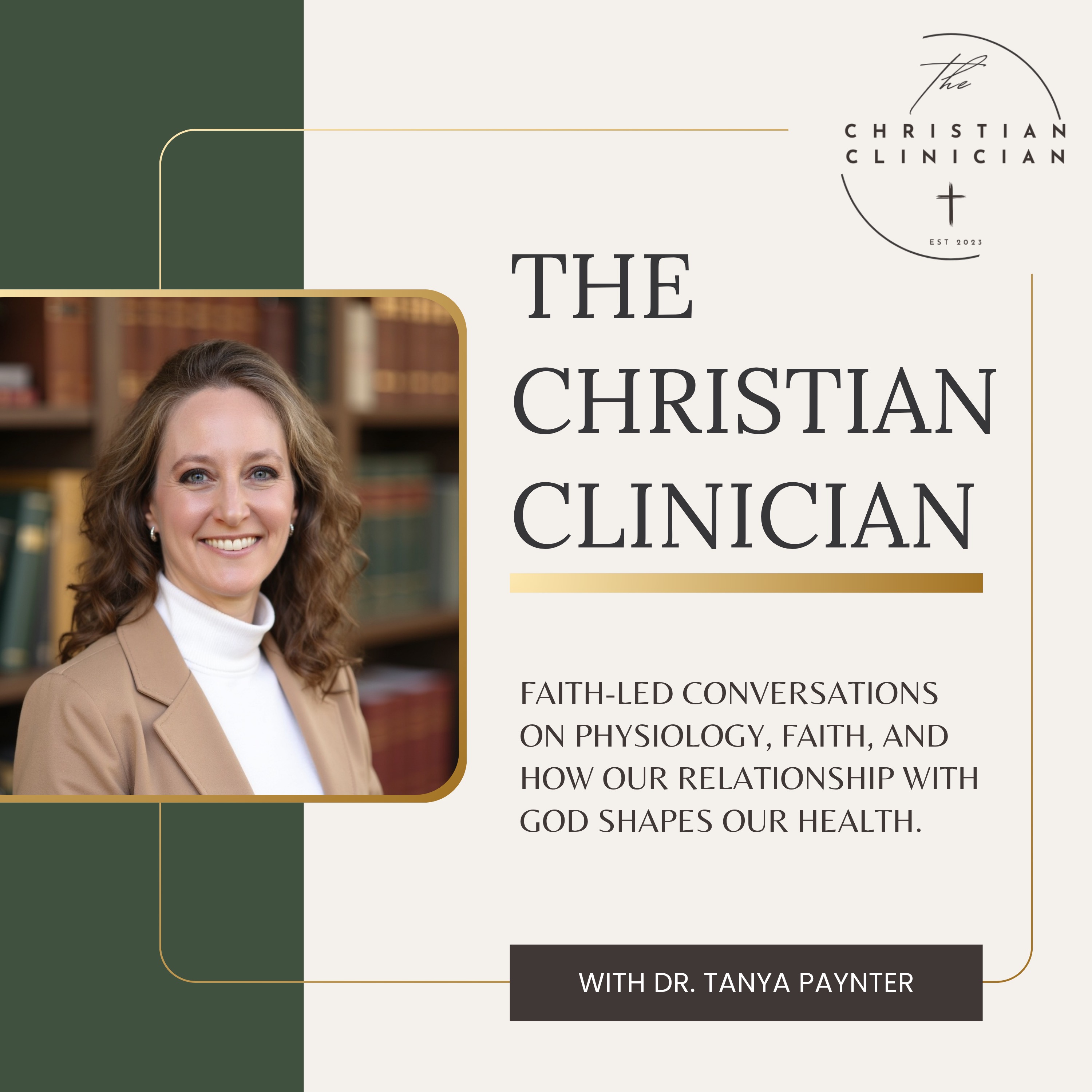
- Why Isn’t My Anxiety Treatment Working? Find the Triggers You May Be Missing
If your anxiety treatment isn’t working the way you hoped, the problem may not be the treatment itself — it may be that you haven’t identified the anxiety triggers actually driving your symptoms. The missing piece may be something you haven’t connected to anxiety at all, which is why changing medications, adding supplements, or trying another stress-management strategy may not be enough.
In this episode of The Christian Clinician, Dr. Tanya Paynter looks at some of the less obvious contributors to anxiety that don’t always get much attention in a conventional anxiety workup. Instead of assuming every case of anxiety needs the same solution, she walks through how patterns in your symptoms can help point you toward the kinds of anxiety treatment that are more likely to fit what’s actually going on.
Could a supplement that seems perfectly reasonable on paper be the wrong choice for you once your nutrient status, genetics, and everything else you’re taking are considered? Could something as ordinary as when you have your coffee, how you use your phone, or where you feel anxiety in your body offer clues about what’s driving it? And could two episodes that you both call “anxiety” actually be coming from very different places?
Some of the clues can be measured. Others require paying attention to patterns you may have never thought were relevant. And some take the investigation in an entirely different direction — into the things you believe about yourself, the relationships around you, and even assumptions about God that you may consciously reject but still react to as though they were true.
In This Episode, You’ll Explore:
- Why conventional anxiety treatment doesn’t work for everyone
- How to start identifying your underlying anxiety triggers
- Which labs are worth discussing with your healthcare provider
- Why expensive specialty testing isn’t necessarily the best place to start
- One five minute practice that can point you to what you’ve been missing
- How to distinguish biochemical anxiety (anxiety as a result of a physical imbalance) from anxiety tied to thoughts, emotions, or circumstances
- Identifying how control may contribute
- How beliefs (sometimes unconscious beliefs) about yourself and God can become part of the anxiety picture
- How relationships impact anxiety (are yours helpful or harmful?)
Anxiety is complicated. The goal of anxiety treatment is to figure out what is actually contributing to your anxiety picture so you know exactly what to address.
Timestamps
00:00 Why your anxiety treatment may be missing something
01:55 Where to start looking for clues
05:34 When your cycle may be telling you something
08:02 How does food impact anxiety levels?
11:06 When more specialized testing might—or might not—help
15:44 The five-minute habit that can reveal patterns
24:27 How to investigate the thoughts and emotions underneath anxiety
30:38 What you can change—and what you can’t - and how control fits into the anxiety picture
41:16 When your beliefs about God become part of the investigation
49:34 What your relationships may be telling you
54:22 How to put the pieces together without becoming overwhelmed
Free Resource
Free Anxiety Symptom-Tracking Sheet
One of the most useful ways to identify your anxiety triggers is to start looking for patterns. Download the symptom-tracking sheet discussed in this episode to track symptoms alongside things like sleep, stress, food, hydration, menstrual-cycle timing, activities, and other factors that may help you see connections you’ve been missing.
Download the free symptom-tracking sheet here:
https://www.psalmmedical.com/season4-signup
Ask The Christian Clinician
Have a question about your relationship with God, the Christian faith, apologetics, or something you’ve been wrestling with that you’d like a different perspective on?
Send your question to support@psalmmedical.com.
You’re welcome to remain anonymous — or, if you’re willing, you may be invited to join me on the podcast to talk through your question together.
Christian Women’s Health Fellowship
Looking for support as you work through your health from a Christian whole-person perspective?
The Christian Women’s Health Fellowship brings Christian women together to explore physical health alongside the mental, emotional, relational, and spiritual pieces that may be affecting their health journey.
Find out more at https://www.psalmmedical.com.
Resources Topics Mentioned
Books:
- The Dawning of Redemption — Dr. Ian Vaillancourt
- The Unfolding of Redemption — Dr. Ian Vaillancourt
Join The Christian Clinician Facebook Group
Christian Women Health and Wellness: Support for Anxiety, Hormones, and Faith
Join us for encouragement, practical health conversations, and weekly discussion tied to the podcast.
https://www.facebook.com/groups/christianwomenhealthandwellness
Where to Find The Christian Clinician
Learn more:
Podcast:
https://www.psalmmedical.com/podcast
Follow The Christian Clinician
YouTube:
https://www.youtube.com/@thechristianclinician
Facebook:
https://www.facebook.com/TheChristianClinician
Facebook Group:
https://www.facebook.com/groups/christianwomenhealthandwellness
Instagram:
https://www.instagram.com/christianclinician/
Substack:
S4E5 - 58m - Oct 15, 2026 - High-Functioning Anxiety in Christian Women: When Responsibility Becomes Control with Ashely Hagamen
Why can’t I stop overthinking—even when I know I’ve done everything I can? Sometimes anxiety doesn’t look like panic or obvious fear. It looks like researching one more thing, planning for every possible outcome, staying productive, taking care of everyone else, and convincing yourself you’re simply being responsible.
But when does wisdom and good stewardship cross over into trying to guarantee that nothing goes wrong? And what happens when the very traits you’ve been praised for—being capable, prepared, productive, and dependable—are also making it harder to let go of control?
In this episode of The Christian Clinician, Dr. Tanya Paynter talks with licensed professional counselor Ashley Hagaman about the mental, emotional, and spiritual side of anxiety in high-functioning Christian women. They explore why a meltdown over something small may have very little to do with what just happened, why accepting help can feel strangely difficult, and how the pressure to “have more faith” can actually add another layer of shame to anxiety.
They also dig into a harder question: How do you know what is actually your responsibility—and what you were never meant to control in the first place? And if busyness has become one of the ways you avoid uncomfortable emotions, what happens when you finally stop long enough to feel them?
In this episode, you’ll explore:
- Why anxiety can hide behind productivity and responsibility
- When problem-solving quietly turns into rumination
- Why being the woman who “has it all together” can become part of the problem
- What a small overreaction may reveal about what’s happening underneath
- Why control can feel useful—even when it’s fueling anxiety
- The guilt and shame Christian women can carry around anxious thoughts
- Why accepting help can feel harder than offering it
- What “take every thought captive” should—and shouldn’t—become
- Why “just have more faith” is such an unhelpful response to anxiety
- What busyness may be protecting you from having to feel
Anxiety doesn’t always look anxious. Sometimes it looks like striving to be the woman everyone else depends on.
Episode Timestamps
00:00 When anxiety looks like responsibility
05:45 Is it really about what just happened?
10:19 When anxiety shows up without obvious thoughts
15:34 Why control can feel so useful
18:35 Where does your responsibility end?
21:39 The pressure to have it all together
25:36 Why accepting help can feel so difficult
30:08 When faith becomes another standard you’re failing
35:19 Does anxiety mean you need more faith?
38:02 The problem with “just have more faith”
39:02 When busyness becomes avoidance
42:22 What anxiety may really be asking you to face
Ask The Christian Clinician
Have a question about your relationship with God, the Christian faith, apologetics, or something you’ve been wrestling with that you’d like a different perspective on?
Send your question to support@psalmmedical.com.
You’re welcome to remain anonymous — or, if you’re willing, you may be invited to join me on the podcast to talk through your question together.
About Ashley Hageman
Ashley Hageman, LPC, is a licensed professional counselor with more than a decade of clinical experience and an adjunct professor of psychology at Cornerstone University. Her work sits at the intersection of psychology, theology, philosophy, and practical Christian mental health. She is also the host of The Created Mind Podcast, where she examines psychological ideas through a Christian worldview. S4E4_Anxiety_Guest_Ashley_Hagam…
Find Ashley here:
The Created Mind Podcast: Listen on Apple Podcasts
The Created Mind on Substack: thecreatedmind.substack.com
Ashley on Substack: @ashleyhageman
Her current podcast and Substack both identify her as Ashley Hageman, LPC. The Created Mind
Join The Christian Clinician Facebook Group
Christian Women Health and Wellness: Support for Anxiety, Hormones, and Faith
Join us for encouragement, practical health conversations, and weekly discussion tied to the podcast.
https://www.facebook.com/groups/christianwomenhealthandwellness
About Dr. Tanya Paynter
Dr. Tanya Paynter is the host of The Christian Clinician, a podcast built on the belief that true whole-person health rests on five pillars: physical health, mental health, emotional health, relationship with God, and Christian fellowship — all connected and communicated through the nervous system.
As a licensed naturopathic physician, Dr. Paynter bridges biblical truth and clinical science — helping Christians understand how our relationship with God and faith practices like worship, prayer, Sabbath, and community shape stress physiology, nervous system health, and long-term wellbeing.
If you're searching for a faith-based functional medicine approach to health that addresses body, mind, spirit, and community together, The Christian Clinician was recorded with you in mind.
Where to Find The Christian Clinician
Learn more at:
Visit the podcast webpage:
https://www.psalmmedical.com/podcast
Follow The Christian Clinician
YouTube:
https://www.youtube.com/@thechristianclinician
Facebook:
https://www.facebook.com/TheChristianClinician
Facebook Group:
https://www.facebook.com/groups/christianwomenhealthandwellness
Instagram:
https://www.instagram.com/christianclinician/
Substack:
S4E4 - 45m - Oct 8, 2026 - Why Do I Always Expect the Worst? Overlooked Factors That May Be Driving Your Anxiety
Why am I anxious for no reason? If you tend to catastrophize, overthink, worry about worst-case scenarios, or feel anxious even when nothing seems obviously wrong, the answer may be more complex than simply “reduce your stress,” “cut back on caffeine,” or “trust God more.”
Sometimes anxiety is being fueled by something you would never think to connect with it — like a favorite food, a supplement meant to help you feel better, or even the anxiety that seems to run in your family.
Could a food you eat regularly be contributing to your anxiety? Could the supplements you're stacking — each one reasonable on its own — actually be creating an overdose that's driving anxious symptoms? Could something you believe you've surrendered to God still be keeping your nervous system on guard? And what happens when the source of your anxiety isn't inside you at all — but in a relationship, an environment, or a responsibility you've assumed you simply have to live with?
In this episode of The Christian Clinician, Dr. Tanya Paynter explores physical, mental, emotional, spiritual, and relational factors that can fuel anxiety — and why figuring out which ones actually apply to you matters for successful treatment.
In This Episode, You'll Explore:
- Why anxiety can show up even when nothing seems obviously wrong
- The physical contributors to anxiety most people never check
- How everyday habits, foods, medications, and supplements can affect treatment
- Why overthinking, catastrophizing, and uncertainty can keep anxiety going long after the trigger is gone
- How grief, trauma, overwhelm, and self-criticism can show up as anxiety
- Why what you believe about God deep down may matter more than what you consciously say you believe
- How certain relationships and responsibilities can become a source of anxiety without you realizing it
- Why finding your own pattern matters more than following a textbook anxiety treatment protocol
Anxiety is rarely just one thing, and the goal is to figure out what’s actually contributing to yours.
Timestamps
00:00 Why anxiety is so complicated
04:11 When anxiety shows up and nothing seems obviously wrong
06:55 The physical contributors most people never check
13:37 When “healthy” choices may be contributing to the problem
20:43 The emotions underneath anxiety
23:27 How your thoughts can keep the fight-or-flight cycle going
25:56 Why uncertainty feels so threatening
29:26 What your deeper beliefs may be contributing (without even being aware of them)
33:04 The spiritual tension you may not realize is there
38:13 When relationships become part of the picture
42:52 What it looks like to bring Jesus into the middle of anxiety
Free Resource
Free Nutrient & Anxiety Handout
Some nutrient deficiencies — and even excesses — can contribute to anxiety, irritability, or physical sensations that feel like anxiety. Download the free handout for a quick reference to the nutrients discussed in this episode and what to look for.
Download the free handout here: https://www.psalmmedical.com/season4-signup
Ask The Christian Clinician
Have a question about your relationship with God, the Christian faith, apologetics, or something you’ve been wrestling with that you’d like a different perspective on?
Send your question to support@psalmmedical.com.
You’re welcome to remain anonymous — or, if you’re willing, you may be invited to join me on the podcast to talk through your question together.
Join The Christian Clinician Facebook Group
Christian Women Health and Wellness: Support for Anxiety, Hormones, and Faith
Join us for encouragement, practical health conversations, and weekly discussion tied to the podcast.
https://www.facebook.com/groups/christianwomenhealthandwellness
About Dr. Tanya Paynter
Dr. Tanya Paynter is the host of The Christian Clinician, a podcast built on the belief that true whole-person health rests on five pillars: physical health, mental health, emotional health, relationship with God, and Christian fellowship — all connected and communicated through the nervous system.
As a licensed naturopathic physician, Dr. Paynter bridges biblical truth and clinical science — helping Christians understand how our relationship with God and faith practices like worship, prayer, Sabbath, and community shape stress physiology, nervous system health, and long-term wellbeing.
If you're searching for a faith-based functional medicine approach to health that addresses body, mind, spirit, and community together, The Christian Clinician was recorded with you in mind.
Where to Find The Christian Clinician
Learn more at:
Visit the podcast webpage:
https://www.psalmmedical.com/podcast
Follow The Christian Clinician
YouTube:
https://www.youtube.com/@thechristianclinician
Facebook:
https://www.facebook.com/TheChristianClinician
Facebook Group:
https://www.facebook.com/groups/christianwomenhealthandwellness
Instagram:
S4E3 - 48m - Oct 1, 2026 - Why One-Size-Fits-All Health Advice Fails: Gut Health, Hormones, Trauma & More
Spend enough time searching for answers to chronic symptoms and you’ll hear a long list of explanations: nervous system dysregulation, unresolved trauma, gut health, parasites, toxins, hormones, Epstein-Barr virus, metabolic dysfunction, mold, Lyme disease, food sensitivities, or inflammation.
Many of these things really can contribute to chronic illness. The problem starts when one of them becomes the explanation for everyone.
In this episode of The Christian Clinician, Dr. Tanya Paynter explores medical reductionism — the tendency to take one legitimate piece of human health and turn it into the single cause of disease. She examines several increasingly popular health philosophies and treatment trends, including German New Medicine, nervous system retraining, trauma-based models of illness, parasite cleanses, terrain theory, detox protocols, gut microbiome approaches, metabolic health, restrictive diets, hormone-focused care, and conventional medicine itself.
The issue is not that these approaches have nothing useful to offer. Trauma does affect physical health. Chronic stress can alter nervous system function. Gut health matters. Hormones matter. Environmental toxins, infections, and diet matters.
But human beings are more complicated than any one explanation.
Dr. Paynter explains why two people with similar symptoms may need completely different approaches, why someone else’s dramatic healing story does not necessarily reveal the cause of your illness, and why chronic health problems often involve several overlapping contributors rather than one hidden culprit.
This is also why health information online can become so confusing. One person says the carnivore diet healed everything. Another says a vegan diet did. Someone else says you need a parasite cleanse, nervous system retraining, detoxification, or treatment for chronic Epstein-Barr. Each may have a compelling testimony — because that approach may genuinely have addressed something important for that individual.
The goal is not to dismiss those possibilities. It is to stop assuming that what helped one person must explain everyone.
This episode continues the Season 4 framework of looking beyond a physical-only model of health without replacing it with a different one-dimensional explanation. Physical health, mental health, emotional health, relationship with God, and relationships with others can all influence what happens in the body — and complex chronic illness often requires looking at more than one piece of the picture.
In this episode, you’ll explore
- Why specialization in medicine is valuable — and where it can become limiting
- The difference between identifying a contributing factor and declaring it the universal cause
- Trauma, emotional conflict, and their effects on physical health
- Nervous system dysregulation and where nervous system retraining can become overly reductionistic
- Detoxification, environmental toxins, mold, pesticides, and heavy metals
- Chronic infections including Epstein-Barr, Lyme disease, and parasites
- Gut microbiome claims and the phrase “all disease begins in the gut”
- Hormones, cortisol, thyroid dysfunction, and endocrine-focused explanations
- How conventional medicine can also become reductionistic
- How to evaluate new health claims without dismissing them or automatically buying into them
- Why individualized testing and a clinician willing to investigate the bigger picture matters in complex or longstanding cases
Episode Timestamps
00:00 Why one explanation usually isn’t enough
02:11 What medical reductionism is — and why it’s so appealing
04:28 When one diagnosis becomes the explanation for everything
06:10 Carnivore diets, parasite cleanses, and one-size-fits-all health claims
10:33 Trauma matters — but does trauma explain every disease?
13:37 Nervous system dysregulation: useful framework or too simplistic?
15:35 Why one protocol can transform one person and fail another
18:36 The detoxification extreme
19:24 Chronic infections, Epstein-Barr, Lyme disease, and parasites
21:41 Gut health and the “all disease begins in the gut” claim
22:02 Diet wars, hormones, cortisol, thyroid, and other single-cause models
24:35 Why something can be true for you without being true for everyone
26:51 What a good doctor should do when they don’t know the answer
28:48 When it may be time to look beyond conventional approaches
30:28 Submit your question to The Christian Clinician
Ask The Christian Clinician
Have a question about your relationship with God, the Christian faith, apologetics, health, or something you’ve been wrestling with that you’d like a different perspective on?
Send your question to support@psalmmedical.com.
You can remain completely anonymous — or, if you're willing, you may be invited to join Dr. Tanya on the podcast to ask your question and talk through it together.
Join The Christian Clinician Facebook Group
Christian Women Health and Wellness: Support for Anxiety, Hormones, and Faith
Join us for encouragement, practical health conversations, and weekly discussion tied to the podcast.
https://www.facebook.com/groups/christianwomenhealthandwellness
Resources & Topics Mentioned
- German New Medicine / Germanic New Medicine
- Biological Decoding
- Recall Healing
- New Thought approaches to illness
- Louise Hay
- Nervous system retraining
- Trauma and autonomic nervous system dysregulation
- Metabolic and cellular health
- Terrain theory
- Detoxification and environmental toxin exposure
- Epstein-Barr virus
- Lyme disease
- Parasites
- Gut microbiome health
- Carnivore and vegan diets
- Seed oils, lectins, gluten, oxalates, and fructose
- Cortisol and hormone imbalance
- Thyroid dysfunction
- Medical Medium
- Functional medicine
- Naturopathic medicine
- Methylene blue
About the Host
Dr. Tanya Paynter is the host of The Christian Clinician, a podcast built on the belief that true whole-person health rests on five pillars: physical health, mental health, emotional health, relationship with God, and Christian fellowship — all connected and communicated through the nervous system.
As a licensed naturopathic physician, Dr. Paynter bridges biblical truth and clinical science — helping Christians understand how our relationship with God and faith practices like worship, prayer, Sabbath, and community shape stress physiology, nervous system health, and long-term wellbeing.
If you're searching for a faith-based functional medicine approach to health that addresses body, mind, spirit, and community together, The Christian Clinician was recorded with you in mind.
Where to Find Dr. Tanya Paynter
Learn more at www.psalmmedical.com
Visit the podcast webpage at https://www.psalmmedical.com/podcast
Follow The Christian Clinician on Social Media
YouTube: https://www.youtube.com/@thechristianclinician
Facebook: https://www.facebook.com/TheChristianClinician
Facebook Group: https://www.facebook.com/groups/christianwomenhealthandwellness
S4E2 - 32m - Sep 24, 2026 - Anxiety, Hormones, Thyroid, and Gut Health: Why Christian Women Aren't Getting Better (And What's Missing)
Many Christian women are dealing with chronic symptoms like anxiety, fatigue, hormone imbalance, thyroid issues, gut problems, insomnia, or feeling "off" in their body — and most health conversations focus almost entirely on physical causes: labs, nutrition, supplements, medications, inflammation, toxins, sleep, and treatment plans. Those pieces matter — but they often don't explain the whole picture.
What if your physical symptoms aren't the beginning of the problem but the end result?
What if everything you've tried hasn't worked because the real contributors are in areas where nobody is looking?
In this opening episode of Season 4 of The Christian Clinician, Dr. Paynter introduces a framework she calls Theophysiology — how our relationship with God, our thoughts, our emotions, our trauma history, and our relationships with others all shape what happens in the physical body. This is not about spiritualizing symptoms or ignoring the physical. It's about recognizing that chronic illness rarely has a single physical cause and that healing often requires going deeper than labs, protocols, and medications.
Season 4 will explore nine real struggles Christian women face — anxiety, hormone imbalance, thyroid issues, gut health, shame, guilt, and the painful question "Why hasn't God healed me yet?" — through five interconnected areas of health that are outlined in this episode with practical conversations about what may be contributing to symptoms and what can be done to address them.
In this episode, you’ll explore
- Why Season 4 will focus on physical health without reducing health to the body alone
- What Theophysiology is and why Dr. Paynter is uses this framework
- How chronic symptoms usually have both physical and non-physical contributors
- How thoughts, emotions, trauma, relationships, and faith can affect physical health
- Why health problems are never uni-directional
- What to expect from Season 4 of The Christian Clinician
- How listeners can submit questions about health, faith, doubts, and spiritual struggles
Episode Timestamps
00:00 Welcome to Season 4 of The Christian Clinician
01:18 Introducing Theophysiology
02:18 Why physical symptoms may not be the first thing going wrong
05:06 Wrestling through the relationship between soul and spirit
06:41 Why we cannot separate health into neat boxes
09:45 Five areas that contribute to physical health
14:33 Why every area affects the others
15:32 Anxiety through the five areas of health
16:45 Hormone imbalance and perimenopause through the five areas
18:32 What Season 4 covers
19:50 What are "health cycles" and how do they work?
23:03 Invitation for listener questions and even a guest spot to be on The Christian Clincian
25:25 Looking ahead
Join The Christian Clinician Facebook Group
Christian Women Health and Wellness: Support for Anxiety, Hormones, and Faith
Join us for encouragement, practical health conversations, and weekly discussions tied to the podcast.
https://www.facebook.com/groups/christianwomenhealthandwellness
Resources Mentioned
- Theophysiology
- Season 4 of The Christian Clinician
- Send listener questions to: support@psalmmedical.com
About the Host
Dr. Tanya Paynter is the host of The Christian Clinician, a podcast built on the belief that true whole-person health rests on five pillars: physical health, mental health, emotional health, spiritual health (relationship with God), and relational health — all connected and communicated through the nervous system. As a licensed naturopathic physician, Dr. Paynter bridges biblical truth and clinical science — helping Christians understand how our relationship with God and faith practices like worship, prayer, Sabbath, and community shape stress physiology, nervous system health, and long-term wellbeing. If you're searching for a faith-based functional medicine approach to health that addresses body, mind, spirit, and community together, The Christian Clinician was recorded with you in mind.
Where to Find Dr. Tanya Paynter
Learn more at www.psalmmedical.com
Visit the podcast webpage at https://www.psalmmedical.com/podcast
Follow The Christian Clinician on Social Media
YouTube: https://www.youtube.com/@thechristianclinician
Facebook: https://www.facebook.com/TheChristianClinician
Facebook Group: https://www.facebook.com/groups/christianwomenhealthandwellness
S4E1 - 26m - Sep 17, 2026 - When Data Lies: How Christians Can Think Clearly About Statistics, COVID, and Creation with Dr. Jason Wilson
Can Christians trust statistics?
We live in a world drowning in data. Medical studies, COVID debates, vaccine claims, creation and evolution arguments, social media headlines, fulfilled prophecy, and apologetics all involve statistics. But when data is used to support opposite conclusions, how do we know what is actually true?
In this episode of The Christian Clinician, Dr. Tanya Paynter talks with Dr. Jason Wilson — professor of statistics at Biola University and author of Statistics and Faith: A Christian Guide to Telling the Truth with Data — about how Christians can become more honest, discerning, and clear-headed when interpreting data. Dr. Wilson holds a PhD in statistics from UC Riverside and an MA in New Testament studies from Biola, and has spent eighteen years teaching Christians to think about numbers with both rigor and faith.
Dr. Wilson explains that statistics is not "just math" — it is a tool for understanding reality. And because Christians are called to love truth, how we collect, organize, analyze, and interpret data is a deeply theological concern. This conversation covers the three dimensions of truth, how worldview and confirmation bias quietly shape interpretation, why COVID vaccine data and natural immunity were so widely misunderstood, what probability can and cannot prove about fulfilled prophecy, and why abiogenesis raises a probability problem that most naturalists struggle to answer.
There is also one number in this episode — the calculated probability of life arising spontaneously from non-life — that may be the most compelling statistical argument for intelligent design you have ever heard.
If you have ever felt confused by conflicting studies, overwhelmed by competing claims, or unsure how to think about data as a Christian, this episode will help you approach statistics with more clarity, humility, and confidence.
In this episode, you’ll explore
- Why Christians are called to care about statistics, data, and truth
- How worldview, bias, and assumptions quietly shape the way we interpret research
- Why COVID vaccine data and natural immunity were more nuanced than either camp admitted
- What the math around fulfilled prophecy actually proves — and where the argument has limits
- Why abiogenesis raises a probability problem that naturalism struggles to answer
- How to evaluate data without cherry-picking it to win an argument
- Why statistics can lower the temperature in polarized conversations
Episode Timestamps
00:00 The probability problem of life arising from non-life
00:51 Introducing Dr. Jason Wilson and Statistics and Faith
05:01 From “statistical apologetics” to Statistics and Faith
09:04 Why the book is accessible for non-math people
12:18 Intellectual honesty, bias, and interpreting data fairly
15:52 The heart check of confirmation bias
17:26 Three dimensions of truth: propositional, experiential, and communal
23:16 How worldview can distort data
30:28 The four parts of statistics
32:02 The statistics around fulfilled prophecy
37:51 Creation, abiogenesis, and the probability of life from non-life
45:03 COVID data and statistical polarization
46:59 Vaccine efficacy, natural immunity, and reading the data honestly
50:30 How statistics can lower the temperature in polarized conversations
52:45 Where to find Statistics and Faith and Dr. Jason Wilson
Join The Christian Clinician Facebook Group
Christian Women Health and Wellness: Support for Anxiety, Hormones, and Faith
Join us for encouragement, practical health conversations, and weekly discussion tied to the podcast.
https://www.facebook.com/groups/christianwomenhealthandwellness
Resources Mentioned
- Statistics and Faith: A Christian Guide to Telling the Truth with Data by Dr. Jason Wilson
- Publisher: InterVarsity Press / IVP Academic
- https://www.ivpress.com/statistics-and-faith
- Amazon: https://a.co/d/0cDtYVa3
- Dr. Jason Wilson’s Biola University faculty page
- https://www.biola.edu/directory/people/jason-wilson
- Dr. Jason Wilson’s personal Biola homepage
- https://sites.google.com/a/biola.edu/jasonwilson/jason-wilsons-home-page
- Biola University Quantitative Consulting Center
- Mentioned in connection with Dr. Wilson’s work at Biola.
- The Return of the God Hypothesis by Stephen C. Meyer
- Mentioned as a helpful resource on intelligent design, materialism, and origin-of-life questions.
- Peter Stoner’s probability argument for fulfilled prophecy
- Discussed in relation to Jesus fulfilling Old Testament prophecies and the importance of independence in probability calculations.
- Fred Hoyle’s junkyard analogy
- Discussed as an illustration of the probability challenge around life arising spontaneously from non-life..
About the Guest
Dr. Jason Wilson is professor of statistics at Biola University, where he oversees the statistics program and directs the Quantitative Consulting Center. He earned his PhD in statistics from UC Riverside and an MA in New Testament studies from Biola University. Dr. Wilson has taught math and statistics at Biola for the past eighteen years, has published more than twenty peer-reviewed journal articles, and is the author of Statistics and Faith: A Christian Guide to Telling the Truth with Data. His work helps Christians think honestly and faithfully about truth, statistics, bias, data, and the calling to love God with both heart and mind.
About the Host
Dr. Tanya Paynter is the host of The Christian Clinician, a podcast built on the belief that true whole-person health rests on five pillars: physical health, mental health, emotional health, relationship with God, and Christian fellowship — all connected and communicated through the nervous system. As a licensed naturopathic physician, Dr. Paynter bridges biblical truth and clinical science — helping Christians understand how our relationship with God and faith practices like worship, prayer, Sabbath, and community shape stress physiology, nervous system health, and long-term wellbeing. If you're searching for a faith-based functional medicine approach to health that addresses body, mind, spirit, and community together, The Christian Clinician was recorded with you in mind.
Where to Find Dr. Tanya Paynter
Learn more at www.psalmmedical.com
Visit the podcast webpage at https://www.psalmmedical.com/podcast
Follow The Christian Clinician on Social Media
YouTube: https://www.youtube.com/@thechristianclinician
Facebook: https://www.facebook.com/TheChristianClinician
Facebook Group: https://www.facebook.com/groups/christianwomenhealthandwellness
54m - Aug 20, 2026 - What Nobody Taught You About the Old Testament (But Should Have) with Dr. Ian Vaillancourt
Does the Old Testament ever feel confusing, disconnected, or hard to reconcile with Jesus?
Many Christians know the Old Testament matters, but when they encounter genealogies, creation, laws about slavery, tabernacle instructions, sacrifices, blessings and curses, or difficult stories in Genesis and Exodus, they can feel lost. Some begin to wonder whether the Old Testament is mostly a collection of moral lessons, strange laws, ancient history, or hard-to-defend passages.
In this episode of The Christian Clinician, Dr. Tanya Paynter welcomes back Dr. Ian Vaillancourt to discuss his book The Dawning of Redemption: The Story of the Pentateuch and the Hope of the Gospel. Dr. Vaillancourt explains how the first five books of the Bible are not random, disconnected, or secondary to the Christian faith. They introduce the story of redemption that finds its fulfillment in Jesus Christ.
Together, they discuss how to read the Old Testament through a biblical-theological lens, why Genesis is not merely trying to answer modern scientific questions, how the Bible reveals God’s interpretation of history, and why genealogies matter more than many of us realize. They also explore how Joseph’s story points beyond Joseph to Judah, the seed of the woman, and ultimately to Christ.
This conversation also addresses some of the difficult moral objections people raise against the Old Testament, including the Law of Moses, slavery, women, war, and whether God approved of ancient cultural practices. Dr. Vaillancourt explains how Torah is better understood as authoritative instruction for God’s redeemed people — not a way to earn salvation, but a way to live as those who belong to Yahweh.
If you have ever struggled to understand the Old Testament, want to understand how the Old Testament connects to Jesus and the Gospel, or felt unsure how to answer hard questions about creation, the law, genealogies, or slavery in the Bible, this conversation will help you see the Pentateuch with fresh eyes.
In this episode, you’ll explore
- Why the Old Testament is not a disconnected collection of stories and laws
- How the Pentateuch introduces the Bible’s big story of redemption
- Why every part of the Old Testament has a role in pointing us to Jesus
- How the Bible reveals God’s interpretation of history, not just historical events
- Why Genesis 1–2 should first be read on its own biblical terms
- How creation reveals Yahweh as the God over all creation, not one local deity among many
- Why the names Elohim and Yahweh matter when reading Genesis
- How genealogies trace the seed of the woman and the hope of redemption
- Why Joseph is a supporting actor and Judah is central in the drama of redemption
- How Torah as “authoritative instruction” reframes the Law of Moses
- Why gospel comes before law in Exodus and in the Christian life
- How Old Testament laws show Israel how to represent Yahweh differently from the surrounding nations
- How reading the Old Testament well strengthens faith, worship, and confidence in Scripture
Episode Timestamps
00:00 Difficult Old Testament laws and representing God differently
01:16 Introducing Dr. Ian Vaillancourt and The Dawning of Redemption
01:55 Dr. Vaillancourt’s background in Old Testament, Hebrew, and seminary teaching
02:40 Why he wrote The Dawning of Redemption
03:52 Biblical theology and seeing the big picture of Scripture
05:29 How these books changed Dr. Tanya’s understanding of the Old Testament
06:57 The main thesis: the Bible tells the story of God redeeming a people for Himself
09:11 Creation, Eden, genealogy, covenant, Exodus, Torah, tabernacle, unbelief, and blessing
10:13 What happens when churches stop reading the Old Testament as moralism
12:41 Reading the Old Testament without feeling lost
13:15 Difference between The Dawning of Redemption and Unfolding Redemption
15:21 The Bible as God’s interpretation of historical events
17:31 Why Scripture gives us more than being a “fly on the wall”
20:05 Creation, evolution, and asking the questions the Bible leads us to ask
23:07 Why Genesis begins the Bible and the Pentateuch
25:56 Science, Scripture, worldview, and biblical lenses
28:23 Elohim, Yahweh Elohim, and the personal covenant name of God
32:45 Why the serpent depersonalizes God in Genesis 3
33:36 How English Bibles signal the name Yahweh
35:52 Genealogies, Genesis 3:15, and the seed of the woman
40:55 Why Joseph is not the main character in the final section of Genesis
43:28 Why Judah matters in the lineage of Jesus
46:32 Torah, Law of Moses, and authoritative instruction
48:46 Gospel before law: “I am Yahweh your God who brought you out of Egypt”
51:08 Bearing the name of Yahweh and representing God in the world
53:19 Slavery, women, ancient culture, and living differently as God’s people
54:23 Where to find The Dawning of Redemption and Unfolding Redemption
Join The Christian Clinician Facebook Group
Christian Women Health and Wellness: Support for Anxiety, Hormones, and Faith
Join us for encouragement, practical health conversations, and weekly discussion tied to the podcast.
https://www.facebook.com/groups/christianwomenhealthandwellness
Resources Mentioned
- The Dawning of Redemption: The Story of the Pentateuch and the Hope of the Gospel by Dr. Ian Vaillancourt
- Unfolding Redemption: The Heart of the Gospel in the Story of Old Testament History by Dr. Ian Vaillancourt
- Previous episode with Dr. Ian Vaillancourt on Unfolding Redemption
- Preaching Christ from the Old Testament by Sidney Greidanus
- The Reason for God by Timothy Keller
- Graham Goldsworthy
- Gerhardus Vos
- Christopher Wright
- Daniel Block
- Carmen Imes
- Crossway
- InterVarsity Press
- 10ofthose.com
- Amazon
About the Guest
Dr. Ian Vaillancourt is professor of Old Testament and Hebrew and director of distance learning at Heritage Theological Seminary. He is an ordained pastor in the Fellowship of Evangelical Baptists in Canada and previously pastored for fourteen years. Dr. Vaillancourt is the author of The Dawning of Redemption and Unfolding Redemption, both of which help Christians see the storyline of Scripture and understand how the Old Testament points forward to Jesus Christ.
About the Host
Dr. Tanya Paynter is the host of The Christian Clinician, a podcast built on the belief that true whole-person health rests on five pillars: physical health, mental health, emotional health, relationship with God, and Christian fellowship — all connected and communicated through the nervous system. As a licensed naturopathic physician, Dr. Paynter bridges biblical truth and clinical science — helping Christians understand how our relationship with God and faith practices like worship, prayer, Sabbath, and community shape stress physiology, nervous system health, and long-term wellbeing. If you're searching for a faith-based functional medicine approach to health that addresses body, mind, spirit, and community together, The Christian Clinician was recorded with you in mind.
Where to Find Dr. Tanya Paynter
Learn more at www.psalmmedical.com
Visit the podcast webpage at https://www.psalmmedical.com/podcast
Follow The Christian Clinician on Social Media
YouTube: https://www.youtube.com/@thechristianclinician
Facebook: https://www.facebook.com/TheChristianClinician
Facebook Group: https://www.facebook.com/groups/christianwomenhealthandwellness
S3E27 - 56m - Aug 6, 2026 - When Faith Feels Like Duty: How to Awaken Delight in God Again with Stephanie Rousselle (S3E26)
Is your Christian life full of activity but missing delight?
Many Christians are doing the right things: going to church, studying Scripture, serving, praying, listening to podcasts, and trying to live faithfully. But underneath it all, they feel tired, distracted, spiritually dry, or disconnected from the deep delight they once had in God.
In this episode of The Christian Clinician, Dr. Tanya Paynter talks with Stephanie Roussel, author of Awaken Delight. Stephanie shares her story of growing up as an atheist in France, coming to faith through the witness of an American Christian family, and eventually building a ministry around helping weary Christians rediscover delight in God.
This conversation explores why delight in God may be one of the missing pieces in Western Christianity. Stephanie and Dr. Paynter discuss chronic pain, migraines, suffering, busyness, self-sufficiency, and the painful but gracious ways God uses trials to prune what is good in order to make room for what is best.
They also talk about the “counterfeit flavors” that steal delight: anxiety, guilt, shame, fear, overwhelm, addiction, busyness, and the distractions that can masquerade as something meaningful while leaving the soul empty. True delight in God is not shallow happiness, self-help, or pretending life is easy. It is a deep relational orientation toward God that can hold us steady even in pain.
If you feel like Jesus has slipped to the edges of your life, if faith has started to feel more like duty than delight, or if suffering has left you wondering how to experience God’s goodness again, this episode offers a thoughtful and hope-filled invitation back to the joy of knowing Him.
In this episode, you’ll explore
- Why delight in God may be the missing piece in many Christians’ faith
- How Stephanie Roussel came to Christ after growing up as an atheist in France
- Why chronic pain and suffering can deepen trust in God
- How God uses trials to prune good things so better fruit can grow
- Why busyness, anxiety, guilt, shame, fear, and overwhelm often counterfeit delight
- How delight in God changes the way we approach our daily to-do lists
- Why Jesus modeled delight in the Father by regularly withdrawing to be with Him
- The difference between self-help and asking God to awaken delight
- Why knowing the true Jesus of Scripture is essential for real relationship with God
- Three practices for awakening delight
Episode Timestamps
00:00 Why this episode may bring an unexpected “aha” moment
01:32 From atheist in France to follower of Christ
04:37 Why Gospel Spice began and who Stephanie serves
06:48 Is delight in God the missing piece in Western Christianity?
07:57 Chronic pain, migraines, and learning to trust God in suffering
10:50 Philippians 3:10 and fellowship in Christ’s sufferings
13:14 Pain, self-sufficiency, surrender, and God’s cleansing work
17:14 The gardener, pruning, and why God cuts even good branches
21:32 What plants and suffering teach us about strength and fruit
23:34 Counterfeit delight: busyness, anxiety, guilt, shame, fear, and overwhelm
26:33 The expulsive power of a new affection
27:20 Sabbath, delight, and relational time with God
30:52 When your to-do list is not the list God gave you
33:27 Why divine delight must be remembered daily
39:31 Three steps to awaken delight in God
51:10 Where to find Stephanie Roussel and Awaken Delight
Join The Christian Clinician Facebook Group
Christian Women Health and Wellness: Support for Anxiety, Hormones, and Faith
Join us for encouragement, practical health conversations, and weekly discussion tied to the podcast.
https://www.facebook.com/groups/christianwomenhealthandwellness
Resources Mentioned
- Awaken Delight by Stephanie Roussel and Gospel Spice Ministries
- https://www.amazon.com/dp/1514013584?lv=shuf&channelId=500&plpRedirect=mhFallback
- https://www.gospelspice.com/
- Free 5-day digital devotional from Gospel Spice
- https://www.gospelspice.com/free
- Bible References
- Philippians 3:10
- John 15
- Psalm 37:4
- A.W. Tozer quote: “What comes into our minds when we think about God is the most important thing about us.”
- Tozer, A.W. The Knowledge of the Holy. New York: Harper & Row, 1961.
- C.S. Lewis, The Problem of Pain
- Thomas Chalmers: “The Expulsive Power of a New Affection”
- https://www.amazon.com/s?k=expulsive+power+of+a+new+affection&i=stripbooks&hvadid=694414042713&hvdev=c&hvexpln=67&hvlocphy=9033785&hvnetw=g&hvocijid=15656855367537345453--&hvqmt=e&hvrand=15656855367537345453&hvtargid=kwd-377306261441&hydadcr=22595_13531227&mcid=eeb453d0cbbf381d941b31c2fa271784&tag=googhydr-20&ref=pd_sl_39xz77npm2_e_p67
About the Guest
Stephanie Roussel is a Bible teacher, speaker, host of the Gospel Spice podcast, and founder of Gospel Spice Ministries. Born and raised in France, Stephanie grew up as an atheist before coming to faith in Christ as a foreign exchange student in the United States. Her life motto is now “God’s glory, our delight.” Having lived in four countries, Stephanie now lives with her family in Pennsylvania and helps weary Christians rediscover the beauty, depth, and delight of knowing God.
Connect with Stephanie Roussel:
Website: https://gospelspice.com
Book website: https://awakenedelight.net
Podcast: Gospel Spice
About the Host
Dr. Tanya Paynter is the host of The Christian Clinician, a podcast built on the belief that true whole-person health rests on five pillars: physical health, mental health, emotional health, relationship with God, and Christian fellowship — all connected and communicated through the nervous system. As a licensed naturopathic physician, Dr. Paynter bridges biblical truth and clinical science — helping Christians understand how our relationship with God and faith practices like worship, prayer, Sabbath, and community shape stress physiology, nervous system health, and long-term wellbeing. If you're searching for a faith-based functional medicine approach to health that addresses body, mind, spirit, and community together, The Christian Clinician was recorded with you in mind.
Where to Find Dr. Tanya Paynter
Learn more at www.psalmmedical.com
Visit the podcast webpage at https://www.psalmmedical.com/podcast
Follow The Christian Clinician on Social Media
YouTube: https://www.youtube.com/@thechristianclinician
Facebook: https://www.facebook.com/TheChristianClinician
Facebook Group: https://www.facebook.com/groups/christianwomenhealthandwellness
S3E26 - 53m - Jul 23, 2026 - When Evangelism Feels Like a Dirty Word: The Psychology of Sharing Your Faith with Dr. Mark Teasdale (S3E25)
What if the reason sharing your faith feels so hard isn't a character flaw — it's actually completely understandable, and there's a name for it?
For many Christians, evangelism doesn't feel joyful or natural. It feels intimidating, shame-loaded, confrontational, or even manipulative. Maybe you were taught that evangelism meant knocking on doors, handing out tracts, arguing someone into belief, or reporting whether you "saved any souls" that week. If that sounds familiar, it makes complete sense that the word evangelism still carries anxiety, guilt, or dread.
In this episode of The Christian Clinician, Dr. Tanya Paynter talks with Dr. Mark Teasdale — President of United Theological Seminary and author of Socially Awkward Evangelism — about why sharing your faith can feel so uncomfortable, what psychology tells us is actually happening beneath the surface, and what a more biblical, grace-filled approach actually looks like.
Dr. Teasdale explains how fear of judgment, social anxiety, shame, fear of harming others, and deeply ingrained bad assumptions about evangelism can keep Christians silent. He and Dr. Paynter also unpack a fact that may change everything: research suggests it takes an average of 76 interactions with Christians before a non-Christian comes to faith. You are almost never closing the deal — you are one faithful link in a long chain. And the Holy Spirit is the one doing the converting.
This conversation also explores how tools like body awareness, prayer, and acceptance-based practices can help you recognize fear without being ruled by it — and why miracles follow mission when we take even small, faithful steps.
Note: Dr. Teasdale's publisher InterVarsity Press offers 14 free downloadable practice appendices from the book — including prayer and mindfulness exercises. No purchase required. Find them at the https://www.ivpress.com/Media/Default/Downloads/Excerpts-and-Samples/A1425-online-appendixes.pdf.
In This Episode, You'll Explore:
- Why evangelism often feels awkward, shame-filled, or like a dirty word — and why that's understandable
- How social anxiety and fear of judgment affect sharing your faith
- Why some Christians fear harming others or coming across as pushy and judgmental
- How bad evangelism training creates pressure, guilt, and long-term avoidance
- Why evangelism is not about "saving souls" yourself — and who actually does the converting
- The 76 interactions research and what it means for how you share your faith
- How prayer can be your first step when you're not ready to speak
- Why body awareness and mindfulness can help you notice and move through fear
- How to share your faith persuasively and ethically — without manipulation
- Why different Christians witness differently — and all of it counts
Episode Timestamps:
- 00:00 — Evangelism shame and why you are not alone
- 00:50 — Introducing Dr. Mark Teasdale and Socially Awkward Evangelism
- 01:35 — Why evangelism can feel like a dirty word
- 02:20 — Dr. Teasdale's background in evangelism and practical theology
- 03:04 — How social anxiety shaped the book
- 05:17 — Why de-churched culture makes evangelism harder
- 07:01 — Fear of being judged vs. fear of harming others
- 08:39 — Why this book is practical, not a psychology textbook
- 09:55 — Free online practices and appendices from InterVarsity Press
- 10:34 — Can Christians use mindfulness?
- 12:09 — Why the body matters in fear, anxiety, and evangelism
- 14:52 — Mindfulness as body awareness, not New Age spirituality
- 16:17 — Social anxiety, shame, and sharing the gospel
- 17:42 — Jesus calling people into socially uncomfortable witness
- 20:10 — Persuasion without manipulation
- 22:25 — Who actually converts people?
- 23:55 — Faulty assumptions about evangelism
- 26:38 — Shame from youth group evangelism training
- 27:48 — Different evangelism styles and spiritual gifts
- 30:04 — The 76 interactions idea and being one link in the chain
- 32:31 — Evangelism through acts of love and service
- 34:15 — Start with prayer before speaking
- 36:00 — Asking God for courage over time
- 38:26 — Miracles follow mission
- 39:27 — Where to find Socially Awkward Evangelism and Dr. Teasdale
Resources Mentioned:
- Socially Awkward Evangelism by Dr. Mark Teasdale (InterVarsity Press)
- Free downloadable appendices and practice exercises — https://www.ivpress.com/Media/Default/Downloads/Excerpts-and-Samples/A1425-online-appendixes.pdf
- Acceptance and Commitment Therapy (ACT)
- Alan Hirsch and Tim Catchim's evangelism matrix (Permanent Revolution)
- Dr. Mark Teasdale's website: https://markteasdale.net/
About the Guest Dr. Mark Teasdale is President of United Theological Seminary in Dayton, Ohio, and previously served as the E. Stanley Jones Professor of Evangelism at Garrett Evangelical Theological Seminary. His work focuses on evangelism, practical theology, and how Christians can faithfully witness in today's cultural landscape. Socially Awkward Evangelism brings together psychology, social anxiety, persuasion theory, and Christian witness into one accessible, grace-filled guide.
Join the Community
Are you a Christian woman navigating faith, anxiety, and whole-person health? Join Christian Women Health and Wellness: Support for Anxiety, Hormones, and Faith — a free Facebook group for encouragement, practical health conversations, and weekly discussion tied to the podcast. 👉 facebook.com/groups/christianwomenhealthandwellness
About the Host Dr. Tanya Paynter is the host of The Christian Clinician, a podcast built on the belief that true whole-person health rests on five pillars: physical health, mental health, emotional health, relationship with God, and Christian fellowship — all connected and communicated through the nervous system. As a licensed naturopathic physician, Dr. Paynter bridges biblical truth and clinical science — helping Christians understand how faith practices like worship, prayer, Sabbath, and community shape stress physiology, nervous system health, and long-term wellbeing. If you're searching for a faith-based functional medicine approach to health that addresses body, mind, spirit, and community together, The Christian Clinician was recorded with you in mind.
Connect with Dr. Tanya Paynter & The Christian Clinician:
- 🌐 www.psalmmedical.com
- 🎙️ psalmmedical.com/podcast
- ▶️ @thechristianclinician
- 📘 TheChristianClinician
- 👥 Christian Women Health and Wellness
- 📸 @christianclinician
S3E25 - 43m - Jul 9, 2026 - Why the Church Is So Tired — Sabbath, Rest, and the Science of Stress with Dr. Amy Erickson and Dr. Gregory Wagenfuhr
Why does the church feel so tired?
Many Christians know they need rest, but even after a day off, a vacation, or a slower weekend, the deeper restlessness often remains. In this episode of The Christian Clinician, Dr. Tanya Paynter talks with Dr. Amy Erickson and Dr. Gregory Wagenfuhr about their book Sabbath Gospel and a renewed vision of Sabbath, work, rest, and the mission of the church.
This conversation moves beyond Sabbath as a personal health practice or weekly day off. Dr. Erickson and Dr. Wagenfuhr explain Sabbath as a much larger gospel reality: God’s rest, God’s kingdom, and the household of God breaking into a restless world. They discuss why the church is weary, how Christians often try to create rest on their own terms, and why false versions of rest can leave us more anxious, self-focused, and disconnected from one another.
Together, they explore the idea of the “dream home”—the personal, cultural, and institutional ways we try to control life enough to finally feel secure. But that kind of rest never satisfies for long. True Sabbath rest is not found in control, success, productivity, or self-protection. It is received from God and then lived out in community as we learn to carry one another’s burdens.
This episode also connects Sabbath to stress physiology, nervous system health, and Christian formation. When we stop seeing church as only a worship event and begin seeing it as a formative household of God, rest becomes more than something we take for ourselves. It becomes something we receive, practice, and give.
In this episode, you’ll explore
- Why the church feels tired, weary, and spiritually exhausted
- How Sabbath Gospel reframes Sabbath as more than a weekly day off
- The difference between taking rest for yourself and giving rest to others
- Why trying to build your own “dream home” often leads to deeper restlessness
- How Sabbath exposes the false promise of control, success, and self-protection
- Why Sabbath is connected to God’s kingdom, not just personal wellness
- How the church can become a household of rest instead of another system of exhaustion
- Why serving through your God-given gifts can become restful, life-giving work
- How community, burden-bearing, and Christian fellowship shape stress physiology and formation
Episode Timestamps
00:00 Sabbath, physiology, and why church forms us
00:45 Introducing Sabbath Gospel
01:38 Why write a book on Sabbath and the tired church?
04:12 Who this book is for: pastors, churches, and thoughtful Christians
06:14 Sacrifice, Christ’s blood, and Sabbath in the biblical story
10:02 The “dream home” and the false promise of control
13:53 Sin as something we commit and something we are caught in
16:26 Sabbath as more than a day off
18:14 Giving rest, not just taking rest
20:25 Sabbath as heart posture and practice
22:41 Sabbath, the Ten Commandments, Sabbath year, and Jubilee
26:40 The danger of using Sabbath only as a health practice
30:39 Why the church is tired: wrong work vs life-giving work
35:13 Church as a place of formation, not just a worship event
38:19 Practical questions for churches and communities
42:09 Where to find Sabbath Gospel and the authors
Join The Christian Clinician Facebook Group
Christian Women Health and Wellness: Support for Anxiety, Hormones, and Faith
Join us for encouragement, practical health conversations, and weekly discussion tied to the podcast.
https://www.facebook.com/groups/christianwomenhealthandwellness
Resources Mentioned
- Sabbath Gospel by Dr. Amy Erickson and Dr. Gregory Wagenfuhr
- https://www.amazon.com/Sabbath-Gospel-Narrative-Time-Church/dp/1514009544
- Matthew 11: “Come to me, all who are weary…”
- 1 Corinthians 12 and the body of Christ
- Dr. Gregory Wagenfuhr: www.gpwagenfuhr.com
- Dr. Amy Erickson: https://stmarks.edu.au/about-our-people-dr-amy-erickson/
About the Guests
Dr. Gregory Wagenfuhr is a pastor, theologian, and co-author of Sabbath Gospel. His work explores theology, church formation, Scripture, and the life of the church in a tired and restless age.
Dr. Amy Erickson is a theologian, scholar, and co-author of Sabbath Gospel. She serves at St. Mark’s National Theological Centre in Canberra, Australia, and brings deep biblical and theological insight into Sabbath, rest, the household of God, and the work of the church.
About the Host
Dr. Tanya Paynter is the host of The Christian Clinician, a podcast built on the belief that true whole-person health rests on five pillars: physical health, mental health, emotional health, relationship with God, and Christian fellowship — all connected and communicated through the nervous system. As a licensed naturopathic physician, Dr. Paynter bridges biblical truth and clinical science — helping Christians understand how our relationship with God and faith practices like worship, prayer, Sabbath, and community shape stress physiology, nervous system health, and long-term wellbeing. If you're searching for a faith-based functional medicine approach to health that addresses body, mind, spirit, and community together, The Christian Clinician was recorded with you in mind.
Where to Find Dr. Tanya Paynter
Learn more at www.psalmmedical.com
Visit the podcast webpage at https://www.psalmmedical.com/podcast
Follow The Christian Clinician on Social Media
YouTube: https://www.youtube.com/@thechristianclinician
Facebook: https://www.facebook.com/TheChristianClinician
Facebook Group: https://www.facebook.com/groups/christianwomenhealthandwellness
S3E24 - 43m - Jun 25, 2026 - Why You Never Feel Like You Have Enough Time: Sabbath Reset Busy Christians Need (S3E23)
What if anxiety, poor sleep, and mood shifts are your body's way of telling you something about your relationship with God?
In this episode of The Christian Clinician, Dr. Tanya Paynter closes the Sabbath series with a deeply personal application episode — sharing her own story of taking a priority assessment that revealed her actual life looked nothing like the priorities she believed she held. God, family, health, and business were ordered one way in her mind. Where she focused her time and resources told a completely different story.
This episode is about the gap between the priorities we believe we hold and the ones our daily lives actually reflect — and what to do about it. Dr. Paynter explains how anxiety, disrupted sleep, irritability, and mood shifts can serve as early warning signals that our Godward orientation has drifted, and that we may be substituting learning about God for actually spending relational time with Him.
From there, she walks through four practical, grace-filled steps to begin building micro-Sabbath habits into everyday life — small, sustainable ways to reorient your day around God rather than fitting God around your day.
This episode is especially for you if you feel like you never have enough time, struggle to make God your first priority, find yourself substituting theology podcasts and worship music for actual conversation with Him, or notice stress and anxiety rising as your days get fuller.
In This Episode, You'll Explore:
- Why Sabbath rest is a daily orientation, not just a weekly practice
- How your actual priorities — revealed by how you spend your time and resources — may differ from the ones you believe you hold
- Why anxiety, poor sleep, irritability, and mood shifts can signal spiritual and relational drift
- The difference between learning about God and spending relational time with Him
- How to include God in ordinary daily tasks
- How stress, sleep changes, and mood shifts become your early-warning system for spiritual drift
- How we can use a small daily sacrifice of time as our worship to Him
Episode Timestamps:
00:00 — When your stated priorities don't match your actual life
00:53 — Practicing Sabbath as a daily habit with God
02:10 — The priority test that exposed what was really first
05:02 — What your time and money reveal about your true priorities
06:42 — Learning about God vs. spending relational time with God
08:33 — Anxiety as a warning signal that something is off
10:13 — Bringing God into the ordinary tasks
11:29 — Practical Step 1: Evaluate
18:37 — Practical Step 2: Invite
19:22 — Practical Step 3: Remind
23:22 — Practical Step 4: Dedicate
26:23 — Recognizing stress, sleep changes, and mood shifts as signals
28:17 — Closing encouragement
Join The Christian Clinician Facebook Group
Christian Women Health and Wellness: Support for Anxiety, Hormones, and Faith
Join us for encouragement, practical health conversations, and weekly discussion tied to the podcast.
https://www.facebook.com/groups/christianwomenhealthandwellness
Scripture Referenced:
- Romans 12:1–2 — living sacrifice; renewing the mind
- Psalm 1 — meditating on the Word day and night
About the Host
Dr. Tanya Paynter is the host of The Christian Clinician, a podcast built on the belief that true whole-person health rests on five pillars: physical health, mental health, emotional health, relationship with God, and Christian fellowship — all connected and communicated through the nervous system. As a licensed naturopathic physician, Dr. Paynter bridges biblical truth and clinical science — helping Christians understand how faith practices like worship, prayer, Sabbath, and community shape stress physiology, nervous system health, and long-term wellbeing. If you're searching for a faith-based functional medicine approach to health that addresses body, mind, spirit, and community together, The Christian Clinician was made for you.
Where to Find Dr. Tanya Paynter
Learn more at www.psalmmedical.com
Visit the podcast webpage at https://www.psalmmedical.com/podcast
Follow The Christian Clinician on Social Media
YouTube: https://www.youtube.com/@thechristianclinician
Facebook: https://www.facebook.com/TheChristianClinician
Facebook Group: https://www.facebook.com/groups/christianwomenhealthandwellness
Instagram: https://www.instagram.com/christianclinician/
S3E23 - 29m - Jun 18, 2026 - Breaking Patterns of Anxiety, Insomnia, and Burn Out with Dr. Natasha Tubbs (S3E21)
Sabbath often gets reduced to "a day off." But what if Sabbath isn't just stopping work — what if it's a whole way of life that exposes anxiety, reshapes identity, and restores the nervous system over time?
In this episode of The Christian Clinician, Dr. Tanya Paynter sits down with Dr. Natasha Tubbs to explore how practicing Sabbath as a way of life helped resolve debilitating anxiety, restore sleep, and reduce chronic pain and inflammation. Natasha shares her journey through burnout, overwhelming anxiety, and a nerve condition that affected her ability to speak and work — and what shifted when God revealed she was confusing capability with grace: saying yes to everything because she could, while her body was clearly saying no.
Together, they unpack Sabbath not as self-care, not as a catch-up day, and not as something you earn by finishing your to-do list — but as worship. Natasha explains how a weekly 24-hour Sabbath reshaped the other six days of her week, helping her live from rest instead of crashing into it. The results were measurable: anxiety resolved, mental clarity returned, sleep improved, and pain and inflammation decreased.
This episode is especially for the high-achieving Christian woman who feels like rest is irresponsible, who ties her worth to productivity, or who has tried "time off" but still doesn't feel restored.
In This Episode, You'll Explore:
- Why Sabbath is more than a day off — it's a way of life that reshapes the other six days
- How anxiety can be rooted in identity, worth, and chronic over-functioning
- Capability vs. grace: why you can do more than you were ever meant to carry
- Why Sabbath is worship, not self-care — and why catch-up days don't restore the nervous system
- How micro-Sabbath habits build rest throughout the week
- How Sabbath practice can improve sleep, mental clarity, and stress reactivity over time
- Why Sabbath exposes the "doing over being" problem and invites deeper trust in God
Episode Timestamps:
- 00:00 — Sabbath exposes anxiety and the "doing over being" pattern
- 01:33 — Introducing Dr. Natasha Tubbs
- 02:37 — Burnout, nerve pain, and anxiety: what life looked like before Sabbath
- 05:36 — Capability vs. grace: why "yes to everything" breaks the body
- 07:22 — Sabbath as a way of life, not just one day
- 09:55 — What Sabbath looks like practically in different seasons
- 12:25 — Sabbath vs. self-care vs. catch-up day
- 17:28 — Worth, performance, and why anxiety grows
- 20:12 — What changed: anxiety resolved, sleep restored, pain and inflammation reduced
- 23:22 — Micro-habits to start: put away the list, practice presence, build slowly
- 29:25 — Where to find Dr. Tubbs
Join The Christian Clinician Facebook Group
Christian Women Health and Wellness: Support for Anxiety, Hormones, and Faith
Join us for encouragement, practical health conversations, and weekly discussion tied to the podcast.
https://www.facebook.com/groups/christianwomenhealthandwellness
Resources Mentioned
- Psalm 46:10 (be still and know)
- Mark 2:27 (Sabbath made for man)
- James 2 (faith and works)
- Rich Villodas (quoted about Sabbath and worth)
- Dr. Natasha Tubbs’ website: sabbathandshalom.com
About the Guest
Dr. Natasha Tubbs is an adjunct professor specializing in apologetics and leadership at Manna University in North Carolina. She is a writer with Women in Apologetics and contributes to ethical training in religious studies for AI. She is also transitioning into UX design and Python programming to help develop human-centered, ethically informed AI tools.
Connect with Dr. Natasha Tubbs:
Website: https://sabbathandshalom.com
Instagram/Facebook: Natasha Tubbs
About the Host
Dr. Tanya Paynter is the host of The Christian Clinician, a podcast exploring faith, physiology, and the nervous system—how biblical practices shape stress response, emotional resilience, and long-term physical health. As a licensed naturopathic physician, she helps Christians pursue health without separating the body from the soul.
Where to Find Dr. Tanya Paynter
Learn more at www.psalmmedical.com
Visit the podcast webpage at https://www.psalmmedical.com/podcast
Follow The Christian Clinician on Social Media
YouTube: https://www.youtube.com/@thechristianclinician
Facebook: https://www.facebook.com/TheChristianClinician
Facebook Group: https://www.facebook.com/groups/christianwomenhealthandwellness
S3E21 - 30m - Jun 11, 2026 - Sabbath Isn't Just a Day Off: Rest in Christ, Stress Recovery, and Burnout Prevention (S3E20)
Sabbath is one of the most misunderstood practices in the Christian life — and one of the most healing ones, physically and spiritually.
In this teaching episode, Dr. Tanya Paynter walks through the biblical foundation of Sabbath from creation through the Ten Commandments, then shows how Sabbath ultimately points to Jesus — our true rest — under the New Covenant. This is not a legalistic rule to follow. It's an invitation into something deeper.
Dr. Paynter also connects Sabbath to stress physiology and nervous system recovery. A weekend off does not automatically produce real rest if your body is still carrying chronic stress, low control, and unresolved strain. True Sabbath rest reorients your mind and attention toward God in a way that actually calms the stress response and allows the body to recover over time.
This episode also introduces a new, yet Biblical, concept — Sabbath doesn’t have to be an entire day. It can include “micro-Sabbath” moments—short, intentional pauses throughout the day to step out of task-to-task pressure, check in with God, and let recovery accumulate even when a full day of rest feels impossible.
If you feel exhausted even after time off, struggle to truly rest, or have wondered what Sabbath really means for Christian women today — this episode gives you a clearer, more freeing picture.
In this episode, you’ll explore
- Why Sabbath is more than “a day off” and what Scripture says about how it’s tied to relationship with God
- Sabbath in Genesis and the Ten Commandments: why it’s grouped with God-relationship commands
- How Sabbath points to Jesus and the finished work of Christ (rest under the New Covenant)
- Why a day off doesn’t always restore the body when stress remains high
- What research suggests about Sabbath, burnout, wellbeing, and recovery
- How micro-breaks and “mini Sabbaths” can reduce stress reactivity during the week
- How Sabbath becomes reorientation—resting in God, not just resting from work
Episode Timestamps
00:00 Sabbath isn’t just a day off
01:40 Sabbath in Genesis: creation and ongoing rest
03:17 Sabbath in the Ten Commandments and why it matters
06:10 Sabbath under the New Covenant: rest in Christ (Colossians 2; Hebrews 4)
09:03 What Sabbath looks like practically: worship, connection, delight
11:31 What research says: Sabbath, wellbeing, burnout, recovery
14:32 Why a day off doesn’t always equal recovery (stress load + control)
16:54 Micro-Sabbath breaks: rest throughout the day
18:50 Key takeaway: reorientation toward God, not just stopping
22:48 Invitation: micro-Sabbath throughout your day + next steps
Join the Facebook Group!
Join us for encouragement, practical health conversations, and weekly discussion tied to the podcast.
Christian Women Health and Wellness: Support for Anxiety, Hormones, and Faith
https://www.facebook.com/groups/christianwomenhealthandwellness
Resources Mentioned
- Exodus 20:8–11 (Sabbath command)
- Colossians 2:16–17 (Sabbaths as shadow; Christ the substance)
- Hebrews 4 (rest in Christ)
- Ezekiel 20:12 (Sabbath as a covenental sign)
- Mark 2:27 (Sabbath made for man)
- Commentary referenced: Enduring Word by David Guzik
- https://enduringword.com/
- Research
- Speedling BB. Celebrating Sabbath as a Holistic Health Practice: The Transformative Power of a Sanctuary in Time. J Relig Health. 2019 Aug;58(4):1382-1400. doi: 10.1007/s10943-019-00799-6. PMID: 30972608.
- Cheng A, Lee MH, Djita R. A Cross-Sectional Analysis of the Relationship Between Sabbath Practices and US, Canadian, Indonesian, and Paraguayan Teachers' Burnout. J Relig Health. 2023 Apr;62(2):1090-1113. doi: 10.1007/s10943-022-01647-w. Epub 2022 Sep 1. PMID: 36048354; PMCID: PMC9434070.
- Tsuchiya M, Takahashi M, Miki K, Kubo T, Izawa S. Cross-sectional associations between daily rest periods during weekdays and psychological distress, non-restorative sleep, fatigue, and work performance among information technology workers. Ind Health. 2017 Apr 7;55(2):173-179. doi: 10.2486/indhealth.2016-0140. Epub 2016 Dec 24. PMID: 28025423; PMCID: PMC5383414.
- Albulescu P, Macsinga I, Rusu A, Sulea C, Bodnaru A, Tulbure BT. "Give me a break!" A systematic review and meta-analysis on the efficacy of micro-breaks for increasing well-being and performance. PLoS One. 2022 Aug 31;17(8):e0272460. doi: 10.1371/journal.pone.0272460. PMID: 36044424; PMCID: PMC9432722.
- Aziz S, Meier B, Wuensch K, Dolbier C. Take a break! Leisure participation moderates the workaholism-work stress relationship. Career Dev Q. 2023 Dec;71(4):315-329. doi: 10.1002/cdq.12336. Epub 2023 Oct 17. PMID: 38390370; PMCID: PMC10883458.
About the Host
Dr. Tanya Paynter is the host of The Christian Clinician, a podcast exploring faith, physiology, and the nervous system—how biblical practices shape stress response, emotional resilience, and long-term physical health. As a licensed naturopathic physician, she helps Christians understand how spiritual health affects both physical and emotional wellbeing, without separating the body from the soul.
Where to Find Dr. Tanya Paynter
Learn more at www.psalmmedical.com
Visit the podcast webpage at https://www.psalmmedical.com/podcast
Follow The Christian Clinician on Social Media
YouTube: https://www.youtube.com/@thechristianclinician
Facebook: https://www.facebook.com/TheChristianClinician
Facebook Group: https://www.facebook.com/groups/christianwomenhealthandwellness
Instagram: https://www.instagram.com/christianclinician/
S3E20 - 24m - Jun 4, 2026 - Why You Feel Guilty for Resting — and How God Designed You for Play w/ Brianna Lambert (Created To Play Book Review) (S3E19)
Do you feel guilty for enjoying your hobbies? Like reading, baking, or camping somehow pulls you away from God instead of toward him?
In this episode, Dr. Tanya Paynter sits down with Brianna Lambert — author of Created to Play: How Taking Hobbies Seriously Grows Us Spiritually — to talk about why Christians so often compartmentalize their faith from the things they love, and why that divide was never meant to exist.
Brianna shares how she once felt deep guilt over the activities she enjoyed most, and how understanding God's character as the source of all beauty, goodness, and creativity changed everything. They explore how hobbies are not a distraction from worship — they are an opportunity for it.
In this episode, you’ll explore
• Why the secular/spiritual divide in our daily lives is a false one
• How play and hobbies connect us to our identity as image bearers of God
• The difference between rest that restores and escapism
• How shared hobbies build relationships — and open doors to the gospel
• Practical ways to start small and find God in your ordinary, everyday moments
Episode Timestamps
00:00 Why hobbies and shared activities build real relationships
03:26 Guilt, “secular vs spiritual,” and learning to receive good gifts from God
06:46 Rest vs escapism: how to discern the difference
07:50 A better definition of idleness: not doing what you were created to do
11:27 Redefining worship beyond singing and guilt about “not enjoying worship”
23:47 Play in community: family hobbies, church life, and everyday evangelism
31:30 The 10 “titles” of play + deep joys and temptations
35:13 What it means to take hobbies seriously (without turning them into performance)
41:36 Practical steps to start small and release productivity guilt
Resources Mentioned
- Created to Play: How Taking Hobbies Seriously Grows Us Spiritually — Brianna Lambert
- Stuart Brown (play and lifelong development)
- The “scholastics” framing of idleness/laziness (concept discussed)
About the Guest
Brianna Lambert is a writer and author from a rural community outside Indianapolis. Her articles and essays have appeared in Christianity Today, The Gospel Coalition, Common Good, and Mere Orthodoxy. She serves on staff at Gospel Centered Discipleship and in the women’s ministry at her local church. She is the author of Created to Play: How Taking Hobbies Seriously Grows Us Spiritually.
Connect with Brianna Lambert:
- Website: https://briannalambert.com
- Substack: https://briannalambert.substack.com
- Instagram: https://www.instagram.com/briannalambertauthor
- Book availability mentioned: Amazon, Barnes & Noble, Walmart (online)
About the Host
Dr. Tanya Paynter is the host of The Christian Clinician, a podcast exploring faith, physiology, and the nervous system—how biblical practices shape stress response, emotional resilience, and long-term physical health. She is a licensed naturopathic physician.
Where to Find Dr. Tanya Paynter
Learn more at www.psalmmedical.com
Visit the podcast webpage at https://www.psalmmedical.com/cc-podcast
Follow The Christian Clinician on Social Media
YouTube: https://www.youtube.com/@thechristianclinician
S3E19 - 45m - May 28, 2026 - Worship Is More Than Singing: 5 Surprising Ways to Worship God in Daily Life (S3E18)
When most Christians hear the word worship, they think singing. And while singing is a biblical expression of worship, worship is far bigger than a Sunday morning moment.
In this episode of The Christian Clinician, Dr. Tanya Paynter closes the worship series by reframing worship as the Godward orientation of your entire life — your body, your choices, your attention, your obedience, your resources, and your daily routines. She also shares a personal tension: she doesn't naturally enjoy singing, yet came to realize that worship isn't always about emotion or enjoyment. Sometimes worship is sacrificial — doing what honors God even when you don't feel spiritually moved.
Dr. Paynter then walks through five practical ways to worship God in daily life — many of them built into responsibilities you already carry. She explains how these everyday worship practices also directly shape stress physiology: reducing rumination, retraining the nervous system, and lowering chronic fight-or-flight patterns over time by reorienting the mind and body toward trust, humility, and obedience.
This episode is especially for you if:
- Worship has felt limited to a church service or a style of music
- You've felt guilty for not "feeling worshipful" during singing
- You want a practical, faith-based approach to honoring God in the middle of ordinary life
- You're a Christian dealing with chronic stress, anxiety, or nervous system dysregulation and want to understand how spiritual practices affect your physiology
In This Episode, You'll Explore:
- Why worship is more than singing — it's a whole-life orientation toward God
- Why some worship is sacrificial (obedience and faithfulness when you don't feel it)
- Worship through daily work: excellence, chores, and ordinary faithfulness as spiritual practice
- Worship through stewarding your body: movement, food choices, and physical discipline as honor to God
- Worship through creating beauty: art, craftsmanship, meals, gardens, and generosity
- Worship through humility: asking for prayer, receiving help, and accepting your limits
- Why these practices retrain the stress response and reduce nervous system reactivity over time — and what the science says
Episode Timestamps
- 00:00 — Why worship is more than singing
- 01:29 — Singing as a sacrifice (when you don't enjoy it)
- 02:58 — Defining worship as whole-life orientation toward God
- 04:46 — 1) Worship through obedience when you don't feel like it
- 06:36 — 2) Worship through excellence in ordinary work and chores
- 08:52 — 3) Worship through stewardship of the body (movement, food, discipline)
- 12:56 — 4) Worship through creating beauty with your gifts
- 14:25 — 5) Worship through humility, asking for help, and accepting limits
- 19:21 — Why chronic stress rises when we refuse limits
- 21:50 — Closing: expanding your picture of worship
Scripture References
- Ephesians 5 — psalms, hymns, and spiritual songs
- Colossians 3:23–24 — work heartily as for the Lord
- 1 Corinthians 10:31 — do all to the glory of God
- 2 Corinthians 12:9–10 — power made perfect in weakness
About the Host Dr. Tanya Paynter is the host of The Christian Clinician, a podcast built on the belief that true whole-person health rests on four pillars: physical health, mental and emotional health, relationship with God, and Christian fellowship. As a licensed naturopathic physician, Dr. Paynter bridges the gap between biblical truth and clinical science — helping Christians understand how practices like worship, prayer, gratitude, forgiveness, and community directly shape stress physiology, nervous system health, and long-term wellbeing. If you're looking for a whole-person, faith-rooted approach to health that goes far beyond symptom management and addresses body, mind, spirit, and community together, The Christian Clinician was made for you.
Connect with Dr. Tanya Paynter & The Christian Clinician
- 🌐 Website: www.psalmmedical.com
- 🎙️ Podcast Page: psalmmedical.com/cc-podcast
- ▶️ YouTube: @thechristianclinician
- 📘 Facebook: TheChristianClinician
- 📸 Instagram: @christianclinician
S18E3 - 22m - May 21, 2026 - How Worship Calms Stress: Community, Scripture Meditation, and the Fight-or-Flight Response (Part 2) S3E17
Worship is not only singing. It’s a whole-life response to God—and Scripture shows that worship can be practiced in many forms that shape both spiritual life and stress physiology.
In this episode of The Christian Clinician, Dr. Tanya Paynter continues the teaching on worship and the body by focusing on two worship categories that often get overlooked: corporate worship and fellowship, and meditation on Scripture as a worshipful act. She explains why community is one of the strongest protective factors for emotional health and why communal worship tends to have stronger effects than private practice alone. She also explores Scripture meditation as a focused, Christian form of attention that supports nervous system regulation by reducing rumination, reorienting the mind toward God’s truth, and reinforcing Romans 12:2 “renewing the mind” patterns.
This episode also includes an important caution: not all religious practice is automatically regulating. Worship rooted in fear, shame, performance, or distorted theology can increase stress and intensify fight-or-flight. The benefits are strongest when worship is grounded in trust, truth, gratitude, surrender, and a secure relationship with God.
If worship has felt limited to Sunday singing—or if you’ve wondered why your body responds to some “spiritual” experiences with stress rather than peace—this episode offers a bigger, more biblical picture of worship and why it matters for the nervous system.
In this episode, you’ll explore
• Why corporate worship and fellowship are part of a worshiping life—not optional extras
• Why community and group prayer can reduce isolation and improve emotional health
• How worship practices shape stress physiology and fight-or-flight reactivity over time
• Scripture meditation as worship: focused attention, reduced rumination, and renewing the mind
• Why worship isn’t about personality type or enjoyment, but can be sacrificial worship
• A caution on fear-based religion: how bad theology can increase stress
• Why worship “works” because we were made for God—our bodies respond by design
Episode Timestamps
00:00 When worship increases stress (important caution)
01:14 Corporate worship and fellowship as worship (Acts 2; Hebrews 10)
05:06 Community and health outcomes (social support, isolation, shared meaning)
05:44 Singing, vagus nerve, and the parasympathetic shift
06:09 Scripture meditation as worship (Nehemiah 8; Isaiah 66)
09:02 How worship practices regulate attention, rumination, and stress appraisal
11:45 Fear-based worship vs trust-based worship + invitation to expand worship this week
16:56 Why worship heals by design + gospel moment (John 4)
18:51 Closing and review request (Numbers 6)
Resources Mentioned
• Acts 2:42; Hebrews 10:24–25 (community and gathering)
• Nehemiah 8:5–6; Isaiah 66:2 (receiving God’s Word as worship)
• Romans 12:1–2 (living sacrifice; renewing the mind)
• John 4:23–24 (worship in spirit and truth)
• Numbers 6:24–26 (closing blessing)
• Research referenced:
VanderWeele, T. Invited Commentary: Religious Service Attendance and Implications for Clinical Care, Community Participation, and Public Health (2022) https://pubmed.ncbi.nlm.nih.gov/33977296/
Shanshan, Li et al. Religious Service Attendance and Mortality in Women (2017)
https://pmc.ncbi.nlm.nih.gov/articles/PMC5503841/
About the Host
Dr. Tanya Paynter is the host of The Christian Clinician, a podcast exploring the intersection of Christian faith, physiology, and whole-person health. As a licensed naturopathic physician, she helps Christians understand how biblical practices—like worship, prayer, gratitude, and forgiveness—shape stress physiology, nervous system regulation, emotional resilience, and physical health over time.
Where to Find Dr. Tanya Paynter
Learn more at www.psalmmedical.com
Visit the podcast webpage at https://www.psalmmedical.com/cc-podcast
Follow The Christian Clinician on Social Media
YouTube: https://www.youtube.com/@thechristianclinician
S3E17 - 19m - May 14, 2026 - What Worship Actually Means—And Why It Physically Heals Your Body (S3E16)
What if worship was one of the most healing things you could do for your body?
Most of us grew up thinking worship meant the singing portion of a Sunday service. But the Bible's picture of worship is far bigger than music—and the science of healing maps almost perfectly onto that wider picture.
In this episode of The Christian Clinician, Dr. Tanya Paynter walks through the major categories of biblical worship and examines what the research shows each one actually does inside your body. From prayer and gratitude to forgiveness, surrender, and service, she connects the commands of Scripture directly to the physiology of stress regulation, inflammation, and long-term health.
This is part one of a two-part episode exploring worship as a whole-life healing practice. You'll come away with a completely new way of thinking about what it means to worship God with your whole self—and why it matters far beyond Sunday mornings.
In This Episode, You'll Explore
- Why the Bible's definition of worship includes your body, your will, your emotions, and your daily routines
- How prayer, when rooted in trust rather than fear, shifts your nervous system from sympathetic to parasympathetic
- The neuroscience of gratitude—including how it releases oxytocin, deepens your relationship with God, and reduces amygdala activation
- Why forgiveness is an act of worship that interrupts the brain's chronic threat loop
- How surrender and trust in God produce measurable physiological effects—even before the conscious mind catches up
- Why obedience and service—even household chores—can become acts of worship that reduce stress, increase meaning, and strengthen relational bonds
- The critical difference between worship-based healing and secular practices like meditation
Scriptures Referenced Matthew 4:10 | Romans 12:1, 12:19–21 | Psalm 141:2 | Psalm 100:4 | Colossians 3:17, 3:23–24 | Psalm 56:3–4 | 1 Samuel 15:22 | Romans 4:20–21
Episodes Mentioned
- Episode 1: Does Prayer Work?
- Episode 3: When Prayer Feels Like a Chore
- Episodes 5 & 7: Biblical Gratitude Series
- Episode 9: How Unforgiveness Affects Your Body
- Episode 11: Forgiveness Is a Process — Practical Steps to Let Go and Heal
Timestamps
00:00 – Why worship isn't just about Sunday singing
01:23 – Building a biblical definition of worship
02:54 – Why nervous system healing requires more than coping techniques
03:38 – The difference between worship and meditation
04:38 – Defining worship from Scripture
05:59 – Category 1: Prayer and contemplative prayer
07:36 – Category 2: Gratitude
10:54 – Category 3: Forgiveness as worship
13:24 – Category 4: Surrender and trust
15:21 – The physiology of religious coping
19:02 – Category 5: Obedience and service
22:06 – The health benefits of pro-social behavior
23:33 – Closing thoughts and Part 2 preview
About the Host Dr. Tanya Paynter is the host of The Christian Clinician, a podcast exploring how Christian faith and human physiology intersect. As a licensed naturopathic physician, she is especially interested in how spiritual practices such as worship, forgiveness, gratitude, and prayer influence stress regulation, emotional resilience, and long-term health. Through thoughtful teaching and clinical insight, she helps listeners understand how the body reflects the design of its Creator.
Where to Find Dr. Tanya Paynter
🌐 Website: www.psalmmedical.com
🎙️ Podcast: https://www.psalmmedical.com/cc-podcast
▶️ YouTube: https://www.youtube.com/@thechristianclinician
📘 Facebook: https://www.facebook.com/TheChristianClinician
📸 Instagram: https://www.instagram.com/christianclinician/
S3E16 - 24m - May 7, 2026 - When You Need Spiritual First Aid: Praying Scripture for Anxiety, Peace, and Protection (with Stephanie Esposito) S3E15
In hard seasons, many Christians don’t stop believing in God—but they do start doubting whether His Word applies to their real life. When fear is loud, when your child is sick, when you’re exhausted, it’s easy to feel like prayer becomes a desperate scramble for the right words.
In this episode of The Christian Clinician, Dr. Tanya Paynter interviews Stephanie Esposito, author of The Covering: Spiritual First Aid for Families. Stephanie shares the story that led to the book: a season of desperation when her son was very sick and she had to decide whether the God she grew up knowing about still heals and still keeps His promises today.
Together, they talk about what keeps many Christians stuck in prayer—emotions, intentions, disappointment, and the labels we place on God when life does not go the way we expected. Stephanie also explains a key distinction she teaches in the book: the difference between God’s promises and covenant responsibilities, and why confusion here can create unnecessary discouragement in prayer.
Much of The Covering is designed to be a practical tool: scripture organized by topic so families can pray God’s Word in moments of fear, anxiety, and need. The conversation also touches on renewing the mind, gratitude and forgiveness as core practices, and why we can use tools like counseling, medication, and supplements without becoming dependent on them or making them a substitute for God.
This episode is especially for you if you’ve ever felt stuck in prayer, needed “spiritual first aid” in a crisis, or want a simple way to pray scripture with confidence.
In this episode, you’ll explore
• What “spiritual first aid” looks like in real life and why Stephanie wrote The Covering
• Why emotions, intentions, and disappointment can quietly reshape how we see God
• The difference between a promise and a covenant, and why that matters for prayer
• How scripture-based declarations can help in anxiety, fear, and desperate moments
• Renewing the mind through repeated truth, gratitude, and forgiveness
• Using counseling, medication, and supplements wisely without making them an idol
Episode Timestamps
00:00 Why this book was born from desperation
01:12 Meet Stephanie Esposito and what The Covering is
03:23 Scripture declarations organized by topic (a practical tool)
04:40 Promise vs covenant: what’s the difference?
09:56 Renewing the mind: gratitude, forgiveness, and repeated truth
12:06 Philippians 4 and choosing focus when the world feels heavy
16:32 Redemption vs restoration and “walking in the fullness”
23:45 Tools vs idols: supplements, counseling, medication, and dependence
28:18 Where to find Stephanie and the book (Amazon, Audible, more)
Resources Mentioned
• The Covering: Spiritual First Aid for Families (Stephanie Esposito)
• Scriptures referenced: Philippians 4; Hebrews 6:18; Titus 1:2; John 10:10; Jeremiah (new covenant)
• Prior episodes referenced: Gratitude cycle and Forgiveness cycle (for physiology + implementation)
About the Guest
Stephanie Esposito is a former TV news reporter for Fox 29’s Good Day Philadelphia, whose work aired nationally on Fox News. She is now a voiceover artist and the author of The Covering: Spiritual First Aid for Families, created to help families pray God’s Word with confidence and walk boldly in God’s promises.
Connect with Stephanie Esposito
• Website: stephanieesposito.com
• Social media: Stephanie Esposito
• Book availability: Amazon, Barnes & Noble online, Walmart online
The Covering: Spiritual First Aid for Families
https://www.amazon.com/Covering-Spiritual-First-Aid-Families/dp/B0F81XR8XP
• Audiobook: Audible
About the Host
Dr. Tanya Paynter is the host of The Christian Clinician, a podcast exploring the intersection of Christian faith, physiology, and whole-person health. As a licensed naturopathic physician, she helps Christians understand how spiritual practices like prayer, gratitude, and forgiveness shape stress physiology, emotional resilience, and long-term health.
Where to Find Dr. Tanya Paynter
Learn more at www.psalmmedical.com
Visit the podcast webpage at https://www.psalmmedical.com/cc-podcast
Follow The Christian Clinician on Social Media
YouTube: https://www.youtube.com/@thechristianclinician
29m - Apr 29, 2026 - The Reconstruction Project: Answering Objections and Rebuilding Faith (with Drs. Shepardson and Dr. Travis) S3E14
Many apologetics resources focus on making a positive case for Christianity—but real conversations often start with an accusation.
Christians are hypocrites. Christianity is anti-LGBTQ. The Bible supports slavery. The church is abusive. God is cruel.
In this episode of The Christian Clinician, Dr. Tanya Paynter interviews Dr. Andrew “Ike” Shepardson and Dr. Melissa Cain Travis about their book The Reconstruction Project: Recovering Truth and Rebuilding Faith. They explain why they wrote this book as a work of negative apologetics—not to win arguments, but to remove roadblocks that keep people from even considering Christianity as true and good.
Together, they discuss how apologetics has shifted over the last decade: objections are often less about whether Christianity is true and more about whether it is morally good. They also talk candidly about the places the church has failed, why honesty matters when addressing historical and moral objections, and why every apologetic conversation should ultimately point back to Jesus and the gospel.
This episode is especially for Christians who want to engage hard questions with clarity, humility, and confidence—and for anyone who feels stuck between honest objections and the desire to rebuild faith on solid ground.
In this episode, you’ll explore
• Why apologetics conversations often begin with an accusation rather than a question
• What “negative apologetics” is and why it matters for deconstruction conversations
• Why many objections today focus on whether Christianity is good, not just true
• How naturalism undermines meaning, free will, and rationality
• How the problem of evil connects to objective moral claims and a moral lawgiver
• How Jesus dignifies women (Mary, the Samaritan woman, resurrection witnesses)
• Why honesty about church failures is essential to credible apologetics
• How to use the book chapter-by-chapter as a practical reference tool
Episode Timestamps
01:08 Introducing Dr. Andrew Ike Shepardson and Dr. Melissa Cain Travis + the book
02:34 Why they wrote The Reconstruction Project (negative apologetics)
09:42 Is Christianity good?
11:45 Diving into the book
14:29 The hardest chapters to write (abuse, abortion, crusades)
22:29 Naturalism and meaning: why “create your own meaning” falls short
31:10 The problem of evil, free will, and moral objectivity
42:16 Christianity and women: how Jesus dignifies women
47:59 Companion resources and how to use this book practically
51:18 Where to find the authors and their work
Resources Mentioned
• The Reconstruction Project: Recovering Truth and Rebuilding Faith — Dr. Andrew Ike Shepardson & Dr. Melissa Cain Travis
https://www.amazon.com/Reconstruction-Project-Recovering-Truth-Rebuilding/dp/1430088389
Examples of positive apologetics books
• Reasonable Faith William Lane Craig
https://www.amazon.com/Reasonable-Faith-Christian-Truth-Apologetics/dp/1433501155
• On Guard — William Lane Craig
https://www.amazon.com/Guard-Defending-Faith-Reason-Precision/dp/1434764885
• Christian Apologetics — Douglas Groothuis
https://www.amazon.com/Christian-Apologetics-Comprehensive-Biblical-Faith/dp/0830839356
• Knowledge of God in the World and the Word — Andrew Ike Shpardson & Douglas Groothuis https://www.amazon.com/Knowledge-God-World-Word-Introduction/dp/0310113075
About the Guests
Dr. Andrew “Ike” Shepardson is Chief of Christian Integration and Discovery at Valor Christian High School and leads the Master’s program in Christian Apologetics at Colorado Christian University.
Dr. Melissa Cain Travis serves as Assistant Professor of Apologetics at Houston Christian University. She is a Fellow at the Discovery Institute Center for Science and Culture and writes for Shadowlands Dispatch, a Substack magazine dedicated to cultural apologetics.
Connect with the Authors
• Dr. Andrew “Ike” Shepardson: ikeshepherdson.com
• Dr. Melissa Cain Travis: melissacanetravis.com
• Substack: Music of the Spheres (Melissa Cain Travis)
• Shadowlands Dispatch (Substack publication)
• Discovery Institute Center for Science and Culture (Melissa Cain Travis, Fellow)
About the Host
Dr. Tanya Paynter is the host of The Christian Clinician, a podcast exploring the intersection of Christian faith, physiology, and whole-person health. As a licensed naturopathic physician, she helps Christians understand how spiritual practices and theological beliefs shape stress physiology, emotional resilience, and long-term health.
Where to Find Dr. Tanya Paynter
Learn more at www.psalmmedical.com
Visit the podcast webpage at https://www.psalmmedical.com/cc-podcast
Follow The Christian Clinician on Social Media
YouTube: https://www.youtube.com/@thechristianclinician
S3E14 - 54m - Apr 15, 2026 - Biblical Practices and the Nervous System: Mid-Season Recap
Welcome to a mid-season recap of The Christian Clinician.
In this mid-season recap of The Christian Clinician, Dr. Tanya Paynter steps back to look at the bigger picture of Season 3 and why this season has been centered on biblical practices and physiology—how prayer, gratitude, and forgiveness shape the nervous system, retrain the brain, and help deactivate chronic fight-or-flight responses.
So far this season, we’ve covered three practices: prayer, gratitude, and forgiveness. In each series, the goal has been twofold: to deepen our relationship with God and to understand how these practices shape physiology over time—helping retrain the brain, reduce stress reactivity, and create steadier emotional regulation.
This episode is also a mid-season reset. If you’re new to the podcast, this is the best place to start. If you’ve been listening for a while, it’s a chance to revisit these practices with fresh perspective and remember why this season matters.
Dr. Paynter also previews what’s coming next: two author interviews and an opportunity to catch up on episodes you may have missed while the season continues forward.
In this episode, you’ll explore
• The big picture purpose of Season 3 and why it focuses on physiology
• The three practices covered so far: prayer, gratitude, and forgiveness
• Why spiritual practices impact stress physiology, brain patterns, and fight-or-flight
• How deepening relationship with God supports emotional regulation over time
• What’s coming next in the season (author interviews and continued practice focus)
Episode Timestamps (Mid-season recap episodes under ~20 minutes → 5–7 timestamps; here are 7)
00:00 Welcome and what The Christian Clinician is about
00:29 Why this mid-season recap matters
01:11 Prayer, gratitude, forgiveness: what we’ve covered so far
02:05 Why biblical practices shape physiology and the nervous system
05:10 The goal: deeper relationship with God and reduced fight-or-flight
08:40 Catch up suggestions for new and returning listeners
11:05 What’s coming next: author interviews and the next stretch of the season
Resources Mentioned
• Season 3 resources and downloads: https://www.psalmmedical.com/ccseason3-signup
• Podcast webpage (episode list): https://www.psalmmedical.com/cc-podcast
About the Host
Dr. Tanya Paynter is the host of The Christian Clinician, a podcast exploring the intersection of Christian faith, physiology, and whole-person health. As a licensed naturopathic physician, she helps Christians understand how spiritual practices like prayer, gratitude, and forgiveness shape stress physiology, emotional resilience, and long-term health.
Where to Find Dr. Tanya Paynter
Learn more at www.psalmmedical.com
Visit the podcast webpage at https://www.psalmmedical.com/cc-podcast
Follow The Christian Clinician on Social Media
YouTube: https://www.youtube.com/@thechristianclinician
S3E13 - 22m - Apr 8, 2026