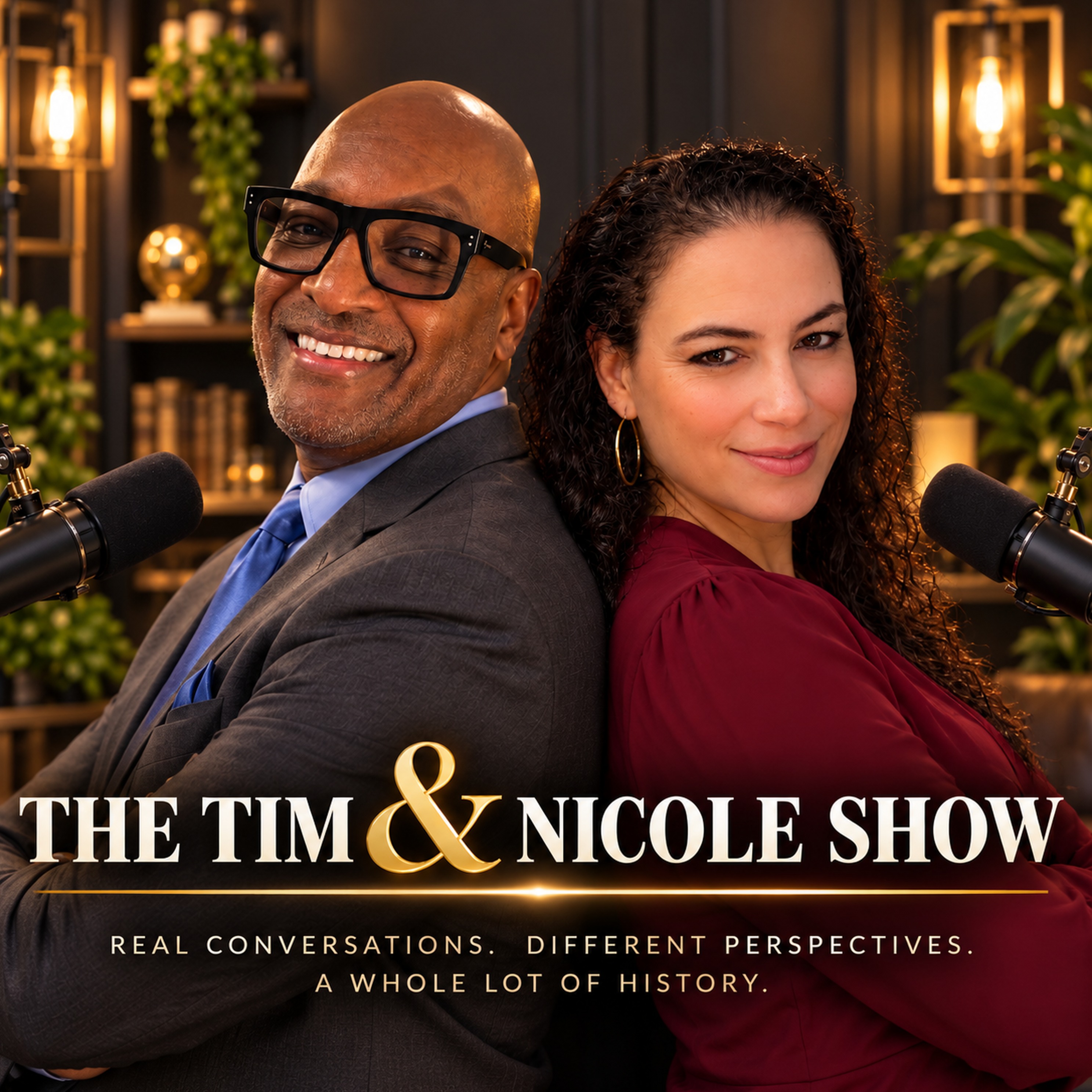
Can Love Survive Politics?
45m | Sep 20, 2026Can love survive politics?
Personal opinions shared. This content is not legal or political advice.
What happens when one partner is a Democrat and the other is a Republican—or when a vote reveals values you didn’t realize were there?
In this episode of The Tim and Nicole Show, we go deep into whether relationships and marriages can survive today’s political climate. Tim believes love can be stronger than political differences. Nicole believes some political choices reach beyond party affiliation and expose fundamental differences in values.
We discuss dating and marrying across party lines, whether someone’s vote can become a relationship dealbreaker, what happens when politics becomes an off-limits subject at home, immigration enforcement and human dignity, and whether changing beliefs can feel like a form of unfaithfulness.
This conversation is unscripted, honest, occasionally heated—and still filled with laughter. We don’t agree on everything, but we stay at the table and keep talking.
Could you remain with someone whose political beliefs were completely different from yours? Is a vote simply a political choice—or can it reveal something deeper about a person’s character and values?
Follow The Tim and Nicole Show, share this episode, and let us know what you think.
Different experiences. Different perspectives. A whole lot of history.
CLARIFICATION REGARDING THE VOTING DISCUSSION:
When Nicole said a husband could effectively “vote for the household,” she was describing a potential practical outcome—not a law permitting husbands to cast ballots for their wives. Proposed proof-of-citizenship requirements could create barriers for some married or divorced women whose current legal names differ from their birth certificates. If a woman cannot readily provide documents connecting those names, she could experience difficulty registering or updating her registration—potentially leaving her husband’s ballot as the only one cast by that household. An unmarried woman facing the same documentation barrier could be unable to cast a ballot at all.
The discussion of immigration enforcement reflects the speakers’ personal opinions and community experiences, including a distinction between supporting lawful enforcement and opposing tactics they believe unnecessarily harm workers, families, and people pursuing legal processes.