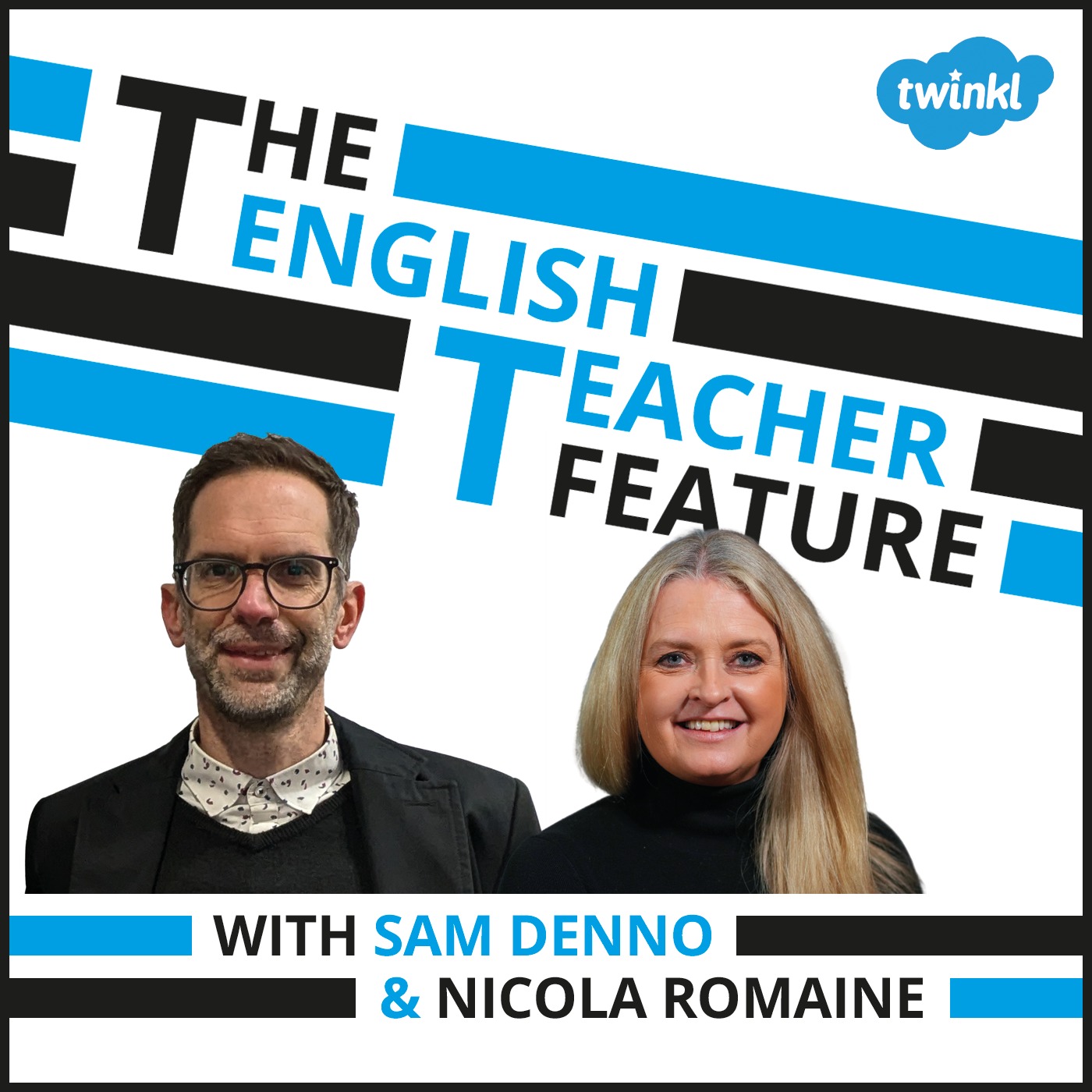
- The writing framework unpacked (8): How do we motivate pupils to write?
How do we help pupils become motivated, resilient writers?
In the concluding episode of our eight-part series exploring the Department for Education's 2025 Writing Framework, Sam Denno and Nicola Romaine turn their attention to perhaps the most human aspect of writing: motivation.
Together they discuss why writing can feel uniquely exposing for pupils, how writing identity develops over time, and why confidence often grows from carefully engineered success rather than natural ability alone.
Along the way they explore practical classroom approaches including oral rehearsal, shared writing, purposeful writing contexts, gallery walks and strategies for balancing transcription with composition, all with the aim of helping more pupils experience themselves as successful writers.
As the final instalment in the series, this episode also reflects on many of the key ideas explored throughout the previous seven conversations, drawing the Writing Framework sequence to a thoughtful close.
Whether you're teaching in Key Stage 1 or Key Stage 4, we hope you'll find practical ideas, professional reflection and plenty of encouragement to take back into your classroom.
Music by Bensound.com/free-music-for-videos
License code: RYJOR8WMSINGNIXA
Artist: Benjamin Tissot
#twinklbeyondenglish
22m - Jul 28, 2026 - The writing framework unpacked (7): How well do you manage your pupils' cognitive load?
Cognitive load theory and working memory are the subjects of Sam Denno and Nicola Romaine's discussion in this episode of The English Teacher Feature, in our miniseries that unpacks the 2025 writing framework.
Twinkl's Sam and Nicola have been exploring some of the key principles of teaching English via their podcast, and their insights into writing for pupils in primary schools and secondary schools offer valuable opportunities for professional development for teachers and leaders.
Contents
00:00 Welcome and introduction
00:52 Why cognitive load theory matters for writing
02:26 When cognitive load theory became part of classroom practice
05:08 How does multitasking relate to cognitive load?
06:28 What happens in an expert writer's working memory?
09:33 Building automaticity through practice
13:31 How transcription drilling could affect young learners
17:20 Practical ways to reduce cognitive load
For more tools and resources that embed some of those core principles of English teaching, you can visit the Twinkl website and bag yourself a trial, here: https://www.twinkl.co.uk/r/wmh17
Here are some recommended Beyond English writing intervention resources:
Writing intervention booklet: https://www.twinkl.co.uk/r/1bfv9
Handwriting exercises: https://www.twinkl.co.uk/r/av27p
Literacy intervention pack: https://www.twinkl.co.uk/r/1497q1
SPaG starters: https://www.twinkl.co.uk/r/gmgjq
Music licensed through Soundstripe.
Code: ODXHGKCPROSAKEEK
Sam Denno and Nicola Romaine are National Education Leads at Twinkl; Nicola taking responsibility for primary school English decision making and Sam heading up the secondary English product and sub-products.
#twinklbeyondenglish
21m - Jul 14, 2026 - The writing framework unpacked (6): Why some pupils struggle with writing and what we can do about it
The English Teacher Feature explores the struggle of writing. This is our sixth episode looking at the writing framework and here we consider the case study of Sophie, a pupil whose chattiness and comfort at reading potentially mask her writing frailities. Sam Denno and Nicola Romaine consider why Sophie's writing never took off in her early years, why this may not have been picked up in her primary schooling and how a secondary school might identify the issues and support her. It's a fascinating conversation that unearths plenty of gems, with cognitive load theory and the simple view of writing discussed alongside establishing transcription early and strategies for scaffolding writing where learners lack confidence.
You can find some amazing Year 7 writing intervention materials on the Twinkl website, you can sign up for a trial here: https://www.twinkl.co.uk/r/1nc8jl
Twinkl's Beyond English range features classics like these:
Writing intervention booklet: https://www.twinkl.co.uk/r/xhx4t
Handwriting exercises: https://www.twinkl.co.uk/r/1832no
Literacy intervention pack: https://www.twinkl.co.uk/r/1mbuwx
SPaG starters: https://www.twinkl.co.uk/r/vravr
Contents:
00:00 Intro
02:01 Why is writing more cognitively challenging than reading?
03:54 Getting to grips with cognitive science
04:43 Why might fine motor skills not develop?
10:17 Why are children that struggle with writing sometimes missed?
12:35 Does being a competent reader mask writing difficulties?
16:51 Mitigating writing issues in the primary phases
17:41 Strategies for using with struggling writers
Music by Bensound.com/free-music-for-videos
License code: RYJOR8WMSINGNIXA
Artist: Benjamin Tissot
#twinklbeyondenglish
24m - Jun 30, 2026 - Is classroom talk an education silver bullet? (With Alan Howe)
Twinkl have teamed up with publisher Bloomsbury Education to secure the special guest on this episode of The English Teacher Feature. Podcast host and National Education Lead for Secondary English, Sam Denno, talks to author and educator Alan Howe about the use of oracy in the classroom. Alan's new book 100 Ideas for Secondary Teachers: Oracy, co-written with Topsy Page, is available to purchase on the Bloomsbury website - https://www.bloomsbury.com/uk/100-ideas-for-secondary-teachers-oracy-9781801997331/.
In their conversation, Sam and Alan talk about the value of oracy, the role it can play in education, why it is important beyond the classroom, when students should talk and when they should write and what practice looks like when oracy is used well. Alan ends by describing one of his favourite strategies from the book.
Twinkl's Beyond Secondary range features a wide selection of resources for conducting oracy activities in the classroom.
Coordinate classroom dialogue using Beyond Debate Topic Packs which promote conversation via current issues: https://www.twinkl.co.uk/r/121pdl
Or have a browse through the Beyond English oracy units of work to find an engaging theme for to drive student talk: https://www.twinkl.co.uk/r/pmctp
Music by Bensound.com/free-music-for-videos
License code: RYJOR8WMSINGNIXA
Artist: Benjamin Tissot
Contents:
00:00 - Is oracy a silver bullet for teachers?
02:25 - The background of the authors
03:17 - The educational and political context of oracy
04:11 - The benefits of oracy
05:36 - Is oracy effective because speech is learnt intrinsically?
09:58 - Do classroom talk activities inevitably have to end with a written response?
12:39 - What do good and bad oracy practices look like?
14:12 - A favourite strategy from the book
19:05 - Do secondary classroom oracy strategies differ from primary strategies?
20:28 - How do we pass the oracy baton at the KS2/KS3 transition point?
You can begin to explore all of Twinkl's secondary material by creating an account here: https://www.twinkl.co.uk/r/1nc8jl
#twinklbeyondenglish
23m - Jun 16, 2026 - Spelling isn’t what you think! (With Lyn Stone)
In this episode of The English Teacher Feature, Nicola Romaine is joined by Lyn Stone, author of Spelling for Life, to explore the science of spelling and challenge common misconceptions about how English words work.
Together, they unpack how spelling is shaped by phonics, morphology and etymology, and why understanding word structure is key to improving both reading fluency and writing accuracy. The episode explores essential concepts such as orthographic mapping, cognitive load in writing, and how pupils build a strong mental lexicon for long-term word retention.
Lyn also shares her practical “spelling detective” approach, offering teachers a clear alternative to traditional spelling lists and tests—supporting deeper learning through word investigation and pattern recognition.
To close the episode, Sam Denno offers a focused reflection for secondary English teachers, drawing out key takeaways and practical ways to apply these ideas in the classroom.
Key topics:
- How children learn to spell (beyond phonics)
- The role of morphemes in spelling and vocabulary development
- What is orthographic mapping and why it matters
- Teaching the schwa sound in multisyllabic words
- Moving from spelling tests to deep word knowledge
Ideal for primary and secondary English teachers, literacy leads, and anyone interested in evidence-informed approaches to reading and writing.
26m - Jun 9, 2026 - Can video gaming be harnessed for reading engagement? (With Sharna Jackson)
In this fascinating episode of The English Teacher Feature, Sam Denno speaks to children's author and video game writer, Sharna Jackson, about the worlds of print publishing and game development.
2026 is the National Year of Reading. As part of the government's ambition to raise literacy levels and to increase reading engagement, there is an imperative to reconsider the definition of what reading is for our rapidly evolving, digital-literate society. As part of this, multi-modal text has to be considered.
Sam and Sharna delve into the relationships between the two forms and consider the ways in which educators, creatives and writers might play a role in signposting connections between text. Sharna speaks passionately and enthusiastically about the world of creativity and storytelling in all of its forms.
20m - May 19, 2026 - Could we do a better job of engaging parents with English? (With the Kitchen Table Teacher)
Sam Denno and Nicola Romaine welcome their first guest onto the show. Caroline Hudson, aka the "Kitchen Table Teacher", joins Nicola to talk through her own first-hand experiences of going deeper with parental engagement around literary concepts and the English curriculum in primary settings.
Following the interview, Sam contemplates the implication of Caroline's ideas for secondary schools.
24m - May 5, 2026 - The writing framework unpacked (5): Why some pupils thrive in writing
Sam Denno and Nicola Romaine look at the case of Jamal, a confident, competent writer in year 6, who has had a positive experience during his primary schooling and is about to embark on his secondary school journey with a robust set of writing skills. They look at where things went right for Jamal and consider the application for classroom teachers of English and writing up and down the key stages.
Music by Bensound.com/free-music-for-videos
License code: RYJOR8WMSINGNIXA
Artist: Benjamin Tissot
22m - Apr 21, 2026 - The writing framework unpacked (4): What the simple view of writing means for your classroom
English teachers, Sam Denno and Nicola Romaine examine the "simple view of writing" model as presented in the 2025 writing framework and consider its implications for primary and secondary teachers. Should pupils be literally plotted onto an SVW graph or is it more of a metaphorical tool for educators. And, what can be done with pupils who fall into the respective quandrants. Join Sam and Nicola as they discuss transcription, composition and everything in-between!
Music by Bensound.com/free-music-for-videos
License code: RYJOR8WMSINGNIXA
Artist: Benjamin Tissot
18m - Apr 7, 2026 - The writing framework unpacked (3): How reading and writing actually work together
In this packed episode of The English Teacher Feature, Sam Denno and Nicola Romaine dive into the next section of the DfE's 2025 writing framework. Their focus is on the interaction of writing and reading - how it is imperative that we treat them as distinct disciplines, but how they can be used alongside each other to create a feedback loop that raises literacy levels across the board.
As usual, stay to the end for some practical reflections on classroom implementation.
Sam and Nicola come from different ends of the educational phases in England, as secondary and primary specialists respectively. They are passionate about exploring concepts and methods that can be used up and down the key stages, and developing an appreciation of how the two phases can interact with each other more effectively.
Music by Bensound.com/free-music-for-videos
License code: RYJOR8WMSINGNIXA
Artist: Benjamin Tissot
25m - Mar 24, 2026 - The writing framework unpacked (2): Why speaking is foundational to writing
Nicola Romaine and Sam Denno are back to explore the DfE's writing framework. During this episode they dig into the section entitled "The development from spoken language to written language" and contemplate speaking as the foundation to the discipline of writing. As a secondary teacher, Sam has a host of questions to pose to his primary school counterpart. Will Nicola have all the answers?
Join us for this insightful and practical reflection on the writing framework, which aims to present big concepts in a bitesize manner.
Music by Bensound.com/free-music-for-videos
License code: RYJOR8WMSINGNIXA
Artist: Benjamin Tissot
23m - Mar 10, 2026 - The writing framework unpacked (1): Have we undervalued writing?
Join Sam Denno and Nicola Romaine as they delve into the DfE's Writing Framework 2025 and tackle the section "why writing matters". Sam asks Nicola how important writing is when ranked alongside reading and they ponder what schools should prioritise. This is the first episode in a series about the Writing Framework in which we seek to provide bitesize insights and offer practical advice for embedding good writing practice into the classroom, across both primary and secondary phases.
Music by Bensound.com/free-music-for-videos
License code: RYJOR8WMSINGNIXA
Artist: Benjamin Tissot
16m - Feb 24, 2026