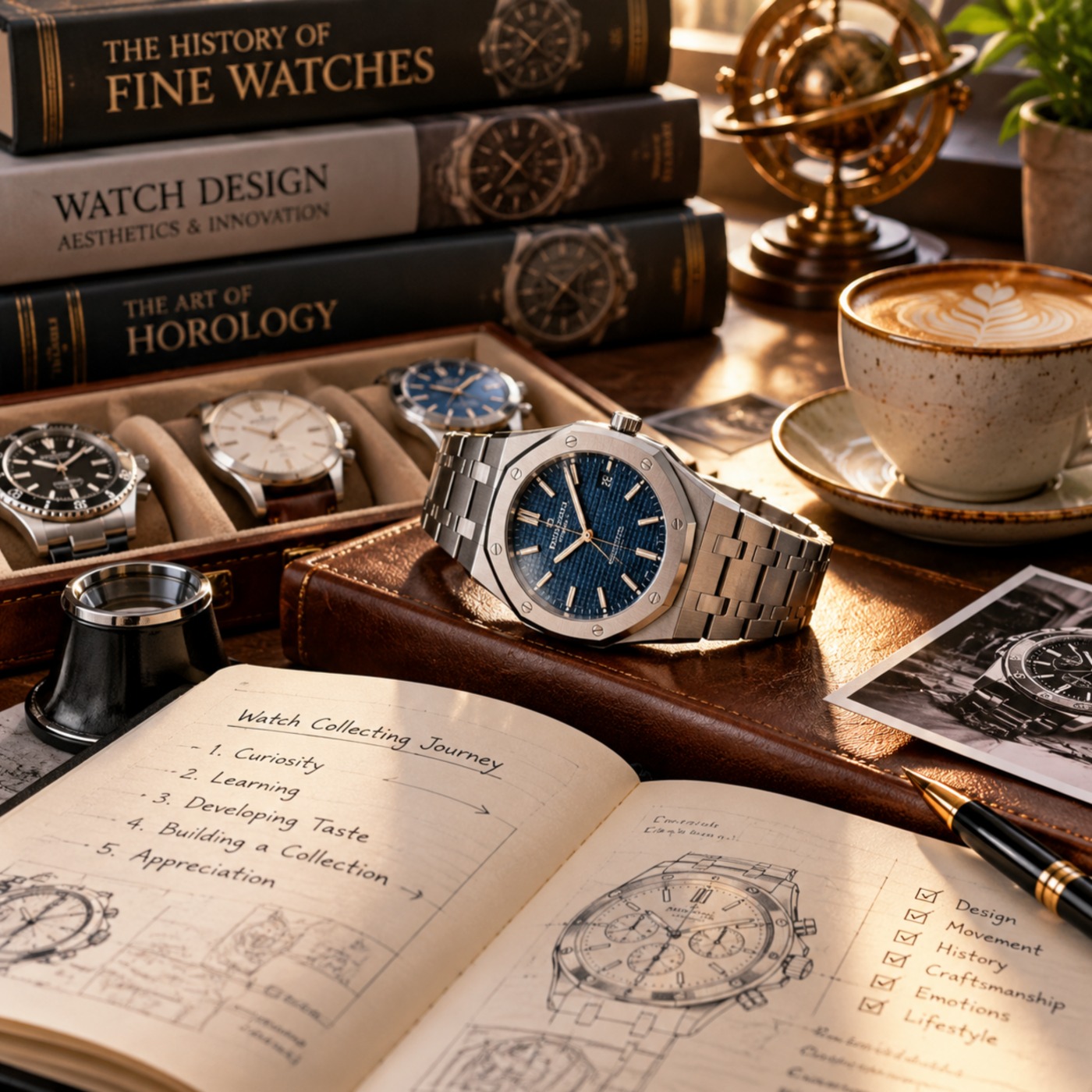
- How Beginners Develop Taste, Knowledge, and Appreciation for Fine Timepieces
The Psychology of Watch Collecting: How Beginners Develop Taste, Knowledge, and Appreciation for Fine Timepieces
For many people, a watch begins as a simple object designed to display time. However, as curiosity grows, some discover that a timepiece can represent far more than a practical function. It can become a reflection of personality, a connection to history, and a reminder of important moments in life. This emotional relationship is one of the reasons watch collecting continues to attract enthusiasts around the world.
For beginners entering horology, the most interesting part of collecting is not simply owning expensive watches. The real journey involves developing knowledge, understanding design choices, and learning why certain timepieces create lasting impressions.
Every experienced collector was once a beginner. The process usually starts with attraction to a particular design or story, then gradually develops into a deeper appreciation of craftsmanship, engineering, and artistic expression.
Why People Become Interested in Watches
The reasons behind watch collecting are different for every person. Some enthusiasts are fascinated by mechanical engineering, while others are attracted to design, history, or the emotional meaning connected to a watch.
Unlike many modern products that are quickly replaced by new technology, mechanical watches represent patience and tradition. A carefully crafted timepiece contains hundreds of small components working together without relying on digital systems.
This combination of technical complexity and human craftsmanship creates a unique experience. Wearing a mechanical watch allows collectors to feel connected to traditional skills that have developed over centuries.
Developing Personal Taste in Watch Design
One of the most important stages in becoming a collector is developing personal taste. Beginners often start by following popular models or famous designs, but over time they begin to understand what truly attracts them.
Design appreciation is a gradual learning process. A collector may initially focus on the overall appearance of a watch, but later begin noticing details such as proportions, finishing, dial balance, and comfort on the wrist.
There is no universal definition of the perfect watch. Some people prefer minimal designs with elegant simplicity, while others enjoy technical displays and complex functions. Personal preference is what makes collecting interesting.
Learning to See Beyond the Surface
A beginner may first notice a watch because of its shape, color, or reputation. However, experienced enthusiasts often look deeper into the ideas behind the design.
Every element of a watch has a purpose. The size of the case influences comfort, the arrangement of the dial affects readability, and the finishing techniques reveal the level of craftsmanship.
Understanding these details changes the way collectors view watches. Instead of seeing only an attractive object, they begin to recognize the decisions, skills, and creativity involved in creating it.
The Role of History in Watch Appreciation
History plays an important role in the emotional value of a watch. Many respected timepieces are appreciated because they represent important moments in design, technology, or cultural development.
A watch with a meaningful background often becomes more interesting because collectors can connect with the story behind its creation. The history of a model, the purpose behind its design, and the innovations it introduced all contribute to its identity.
For beginners who want to explore the broader world of horology and understand how enthusiasts study different timepieces, exploring watch collecting knowledge can provide useful guidance and inspiration.
Understanding the Emotional Side of Collecting
Although watches involve technical knowledge, collecting is also deeply emotional. Many enthusiasts choose watches that represent personal achievements, memorable events, or important periods in their lives.
A watch purchased to celebrate a milestone can carry meaning far beyond its physical features. Years later, the object may remind the owner of the experience associated with that moment.
This emotional connection is one of the reasons watch collecting remains meaningful in a world where many objects are designed for short-term use. A well-chosen watch can become part of a personal story and continue to create memories over many years.
From Consumer to Collector: Changing the Way You Think
The transition from simply buying watches to becoming a collector involves a change in perspective. A consumer may focus mainly on appearance or immediate satisfaction, while a collector considers design philosophy, craftsmanship, history, and long-term appreciation.
This does not mean every collector needs extensive knowledge from the beginning. Instead, it means developing curiosity and asking better questions. Why was this design created? What makes this movement interesting? How does this watch reflect the period in which it was produced?
These questions encourage deeper exploration and help beginners develop a more thoughtful relationship with watches.
The Importance of Patience in Watch Collecting
One common mistake among beginners is rushing the collecting process. The excitement of discovering new watches can sometimes lead to quick decisions without fully understanding personal preferences.
Patience allows collectors to experience different styles, learn from experts, and gradually identify what truly matters to them. The most satisfying collections are usually built over time rather than created immediately.
Taking time to research and observe also helps collectors appreciate the differences between temporary trends and designs that have lasting appeal.
Learning Through the Watch Community
The watch community provides valuable opportunities for beginners to expand their knowledge. Conversations with experienced enthusiasts can introduce new perspectives and reveal details that may not be obvious at first.
Collectors often share information about historical models, technical innovations, and design influences. These discussions create a learning environment where beginners can develop confidence and improve their understanding.
Reading professional articles, visiting exhibitions, and studying different watch designs are all effective ways to continue learning.
Building a Meaningful Collection
A meaningful collection is not defined by the number of watches owned. Instead, it reflects the personality, interests, and experiences of the collector.
Some collectors prefer to focus on a specific style, such as classic dress watches, professional tool watches, or innovative mechanical designs. Others enjoy exploring different categories to understand the diversity of horology.
The most important factor is that each watch has a reason for being part of the collection. A watch that connects with the owner personally often provides more satisfaction than one chosen only because it is popular.
Developing Long-Term Appreciation
Watch collecting is a lifelong learning experience. As knowledge grows, collectors often discover new areas of interest, from movement technology to historical design development.
The more time someone spends studying watches, the more they begin to appreciate subtle details. A small design decision, a unique finishing technique, or an innovative mechanical solution can become a source of fascination.
This continuous discovery is what keeps many enthusiasts engaged with horology for decades.
Final Thoughts: The Journey Matters More Than the Destination
The world of watch collecting is not only about ownership. It is about curiosity, education, and appreciation for human creativity. Every collector begins somewhere, and the most important step is developing a genuine interest in learning.
A great watch represents more than materials and mechanics. It carries ideas, traditions, and emotions that connect people with the history of craftsmanship.
For beginners, the journey of discovering watches can be one of the most rewarding parts of the hobby. By developing personal taste, understanding design, and appreciating craftsmanship, anyone can build a deeper connection with the fascinating world of horology.
0m - Sep 27, 2026