- IPTV Explained Simply: Before You Choose a Subscription

Sponsored contribution from 8K4IPTV.
If you have ever opened a streaming app and wondered what you actually needed to buy, this episode is for you. IPTV stands for Internet Protocol Television. The term describes a delivery method; it does not tell you which programmes a provider includes, which devices it supports or what you will pay.
This episode is a sponsored contribution from 8K4IPTV. We will focus on simple questions that help viewers in the UK and Europe understand a subscription before committing to it.
First, identify the screen and the player Start with the television, phone or computer you intend to use. Write down its exact model and software version. If a box or stick plugs into the television, include that device in your notes. It may be the part running the app.
Next, ask which player is recommended and where to obtain it. Hardware, software and subscription access are different things. Paying for a player may not include content. Equally, buying a subscription may not cover a separate player licence.
The 8K4IPTV website is a starting point for subscription information and setup enquiries. Before choosing a duration, describe the equipment you already own and ask whether extra app charges apply.
Second, describe your household's viewing Think about an ordinary evening. Does one person watch the television while someone else uses a tablet? You need to ask about simultaneous streams, not just the number of devices on which an app can be installed.
If you plan to use the service away from home, ask about location and network conditions. Do not assume a subscription will provide the same programmes everywhere. Confirm authorised availability for the country where you will watch.
Third, compare the full payment A small monthly equivalent can look attractive, but it may represent a larger upfront payment. Write down the total payable today, the period covered, renewal arrangements and any separate charges. Keep the refund and cancellation terms alongside that information.
A shorter plan may suit someone still deciding whether a setup meets their needs. A longer plan should be a considered choice rather than a reaction to a large discount badge. Compare the commitment as well as the displayed price.
Fourth, try the everyday controls Where a trial is available, test it on the same device and connection you intend to use. Can you find the programme guide? Can you return to the previous screen? Are the subtitles readable from your seat? These are practical questions that a feature list cannot answer for you.
If playback pauses, note whether it happens on one programme or throughout the app. Try one change at a time. Keep useful notes for support rather than repeatedly changing settings without knowing which change helped.
Finally, keep a short checklist The 8K4IPTV subscription comparison guide offers another way to organise the questions before choosing. It is a commercial resource, so use it alongside the actual plan conditions and your own requirements.
Here is the short version to remember: identify your device, separate the app fee from the subscription, check simultaneous connections, read the total cost and test normal viewing where possible. Ask about anything unclear before paying.
The goal is not to become a streaming engineer. It is to make a purchase you understand and a setup you can use comfortably. A few clear answers at the beginning can make the rest of the experience much simpler.
0m - Sep 30, 2026 - How Reseller Hosting Helps You Build a Profitable Hosting Business
You don’t need to invest in a large technical team or complicated infrastructure or expensive servers to start a Web hosting business. Entrepreneurs, freelancers, web developers and web agencies can provide quality hosting services using their own name, and all they need to do is depend on a proven host.
Reseller hosting is an intelligent method to make web development and Digital Services a regular income enterprise. You buy the hosting resources from the hosting provider and then segment them into packages of your own and then sell them to your own customers.
What Is Reseller Hosting?
Reseller hosting is a hosting business where server resources are bought from a hosting company that can be resold to customers of the reseller. You don’t have to own or operate any servers and you can build your own hosting brand, with your own pricing and packages.
This model will be very valuable for web designers, developers, marketing agencies, freelance, IT consultants, and entrepreneurs who already cater to website owners. You can offer hosting services to your clients instead of sending them up to another hosting company.
A white label setup can also enable customers to engage with your brand, rather than the underlying infrastructure provider. This makes it more professional and uniform for your clients.
In what way is cPanel Reseller Hosting a better choice?How is cPanel Reseller Hosting a better choice?
Cpanel reseller hosting may be a workable choice for companies that desire an easy-to-manage hosting surroundings. cPanel is a popular hosting control panel that simplifies website, domain, email account, database, file and other hosting management.
With a cPanel reseller plan, you can create and manage separate hosting accounts for your customers. This also allows each client to have their own hosting area, with you administering the reseller account.
This may make things much easier for new hosting entrepreneurs. Instead of getting into the intricacies of server administration, you can concentrate on the acquisition, support, marketing and development of customers.
There are numerous advantages to starting a reseller hosting business.Starting a reseller hosting business comes with a host of benefits.
One of the primary benefits of reseller hosting is that it is relatively easy to operate a reseller hosting business. No need to buy real servers, or to set up a data centre! It is the hosting company who provides the infrastructure, so that you can focus on selling and supporting your services.
Scalability is another key benefit. You can start small with a smaller plan and scale up your resource when you start to have more customers. This enables your hosting company to grow steadily and not put a lot of investment into infrastructure at the start.
Another benefit of white-label is the ability to brand it. You can use your own company name, domain, branding and custom nameservers with a white-label solution. Your customers can then see the hosting service as an integral part of your business, and not as a third-party service.
You can use automation to simplify the hosting process.Automation can help ease the hosting process.
Being a hosting company is more than just offering hosting services. You also need account management, billing, renewals, provisioning and service activation.
These tasks can be much easier to achieve with automation. For instance, WebSeva offers WHMCS integration, which enables automated billing and provisioning. This can help to lower manual work related to customers buying hosting packages or renewing their hosting services.
Automation is especially beneficial when your customer base increases. For businesses, automated systems can take care of many mundane tasks, which leaves more time for them to focus on expanding their business rather than manually creating all the accounts and processing all the renewals.
When it comes to performance and reliability, it’s a no-brainer that it matters.
Your customers expect fast loading speeds and uptime on your website. So, the quality of the infrastructure is a better criterion to choose a reseller hosting company.
WebSeva’s reseller hosting infrastructure includes enterprise NVMe SSD storage, 99.9% uptime goal, automated daily backups, global network infrastructure, and 24/7 monitoring.
These kinds of capabilities can assist resellers deliver a more steady hosting experience for their customers, and decrease the need to manage infrastructure on their own.
Who Can Benefit From Reseller Hosting?
There are various professionals for whom reseller hosting is suitable. Web developers can provide hosting as part of their website development packages, and digital agencies can offer hosting, SEO, marketing and maintenance services in a single package.
Hosting can provide freelancers with another recurring income source as well. IT consultants/managed service providers can provide hosting as a supplementary service to the technical services they provide.
In the eyes of a budding business owner, reseller hosting can be an option to get involved in the hosting industry while avoiding the hassle of establishing their own server facilities.
Establish Your Hosting brand on the appropriate infrastructure.
Operating a successful hosting business requires more than just selling server space. Reputable infrastructure, easy account management, automation, scalability, and professional branding are required.
Businesses can design their own hosting bundles and provide services under their own name with reseller hosting. Concurrently, Cpanel reseller hosting gives a familiar environment to one’s customers to create and manage individual hosting accounts.
Having a provider that offers functions like white label web hosting, automatic invoicing, scalable resources, backups, performance-driven storage, and technical support can make it easier to construct and expand a web hosting business.
A reseller is a viable option for those who are entrepreneurs or agencies that want to provide hosting in addition to their other services.
0m - Sep 30, 2026 - Build a Simpler Home Entertainment Routine
Sponsored contribution from 8K4IPTV.
An evening at home can offer plenty of entertainment and still feel oddly difficult to plan. There are programmes to choose, podcasts to finish and several devices competing for attention. The answer is not always another subscription. Sometimes it is a simpler routine.
This episode is a sponsored contribution from 8K4IPTV. We are looking at practical ways to organise listening and television around the time you actually have, rather than spending the evening browsing options.
Choose the activity before opening the app Start with a small decision. Do you want something to listen to while cooking, a focused hour in front of the television or an evening watching with someone else? Each situation calls for a different kind of attention.
Choose two or three options in advance. A short list does not remove choice; it makes choosing manageable. Check the running time and availability before settling on a plan. Leave longer programmes for evenings when you can enjoy them without watching the clock.
Keep the equipment familiar Try to make starting a programme a short, repeatable process. Keep the remote in one place and write down the few steps another household member would need. If you use headphones, confirm the connection before the evening begins.
Readers exploring IPTV can find subscription information through 8K4IPTV. Before selecting a plan, ask about your television or streaming device, the recommended app and any separate player fees. The right arrangement should suit the people who will use it every day.
Compare commitments, not just price labels List the total payable, the period covered and how renewal works. A longer plan may have a lower monthly equivalent but still require more money upfront. Consider whether you will use it for the full period and read the applicable cancellation and refund terms.
The 8K4IPTV subscription plans provide the starting point for comparing the brand's available durations. Check current prices and conditions directly before ordering. A submitted enquiry is not the same as a completed payment or activated subscription.
Share a room without competing for attention Different people can enjoy the same room in different ways. One person may prefer a podcast while another reads. For a shared television programme, ask about volume, subtitles and interruptions before playback begins.
Keep a little light in the room so people can move comfortably. Adjust reflections on the screen, and check whether dialogue is clear from the seats you actually use. These details make a routine feel welcoming without requiring a complete room makeover.
Leave space between programmes When one episode ends, take a moment before starting another. Refill a drink, talk about what you watched or decide whether you have had enough for the evening. A deliberate finish can feel better than continuing only because another episode began automatically.
If a technical problem appears, make a note and try one sensible change. Check whether it affects one programme or the whole app. Have another activity ready rather than allowing troubleshooting to consume the evening.
Keep the useful parts After a week, ask which choices made entertainment easier. Perhaps a shortlist saved time, subtitles made dialogue clearer or an earlier start suited the household better. Keep those improvements and drop anything that felt like extra work.
Use authorised sources and check local programme availability, particularly when travelling between countries. Then focus on what the routine is meant to provide: enjoyable time at home, with fewer decisions between you and the activity you chose.
0m - Sep 30, 2026 - Article Title: Precision in Practice: Why Healthcare Providers Need Specialised Accounting

The Unique Financial Demands of the Medical Sector
The healthcare industry is fundamentally different from any other business sector. Medical practices, dental clinics, and private therapy offices operate in a high-stakes environment where patient care is the priority, but financial health is the fuel that makes that care possible. Managing a practice involves navigating complex billing cycles, insurance reimbursements, high overhead costs, and strict regulatory requirements. Standard accounting software often lacks the depth needed to handle these specific nuances. This is why accountants for healthcare https://www.bobsbookkeepers.com/ are not just a luxury; they are a fundamental requirement for the long-term success of your practice.
Beyond Basic Bookkeeping: The Need for Industry Expertise
Healthcare providers are faced with a unique "revenue cycle management" challenge. Unlike a retail store, where the customer pays at the point of sale, a medical office often waits weeks or months for insurance claims to be adjudicated. This creates a significant gap between services rendered and cash received.
At Bob’s Bookkeepers, we understand that if your accounting doesn't track these "accounts receivable" with absolute precision, you risk significant cash flow shortages. Our team specialises in the intricacies of insurance reconciliations, ensuring that every claim is tracked until it is fully paid. This industry-specific knowledge allows us to catch underpayments or denied claims that general-purpose bookkeepers would easily overlook.
Compliance and Regulatory Standards
Healthcare is a highly regulated field. Beyond tax law, practices must comply with strict privacy regulations, such as HIPAA, which dictate how financial data involving patient payments must be stored and processed. When you outsource your financial data to a team that doesn't understand the medical sector, you risk violating these privacy mandates.
By engaging professional accountants for healthcare, you ensure that your financial systems are as secure as your electronic health records (EHR). We prioritise data security and confidentiality in every aspect of our workflow, providing you with peace of mind that your practice is fully compliant with all federal and local healthcare financial regulations.
Optimising Overhead and Practice Profitability
Medical practices often struggle with high overhead costs - staffing, medical supplies, high-tech equipment leasing, and facility maintenance. A practice can have high patient volume and still be unprofitable if these costs are not strictly controlled. Our role at Bob’s Bookkeepers is to provide the "financial oversight" that allows you to identify where money is being lost.
We provide detailed profitability reports that allow you to analyse the performance of specific procedures, departments, or even individual practitioners. This data allows you to optimise your schedules and overhead, ensuring that your practice is performing at peak efficiency. We turn your raw financial data into actionable insights, helping you decide where to invest your capital for maximum patient impact and profitability.
Managing Physician Compensation and Tax Strategy
Compensation models in the medical industry are notoriously complex. Whether you use a base-salary model, a production-based bonus, or a profit-sharing arrangement, the tax implications can be significant. Errors in physician compensation can lead to intense internal conflict and regulatory issues. Our accountants for healthcare ensure that payroll is handled accurately, taking into account all the specific benefits and tax-advantaged structures available to medical professionals. We help you create a compensation plan that is fair, competitive, and fiscally responsible.
The Benefit of Outsourced Financial Expertise
Running a practice is exhausting; the last thing you want to do after a long day of seeing patients is reconcile your bank statements or handle payroll taxes. Outsourcing your accounting allows you to return to the core of your mission: providing excellent care to your patients. By delegating the numbers to the experts, you reduce the administrative burden that leads to burnout. You gain a partner who is constantly looking out for your financial interests, identifying tax savings, and ensuring that you are always audit-ready.
Conclusion
Your practice deserves financial health that matches the quality of care you provide to your patients. Because the medical industry has such unique demands, you cannot rely on "one-size-fits-all" accounting solutions. You need a partner who understands the rhythm of your revenue cycle, the burden of your overhead, and the complexity of your compliance obligations. At Bob’s Bookkeepers, we are dedicated to helping healthcare providers maintain a profitable, sustainable practice, so you can focus on the important work of healing and helping your community.
0m - Sep 30, 2026 - Techsslaash and the Growing Importance of Accessible Digital Information
The modern internet has made knowledge easier to access than at any previous point in history. A person with an internet connection can learn about software, artificial intelligence, business strategies, finance, marketing, gaming, or almost any other subject within minutes.
Yet access to information does not automatically mean understanding.
Many digital subjects are complicated, and the terminology surrounding emerging technologies can make them difficult for beginners. As a result, there is an increasing need for online content that explains modern developments in a simple and practical way.
Digital publishing platforms such as Techsslaash are part of this changing information environment, providing content across several areas connected with technology and modern digital culture.
Why Accessible Technology Content Matters
Technology moves quickly.
A product or application that seems new today may become outdated within a relatively short period. Businesses and individuals therefore need to keep learning if they want to understand the tools they use.
Not everyone has a technical background, however.
An entrepreneur may understand business but not software development. A marketer may know SEO but have limited knowledge of cloud infrastructure. A student may be interested in AI without understanding how machine learning works.
Accessible technology content can make these subjects easier to approach.
The purpose is not necessarily to simplify everything to the point of losing accuracy. Instead, good writing can introduce technical concepts gradually and explain them using familiar examples.
Artificial Intelligence and the New Digital Economy
Few technologies have attracted as much attention as artificial intelligence.
AI is becoming part of search, software, customer service, content creation, data analysis, education, and many other fields.
For businesses, AI can provide opportunities to automate certain processes and analyze large amounts of information. For individuals, AI tools can assist with research, writing, planning, and productivity.
But AI also creates challenges.
Users need to understand privacy considerations, accuracy limitations, responsible use, and the difference between marketing claims and practical capabilities.
Informative technology content can help readers approach AI with a more balanced understanding.
Businesses Need to Understand Digital Change
Digital transformation is no longer limited to large corporations.
Small businesses increasingly rely on online booking systems, payment platforms, websites, social media, cloud software, customer management systems, and digital advertising.
These tools can improve efficiency, but choosing the right technology requires research.
Business owners often need answers to straightforward questions:
What does a particular tool do? Is it suitable for a small business? Does it integrate with existing systems? What are the potential benefits and limitations?
Publishing platforms that explain technology from a practical perspective can help readers make sense of these questions.
Readers exploring business technology and related digital subjects can visit https://techsslaash.co/ to discover additional topics and perspectives.
Digital Marketing Is Becoming More Sophisticated
Marketing has changed dramatically because of the internet.
Traditional advertising still exists, but businesses now have access to search engines, social media, content marketing, email campaigns, influencer marketing, video platforms, and online advertising networks.
This variety provides opportunities but also makes digital marketing more complex.
SEO professionals, for example, need to understand search intent, technical optimization, content quality, website structure, internal linking, and user experience.
Social media marketers need to understand audience behavior and platform-specific content.
Because digital marketing is constantly changing, ongoing education has become an important part of the profession.
The Role of Search and Online Discovery
Search engines remain one of the main ways people discover information.
When users type a question into a search engine, they expect relevant answers rather than pages created solely around keywords.
This has changed the way publishers approach content.
A strong article should address the subject comprehensively enough to satisfy the reader while remaining focused on its main purpose.
Natural language is particularly important because people search using questions, conversational phrases, and specific problems rather than only short keywords.
The evolution of search also means that publishers need to think about readers first.
Cybersecurity in an Increasingly Connected World
Digital convenience comes with responsibility.
As people store more information online, cybersecurity becomes an increasingly important part of digital life.
Businesses need to protect customer information, employees need to recognize suspicious communications, and individuals need to take basic precautions when using online services.
Cybersecurity content can help raise awareness by explaining common threats and practical protection methods.
Topics such as phishing, password security, account protection, software updates, data backups, and multi-factor authentication are relevant to users at almost every level of technical experience.
The best security advice is often simple enough to follow without requiring specialist knowledge.
Finance Is Becoming More Technology Driven
Financial services have also experienced significant digital transformation.
Mobile banking, online payments, digital wallets, fintech applications, and automated financial services have changed how consumers and businesses interact with money.
These technologies can make transactions faster and more convenient, but they also require users to understand security and privacy.
The connection between finance and technology is likely to become even stronger as new digital services continue to emerge.
This makes financial technology another important subject for readers interested in understanding the modern digital economy.
Gaming and Digital Communities
Gaming provides another example of technology's influence on modern culture.
The industry now includes mobile games, consoles, PCs, cloud gaming, esports, livestreaming, online communities, and digital marketplaces.
Advances in graphics, processors, networking, and AI have all contributed to changes in gaming.
Gaming also demonstrates the social side of technology. Players communicate, compete, collaborate, and create communities through digital platforms.
As a result, gaming can be viewed not only as entertainment but also as an important part of the broader technology ecosystem.
Lifestyle and the Everyday Use of Technology
Technology affects much more than work.
People use digital tools to plan trips, order products, communicate, study, manage schedules, follow entertainment, and access services.
This has created a modern lifestyle where physical and digital experiences often overlap.
A travel booking may begin with a search engine. A restaurant reservation may be completed through an application. A course may be delivered entirely online.
Understanding these changes can help people make more informed choices about the technologies they use.
Why Variety Can Benefit Readers
A reader's interests can change depending on their circumstances.
Someone might search for AI information while working on a project and later look for business or marketing advice. Another reader may arrive looking for gaming content and discover technology articles that are relevant to their interests.
A diverse publishing platform makes this kind of exploration possible.
Instead of limiting readers to a single category, a multi-topic website can create connections between related areas.
For example, artificial intelligence can be discussed from a business perspective, cybersecurity can be connected with finance, and gaming can be examined through the lens of emerging technology.
This creates a more complete picture of the digital world.
What Makes a Digital Publication Valuable?
A large number of articles does not necessarily make a website useful.
Readers generally benefit from content that has a clear purpose, logical structure, understandable language, and practical information.
Accuracy is also important. Technology changes quickly, so outdated information can become misleading.
Good publishers therefore need to review their subjects carefully and avoid making unnecessary claims.
The reader experience matters too. Articles should be easy to navigate, particularly on mobile devices, where many people consume online content.
Exploring Techsslaash
Within this broader digital environment, Techsslaash provides an opportunity to explore multiple technology-related subjects through one platform.
Rather than treating technology as a single narrow category, its content approach connects technology with areas such as AI, business, finance, digital marketing, gaming, and lifestyle.
For readers who enjoy discovering different aspects of the online world, https://techsslaash.co/ offers another place to explore these subjects and follow emerging digital trends.
The usefulness of a platform ultimately depends on the quality of its individual content, but the broader idea remains relevant: readers benefit when information is organized around the subjects they actually want to understand.
The Future of Digital Publishing
Digital publishing will continue to change alongside technology.
Artificial intelligence is already influencing how content is created and discovered. Search behavior is evolving, audiences are becoming more selective, and new platforms continue to compete for attention.
This environment creates both opportunities and challenges for publishers.
Producing content quickly may be easy, but producing information that readers genuinely find useful requires more effort.
Original ideas, clear explanations, practical examples, thoughtful organization, and a focus on reader needs can help digital publications remain valuable even as technology changes.
Conclusion
The internet has created unprecedented access to information, but readers still need clear explanations and meaningful context.
Technology is connected to almost every aspect of modern life, including business, finance, marketing, entertainment, gaming, education, and everyday communication.
That is why digital platforms covering several related subjects can provide a useful way to explore the modern online environment.
Techsslaash reflects this broader approach by bringing together different areas of digital information. For readers, the opportunity to move between technology, AI, business, finance, marketing, gaming, and lifestyle topics can make it easier to discover new ideas.
As the digital world continues to evolve, the importance of accessible, relevant, and useful information will only become greater. Readers who continue learning about emerging technologies and digital trends will be better prepared to understand the changes taking place around them.
0m - Sep 30, 2026 - How Digital Platforms Like Techsslaash Help Readers Keep Up With Modern Technology
Technology has become a constant part of modern life. From smartphones and cloud applications to artificial intelligence and digital payment systems, technological developments are influencing the way people work, communicate, shop, learn, and entertain themselves.
The challenge is no longer finding information. The internet contains an enormous amount of it. The bigger challenge is finding information that is relevant, understandable, and useful.
This is one reason digital publishing platforms have become increasingly important. Websites covering technology and related subjects give readers a convenient way to explore new ideas without having to search through countless unrelated sources.
Among these platforms, Techsslaash focuses on a broad range of subjects connected with today's digital environment.
The Changing Way People Consume Information
People consume information differently than they did in the past.
Instead of waiting for newspapers or monthly magazines, readers can now search for an answer whenever they need it. A business owner can research a software solution before purchasing it, a student can learn about artificial intelligence through online articles, and a marketer can discover new approaches to digital promotion within minutes.
This convenience has also increased expectations.
Readers want articles that get to the point while still providing enough context. They are less interested in content created simply to fill a webpage and more interested in material that answers genuine questions.
Digital publications therefore have an opportunity to become useful information resources by focusing on topics that matter to their audiences.
Technology Has Become Part of Business
Almost every modern business uses technology in some form.
Websites provide a digital presence, cloud platforms support collaboration, customer relationship systems organize information, and analytics tools help businesses understand their audiences.
Even small businesses can now access tools that were once available mainly to large corporations.
This has created a growing demand for practical technology information. Business owners may want to know how automation can reduce repetitive work, while employees may be interested in productivity applications that can simplify their daily responsibilities.
Technology articles can help bridge this knowledge gap by explaining complex developments in a straightforward manner.
Readers looking for additional technology and digital-business topics can explore https://techsslaash.co/ while researching different tools, trends, and developments.
Artificial Intelligence Is Reshaping Digital Work
Artificial intelligence is one of the clearest examples of how quickly technology can change.
AI-powered tools are increasingly being used for writing assistance, data processing, customer support, coding, research, image creation, and workflow automation.
However, the growing availability of AI tools has also created confusion. New products appear regularly, and their features can vary considerably.
Instead of simply listing new AI products, useful content should explain practical applications. For example, an article might examine how an AI assistant can help organize information or how automation can reduce repetitive administrative tasks.
This type of information is valuable because it connects technology with real-world problems.
Digital Marketing Continues to Evolve
The growth of online business has made digital marketing an important part of modern commerce.
Companies use search engines, social networks, email, paid advertising, video platforms, and content marketing to communicate with potential customers.
Search engine optimization remains particularly important for businesses that depend on organic website traffic.
However, successful SEO is not simply about inserting keywords into an article. Search intent, useful information, website usability, topical relevance, and content quality all contribute to a strong online presence.
Marketing professionals therefore need to keep learning as search behavior and digital platforms change.
A resource such as https://techsslaash.co/ can be useful for readers exploring technology and digital topics that intersect with online marketing.
Why Cybersecurity Deserves More Attention
As more activities move online, cybersecurity becomes increasingly important.
People store personal information on websites and applications, businesses maintain customer databases, and organizations depend on connected systems for daily operations.
Simple security practices can make a significant difference. Strong passwords, software updates, multi-factor authentication, careful handling of suspicious messages, and regular backups are examples of measures that can reduce common risks.
Technology publications have an important role in explaining these issues because cybersecurity terminology can sometimes appear intimidating to ordinary users.
Clear educational content can make security concepts easier to understand and encourage better digital habits.
The Connection Between Technology and Finance
Technology has also changed financial services.
Online banking, digital wallets, contactless payments, fintech applications, and automated financial systems have transformed many traditional processes.
Consumers can complete transactions through mobile devices, while businesses can use digital platforms to manage payments and financial records.
At the same time, these developments introduce questions about privacy, security, regulation, and responsible use.
This is why technology and finance are increasingly discussed together. Understanding one area often requires some awareness of the other.
Gaming Represents Another Side of Technology
Gaming demonstrates how technology can combine with entertainment.
Modern games depend on powerful hardware, sophisticated software, online infrastructure, graphics processing, and sometimes artificial intelligence.
The gaming industry also includes streaming, esports, mobile gaming, digital marketplaces, and large online communities.
For many people, gaming is not simply entertainment. It is part of a wider digital culture.
Technology publications can therefore provide useful context by examining how innovations in hardware, software, connectivity, and AI influence gaming experiences.
The Value of Multi-Topic Digital Resources
Readers do not always have a single area of interest.
Someone researching an AI application may also be interested in business. A digital marketer might want to understand cybersecurity. A gamer may follow hardware developments. A startup founder may need information about finance and automation.
This overlap makes multi-topic publishing increasingly relevant.
Rather than placing every subject into a separate information bubble, a broad digital platform can show how different areas connect.
Techsslaash follows this type of broader approach by covering technology alongside several subjects associated with modern digital life.
What Readers Should Expect From Good Online Content
The increasing amount of online information makes editorial quality important.
A useful article should have a clear purpose. It should introduce the subject, explain important concepts, avoid unnecessary repetition, and provide information that readers can actually use.
Originality is equally important.
Readers can find similar topics on thousands of websites, so simply rewriting existing material does not necessarily create value. Strong content should bring its own organization, perspective, examples, or explanation.
Good formatting also improves the reading experience. Clear headings and short paragraphs make information easier to scan, particularly when readers are accessing articles on mobile devices.
Looking Ahead
The digital environment will continue to change.
Artificial intelligence will influence more industries, businesses will adopt new forms of automation, cybersecurity challenges will evolve, and consumers will continue to discover new ways of using digital services.
This constant change means readers need reliable ways to keep learning.
Digital publishing platforms can contribute by explaining developments in accessible language and connecting individual technologies with the larger trends surrounding them.
Conclusion
Technology is no longer a separate industry that only concerns software developers or computer enthusiasts. It influences business, finance, marketing, entertainment, education, communication, and everyday routines.
For this reason, readers increasingly benefit from platforms that bring different digital subjects together.
Techsslaash offers a broad environment for exploring technology and related topics, allowing readers to move between subjects and discover information relevant to the changing digital landscape.
As technology continues to develop, the ability to understand new tools and trends will become increasingly valuable. The most useful digital content will be the content that helps readers understand not just what has changed, but how those changes can affect their everyday lives and professional decisions.
0m - Sep 30, 2026 - Clean Plus Replica Rolex Datejust Ombre Green - A Refined Play of Light and Color

Hello everyone. Today we are taking a closer look at the Clean Plus Rolex Green Datejust. Rolex watches have always been extremely popular in the replica watch market, which has led many factories such as VS Factory and ARF Factory to produce their own versions. When it comes to popularity, C Factory and VS Factory are among the more well known options, mainly because they have been established in the super clone market for a long time and have paid close attention to fine details.
However, VS Factory has recently introduced a fake free sprung movement for this model, while also increasing the price by around 50 USD. As a result, some enthusiasts have turned their attention to C Factory instead. The C Factory version offers a more affordable price and is also easier to adjust and service later on. For sellers, simple and stable construction is often the most practical choice. Today, we will take this watch apart and examine its internal details so that everyone can get a closer look at its construction and finishing.
The entire watch is made from 904L stainless steel, which is commonly used in high end Rolex replicas. The overall finishing is very well executed, with even and delicate brushing and polishing. There are no obvious burrs or cheap looking details. The total weight is approximately 134 grams, which is consistent with the VS Factory version. This is also a relatively well known detail within the market. Many major factories share similar component supply chains, with parts often coming from the same supporting manufacturers. As a result, there is generally little difference in material, weight distribution, and overall feel. The main differences tend to be found in movement regulation and quality control.
The Datejust replica watch is equipped with a high transparency sapphire crystal that provides excellent clarity in everyday use. Sapphire crystal has a high level of hardness, making it resistant to scratches and wear under normal conditions. The classic hidden Rolex crown marking at the six o clock position is also retained, reproducing one of the distinctive details found on the genuine model.
The bezel features the classic fluted design, with a refined plating process and an even, bright finish. With normal long term wear, it is designed to resist oxidation, discoloration, and dulling. This addresses some of the common issues found on lower grade versions, where fluted bezels may become dull or lose their finish over time.
After removing the watch components, the dial details become much easier to examine. The Clean Plus Green Datejust features a carefully produced smoked green gradient dial. The color transitions naturally from lighter to darker green, recreating the vintage and refined appearance associated with the original design. The hour markers and printed text are clear and well aligned, with consistent thickness and clean edges. There are no obvious signs of blurred printing or excess ink. The classic three hand layout is symmetrical and well balanced, while the hands are smoothly finished without visible burrs. Overall, the dial closely follows the visual characteristics of the genuine model.
The side profile of the case features smooth and well defined lines with balanced proportions. The winding crown on the right side is finely finished, with clearly defined surface texture and effective grip. The engraved lettering on the crown is clean and evenly proportioned. Overall, the finishing follows the standards commonly associated with major replica factories, while the crown provides a firm and smooth operating feel.
The watch uses the classic Rolex solid screw down caseback design, providing good sealing performance and sufficient water resistance for everyday use. After removing the caseback, we can see the movement inside. This version is equipped with a Dandong 3235 movement, which is regarded as one of the more established and widely used movements for Rolex replicas. The overall movement layout is clean and organized, with finely finished gears and bridges. The engraving is clear and properly positioned, while the overall structure reproduces the characteristic appearance of the Rolex 3235 movement.
The biggest advantage of the Dandong 3235 movement is its stability. It offers reliable timekeeping and a relatively low failure rate compared with improvised or heavily modified movements. Its regulation system is also straightforward, making adjustment relatively easy even for less experienced users. Maintenance and later regulation are therefore more convenient. This is one of the main reasons the Clean Plus version offers a strong balance between price and performance within its category.
Although the movement provides good accuracy, the watch should still be handled carefully during everyday use. Avoiding strong impacts and accidental drops can help extend the service life of the movement.
Finally, let us take a look at the bracelet. The entire bracelet is made from 904L stainless steel, with even and delicate brushing. The gaps between the links are consistent and neatly finished. The bracelet links are secured with screws, providing a firm connection and reducing the possibility of looseness or unwanted noise. The clasp is finely polished, with smoothly rounded edges that feel comfortable against the skin. The engraved details are clear, and the opening and closing mechanism provides a smooth and controlled feel. Overall, the bracelet sits comfortably on the wrist and is suitable for everyday wear.
Based on the overall teardown and inspection, the Clean Plus Rolex Green Datejust performs well in terms of exterior details, materials, finishing, and movement stability. Compared with the higher priced VS Factory version, the C Factory version offers comparable finishing, a lower price, and simpler adjustment and maintenance. This gives it a notable value advantage within the current market for this style of Rolex Green Datejust.
0m - Sep 30, 2026 - Traveling Around Hanoi With Family: How to Make Transportation More Comfortable

A family trip to Hanoi can bring together sightseeing, shared meals, and the pleasure of discovering somewhere new. Yet moving between destinations takes a little more planning when children, parents, and grandparents are traveling together. A journey that feels straightforward for one person may become tiring when it involves a stroller, several bags, or relatives who need more time to get in and out of a vehicle.
Comfortable transportation begins with understanding those everyday needs. Choosing a suitable vehicle, allowing time for breaks, and arranging clear pickup points can help the whole family enjoy the day. The goal is to make getting around feel like a manageable part of the holiday, rather than another task to organize at every stop.
Plan Around the Family’s Pace
Before deciding how to travel, consider how much activity your family can comfortably manage. Young children may need regular meals and rest, while older relatives might prefer shorter walks and fewer changes of location.
Build your itinerary around a few visits that everyone is looking forward to. Leave enough time to enjoy each one without rushing back to the vehicle. A relaxed lunch or an afternoon break can be just as valuable as adding another attraction.
Discuss priorities before the trip. If some family members want a busy sightseeing day and others prefer a slower schedule, identifying that difference early makes it easier to find a workable balance.
Your transportation arrangements should follow the family’s pace. Avoid choosing a schedule simply because it includes the greatest number of stops.
Choose a Vehicle With Enough Usable Space
A vehicle’s advertised seating capacity is only the starting point. Your family also needs room for bags, a stroller, and anything else you expect to carry.
When requesting a booking, provide the number of adults and children along with an accurate luggage estimate. Mention larger items separately. This is especially helpful if your airport transfer will also include sightseeing before you reach the hotel.
Ask about the seating arrangement and access to the rear seats. A vehicle may have enough seats but still feel inconvenient if passengers must repeatedly climb past one another.
Comfort also depends on how the available space is used. Avoid crowding the cabin with loose bags, and keep frequently needed items in a small bag that an adult can reach easily. Choosing sufficient space from the beginning is usually simpler than trying to rearrange everything at pickup.
Arrange Child Seats Before Confirming the Booking
If your family needs a child restraint, discuss it with the provider before reserving the vehicle. Availability should be confirmed rather than assumed.
Give the child’s age, height, and weight so the requested seat can be assessed for suitability. Ask about the type of restraint available and whether it can be correctly installed in the booked vehicle.
If you plan to bring your own seat, confirm compatibility and allow time for installation before departure. Follow the restraint manufacturer’s instructions.
This preparation also affects vehicle choice. Child seats can reduce the space available for other passengers, so include them when discussing the seating layout. A booking that accounts for the full arrangement helps avoid a hurried decision when the family is ready to leave.
Consider a Private Car With a Driver
A private car with a driver is one option for families who want to arrange several journeys together. It allows the adults in the group to travel as passengers and give their attention to children or relatives during the ride.
Whether it suits your trip depends on the itinerary and booking terms. A single transfer may be enough for an airport journey, while a sightseeing day may require several stops and agreed waiting periods.
Families exploring this option can visit Car rental service Travelcar.vn to review service information and ask about a vehicle suitable for their group.
When requesting a quotation, explain the family’s needs alongside the route. Include passenger numbers, luggage, child seats, and any assistance required with vehicle access. Confirm these details in writing before finalizing the booking.
Make Pickup Points Easy to Find
Clear meeting arrangements can save a family considerable effort. Give the provider your hotel’s full address and confirm the exact collection point.
For pickups after sightseeing, choose an identifiable location and agree on it before leaving the vehicle. Make sure every adult knows where the family will meet, particularly if the group separates briefly during a visit.
Ask how you should contact the driver when you are ready to depart. Keeping the relevant phone number easily accessible helps avoid searching through messages while managing children and bags.
Allow time to reach the pickup point. A short walk can take longer with a stroller or an older relative, and rushing at the end of a visit can undo the benefit of an otherwise relaxed schedule.
Balance Vehicle Travel With Short Walks
Comfort does not necessarily mean spending the entire day in a car. Walking gives the family an opportunity to explore at its own pace, pause for refreshments, and notice details along the way.
Use transportation to connect the parts of your itinerary that would otherwise require more effort, then plan manageable walks within the areas you visit.
Consider the return journey as well as the outward walk. Children may be energetic when they arrive and tired by the time you are ready to leave. Older relatives may also need a seated break before heading back.
Agree on a practical meeting point that suits the whole group. If anyone becomes tired, be prepared to shorten the visit rather than pushing through the original plan.
Leave Room for Meals and Rest
A family itinerary works better when basic needs have a place in the schedule. Plan time for meals, toilet stops, and rest instead of treating them as interruptions.
If a child normally sleeps during the afternoon, consider that routine when arranging departure times. Avoid relying on a car journey to provide rest if the child does not usually sleep comfortably while traveling.
Discuss longer breaks with the transport provider. Waiting time may affect the booking, so a planned lunch stop should be included when requesting the quotation.
Keep the schedule flexible enough to respond to how people feel. A shorter day that everyone enjoys can be more satisfying than completing every planned stop while the family becomes increasingly tired.
Keep Everyday Essentials Within Reach
Pack a compact day bag for the vehicle with the items your family is likely to need. Water, tissues, wipes, necessary medication, and suitable snacks can help manage ordinary moments during the journey.
Keep phones and essential travel information accessible too. One adult can take responsibility for the booking details and communication, while another helps organize children and belongings.
Before leaving the vehicle, check that you have everything required for the visit. This reduces the need to return for forgotten items.
At each departure, take a moment to account for people and bags. A simple routine makes repeated stops easier, especially when several adults assume someone else has collected a particular item.
Check the Full Booking Terms
A comfortable trip also depends on knowing what you have arranged. Ask whether the quotation includes fuel, parking, tolls, and waiting time, and clarify any charges for additional hours or destinations.
Confirm the cancellation conditions and the contact procedure if your plans change. For an airport pickup, ask how a flight delay would affect the arrangement.
Make sure the confirmed vehicle meets the requirements discussed during booking. If a substitution becomes necessary, the replacement should still accommodate your family and its equipment.
Written confirmation gives you a clear reference for the route, timing, price, and requested features. It also makes communication easier if another family member needs to manage the booking.
Give Everyone a More Enjoyable Journey
Making transportation more comfortable is largely about reducing small sources of difficulty before they accumulate. Enough space, clear meeting points, realistic timing, and regular breaks can make a noticeable difference to the family’s day.
Start with the needs of the people traveling, then choose arrangements that support them. With room to adjust the itinerary and attention to everyday comfort, your family can spend more time enjoying Hanoi together.
0m - Sep 30, 2026 - The Sound of a Win: Why Audio Feedback Matters So Much in Casual Games
Mute a casual game and watch what happens. The animations still play, the numbers still climb, the round still resolves exactly as designed. It just stops feeling like anything. The part that registered as a win was arriving through the speakers.
The contract a sound makes
Every sound in a well-built game is a promise about what just happened. A short rising figure means progress. A single clean tone means the input registered. A dense cluster of notes means something unusual, and players learn that scale within a handful of rounds.
The timing window is narrow. Feedback that lands almost instantly reads as caused by the player. Delay it by half a second and the same sound reads as the game reacting on its own schedule. Latency is an agency problem here.
Short-session games depend on this more than long ones, because there is no story arc carrying the player forward. On platforms built around quick rounds, including the casual titles collected on Splash Coins, audio does the work that pacing and narrative do elsewhere: marking the start, holding tension, and delivering an unmistakable ending.
What the research actually found
The evidence is messier than industry folklore suggests. Psychologist Siu-Lan Tan, writing for Oxford University Press, reviewed studies that compared the conditions and found them split. One reported shooter scores nearly doubling with sound on; another found faster racing laps with the music off.
Tan's own work with colleagues explains the split. In an action-adventure game rich in auditory cues, performance was worst with all audio disabled and improved as sound was added back, because those cues carried warnings and confirmations the screen never showed. The lesson is that sound helps when it carries what the eyes cannot.
Juiciness is measurable
Designers call exaggerated, layered feedback juiciness. Researchers at Eindhoven University of Technology built two versions of one game that differed only in juicy audio, and players in that version felt closer to the game, reporting greater presence. Asked to describe what they had heard, though, they struggled. There is no shared vocabulary for game sound.
Cut first, regretted later
Audio is usually the last thing added and the first thing trimmed, which is how a game tests well in a silent office and falls flat on a phone. Community threads will argue about top rated gaming snacks for pages before anyone asks why one game felt satisfying. Many players also run games muted, so sound should sharpen visuals, never replace them.
Listen to your own game with your eyes shut
Close your eyes, have someone else play a round, and describe it from audio alone. If you can tell when it started, when something good happened, roughly how good it was, and when it ended, the sound design is working.
Casual games have nothing else to hide behind. There is no cutscene and no score swelling on cue at a story beat, just a tap, a result, and half a second to prove it was worth the attention.
0m - Sep 29, 2026 - How Podcasts Became the Unlikely Home for Traffic Safety Storytelling

Traffic safety messaging used to arrive in short, loud bursts. Think of a 30-second radio spot before the morning news, a billboard on the interstate with a shocking number and a hotline, or the driver's ed video watched once at 15 and never played again.
The pitch was usually the same: scare people fast, then let them go. Today, a growing number of the same agencies, advocates, and researchers who once bought that airtime are producing hour-long podcast episodes instead, and drivers are choosing, on their own time, to press play.
Attention has shifted. If you want to reach a driver in the seat where they think about driving, you need to be inside the earbuds they wear on the commute, not on a poster they pass at 65 miles an hour.
The Commute Became the Classroom
One question runs through this piece: why did serious safety advocates, people who spend their careers trying to keep drivers alive, decide a podcast feed was worth the effort? Start with where the audience went. Pew Research tracks a steady climb in adult podcast listening, with the strongest concentration among the same younger drivers who show up disproportionately in crash data.
The car is one of the top places listening happens. That is a rare alignment for a public-health message: the medium and the moment overlap.
Old-format safety messaging had to fight for attention, while a podcast episode arrives with the listener already leaning in. The listener opted in, put in the earbuds, and gave the show 40 minutes. An advocate who can hold that time gets something no billboard has ever offered: room to explain.
Agencies Started Making Shows, Not Ads
The clearest evidence the format took hold is that safety organizations stopped hiring podcasts and started producing them. The Governors Highway Safety Association runs The Intersection, a show that brings state safety officials and former federal regulators into long conversations about what is and isn't working on the road.
State agencies followed. Florida's motor vehicle department produces a driver-education podcast aimed squarely at teens and their parents. The National Center for Rural Road Safety produces Home Safely, focused on the roads where fatality rates are highest per mile driven.
None of these shows top the entertainment charts, and they don't need to. A few thousand engaged listeners, traffic engineers, city council members, driving instructors, parents of new drivers, is a more useful audience for a safety agency than a million passive impressions.
Story Beats Statistic, and the Science Backs It Up
Advocates learned something the hard way over the last two decades: the raw annual fatality number, on its own, does not move behavior. People hear a big round total and file it under background noise. But narrative immersion, following a specific person through a specific event, can change what listeners believe they can do differently.
Statistics inform. Stories rehearse a decision. That is what a podcast episode can deliver that a PSA cannot. Forty minutes with a trauma nurse describing what she sees during an overnight shift. An hour with a driver who caused a fatal crash at 22 and now speaks to high schools. A conversation with the engineer who redesigned an intersection after three pedestrians died at it.
What Advocates Learned About Reaching Drivers
A few practical lessons keep showing up across the safety shows that have found an audience:
● Name a person, not a population. Episodes that follow one family, one officer, or one survivor outperform episodes framed around annual totals.
● Talk to drivers as adults. Hosts who explain trade-offs, why a road was designed the way it was, why enforcement changed, earn more trust than hosts who lecture.
● Bring the expert into the room. A civil engineer, an ER doctor, a crash reconstructionist, or a personal injury attorney can walk a listener through what happens after a collision in a way no 30-second spot can.
● Publish the transcript. A searchable transcript turns one episode into a reference the field can cite for years.
● Keep releasing. Safety behavior changes with repetition, not revelation.
The Format Still Has Blind Spots
Podcasts skew younger, wealthier, and more urban than the general driving population, and that shapes who hears the safety message. The drivers at highest risk on rural two-lane roads, and the pedestrians most overrepresented in fatal crashes, are not always the ones downloading a policy show. Advocacy groups have started to notice, and some shows now build episodes around exactly that mismatch, inviting community organizers, tribal transportation directors, and public-health workers who see the disparities up close.
Firms that work with crash victims see the same pattern in their casework, which is why some now publish pedestrian risk data alongside their client work. That kind of specific, local reporting is the raw material a good safety podcast turns into a story a driver will remember at the next crosswalk.
0m - Sep 29, 2026 - The Podcast Ad That Pulled Your Credit File: How Programmatic Audio Targeting Is Triggering Consumer Reporting Rules

A listener opens a true-crime show on their morning walk. Before the host even says hello, a 15-second spot for a debt-consolidation product plays. The ad is not random. Somewhere in the milliseconds before the file streamed, a demand-side platform matched an audience segment to that listener's device, and the segment was built on the kind of information the Fair Credit Reporting Act was written to govern.
Programmatic audio has been sold to advertisers as the cure for podcasting's old measurement problem. It is also, quietly, moving sensitive consumer signals through pipes that were largely designed without consumer-reporting law in mind. That is a compliance story the industry has not really absorbed yet.
The Ad Buy Is Not the Simple Sponsorship It Used to Be
The old podcast ad was a host reading a script. One show, one audience, one price.
The new podcast ad is dynamically inserted at request time, priced in a real-time auction, and routed to a specific listener based on data signals passed between a publisher, an ad server, a supply-side platform, and a demand-side platform. The listener hears a single spot. The infrastructure behind it touched half a dozen companies.
Some of those signals are innocuous: device type, app, city-level location, episode genre. Others are not. Audience segments sold in audio marketplaces routinely include categories like "in-market for auto refinance," "active credit shopper," "subprime auto," "recent bankruptcy," "medical debt in collections," and "active mortgage lead." Those describe a person's financial condition, and that is exactly the territory the FCRA polices.
Where a Marketing Segment Becomes a Consumer Report
The FCRA does not care what a company calls itself. It cares what the company actually does. If a business assembles or evaluates information about consumers and furnishes it to third parties for decisions about credit, insurance, employment, or housing, it can be a consumer reporting agency, whether or not it prints "credit bureau" on the door. The FTC has been blunt about this for years, warning in a widely cited business alert that saying you are not a CRA does not make it so.
That framing is what makes programmatic audio interesting. A data broker that packages a "likely to qualify for a personal loan" segment and sells it into an audio DSP is arguably doing two regulated things at once: assembling consumer information, and transmitting it so a lender can decide whom to solicit. If a lender uses the segment to decide who hears its offer, that starts to look like a permissible-purpose question, not a marketing question.
The CFPB Has Already Signaled Where This Is Going
Regulators have been circling the data-broker ecosystem for a while, and the direction of travel is not subtle. A proposed rule published in the Federal Register would clarify that companies selling certain categories of sensitive consumer information, including credit-header data and financial-status indicators, are consumer reporting agencies under Regulation V and that the information they sell is a consumer report. The rule's fate is its own political story, but the underlying legal theory is not new.
For audio ad tech, that has an uncomfortable implication. A vendor whose data-onboarding pipeline drops "in collections" or "credit score band" attributes into a bid request is not obviously outside the definition. The signal is small and fast, but the FCRA does not measure obligations in packet size.
What Is Actually at Stake for Listeners and Advertisers
Listeners face the concrete harms familiar to anyone who works in credit-reporting law: opaque decisions about who sees which credit offer, financial attributes attached to a device without consent, and no dispute path when the underlying data is wrong. For advertisers and platforms, the exposure is statutory damages, class actions, and regulatory enforcement, all built on a definition of "consumer report" that is broader than the marketing side of the house tends to assume. Consumers who suspect their financial data has been misused in this way can consult a consumer credit reporting attorney to understand what rights the statute actually gives them and what a claim would need to prove.
The Quiet Part the Industry Will Have to Say Out Loud
Podcasting spent a decade building trust as an intimate medium. The programmatic layer bolted on top of it borrowed its plumbing from display advertising, and it inherited display's habits around data. Some of those habits do not survive contact with consumer-reporting law once the segments get specific enough.
The fix is not to abandon targeting. It is to treat certain audience categories as regulated data, to demand contractual representations from upstream providers about how segments were built, and to keep the truly sensitive attributes out of the bid stream entirely. The ad that pulled a credit file is not a metaphor for much longer. The rules that govern that pull have been on the books since 1970, and they are catching up with the microphone.
0m - Sep 29, 2026 - Why Zero-Party Signals Are Reshaping Podcast Ad Buying

For years, a podcast media plan started with the same question: how many people will hear the ad? Downloads, unique listeners, and estimated reach carried the buy. That's still the entry point on most rate cards, but it is no longer where the interesting money is going in 2026.
The shift is quiet but real. Advertisers are paying more attention to what a listener has actively told someone, and less to how many pairs of ears the download number implies. The signal that matters now is the hand raised on purpose: a preference stated, a code entered, a survey answered, a follow-up requested. That's zero-party data, and it is starting to rearrange how podcast campaigns get planned, priced, and measured.
Reach Is Still the Rate Card, but Not the Whole Story
Podcast reach measurement is a genuine technical achievement. The industry spent years agreeing on how to count a download honestly, and the current standards define what actually counts as a delivered impression across a fragmented listening ecosystem. That work made podcast advertising buyable at scale, and it isn't going anywhere.
What's changing is what buyers do once they've cleared that bar. A campaign that hits a million verified downloads is a starting point, not a result. The pressure now is to show which of those listeners moved, when, and why, and reach numbers alone were rarely built to answer that.
Advertisers who used to accept a post-campaign delivery report are asking the harder question underneath it: which listeners chose to identify themselves, and what did they say when they did? That question connects podcast buying to the broader lead generation shifts reshaping how buyers qualify demand across every channel.
What Counts as a Raised Hand
Zero-party data is the information a person volunteers on purpose. It isn't inferred from a device graph or scraped from a browser trail. Salesforce's working definition covers preferences, purchase intentions, and the context a customer actively shares with a brand, and it's a useful frame for what podcast advertisers are now trying to collect at the point of ad exposure.
In a podcast context, the raised hand takes several concrete forms. None of them are new individually. What's new is treating them as the primary KPI instead of a nice-to-have on the side of a reach report.
Why the Shift Is Happening Now
Three pressures are pushing buyers in the same direction. The first is privacy. Passive tracking on the open web keeps getting harder, and consent-based data is one of the few inputs that doesn't degrade every time a browser or regulator tightens the rules. Podcasts, historically light on cookies, look attractive precisely because their strongest signals tend to be consented ones.
The second pressure is attribution. Dynamic ad insertion made podcast inventory buyable like the rest of digital, but it also made buyers ask digital-style questions about outcomes. A raised hand is easier to tie back to a specific ad than a modeled lift number, and it survives the scrutiny of a finance team that wants to see the pipeline it produced.
The third is trust. Host-read ads convert because listeners feel spoken to rather than targeted at, and that same dynamic is what makes them willing to share information when asked directly. A well-framed ask from a host the audience already trusts often outperforms a slicker prompt from a brand the audience doesn't know.
What This Changes for Media Planning
The practical work of buying a podcast campaign starts to look different when the KPI is a volunteered signal rather than a delivered impression. Shows get evaluated on how well their audiences respond to prompts, not only on how large those audiences are. A mid-sized show with a habit of engaged replies is often worth more than a bigger one with a passive listen-through.
Creative gets rewritten to earn the hand-raise, not to squeeze a benefit statement into thirty seconds. Measurement extends past the click into what the listener actually said next. That doesn't displace reach as a planning input. It reframes it: reach becomes the denominator, and the raised hand becomes the numerator that matters.
Where Advertisers Should Start
Brands still buying podcasts on delivered impressions alone don't need to tear up the plan to move toward zero-party signals. The shift takes bolting a capture layer onto the campaigns already running, and then letting the data slowly change how the next flight is bought. Start with one show where the host is willing to voice a specific, memorable prompt, and one landing page built to receive whatever the listener chose to share. From there, the pattern extends: more shows, sharper prompts, and a growing file of listeners who identified themselves rather than being inferred.
The Metric That Rewards the Medium
Podcasts have tended to be better at intimacy than at scale, and much of the industry spent a decade chasing reach numbers that made them look like radio. Zero-party signals reward what the medium is actually good at: a listener who was paying enough attention to act, and willing enough to say so. That is a smaller number than downloads, and a more honest one. In 2026, it's the number more advertisers are choosing to plan around.
0m - Sep 29, 2026 - Free Floor Plan Generator: From Idea to a 2D or 3D Plan

A free floor plan generator turns room dimensions and layout ideas into a clear 2D or 3D plan online in minutes, no design software or account required.
Most people who want to redesign a kitchen, compare an apartment layout, or pitch an office redesign don't need architectural software. They need a fast way to see the idea. A free floor plan generator does exactly that: describe the rooms, set the dimensions, and get a usable layout without installing anything or paying for a license. Two tools built around this idea, free floor plan generator and floor plan Al 3D, cover the two halves of the job: building a plan from scratch, and turning an existing 2D layout into a floor plan AI 3D view. Here's how each one works and when to use which.
What a Free Floor Plan Generator Actually Does
A floor plan generator is a browser-based tool that converts room requirements — bedrooms, bathrooms, total area, an open or closed kitchen — into a structured layout. Instead of dragging walls pixel by pixel, you fill in a short form and the tool builds a plan that respects those constraints. Floor Plan Generator works this way: pick a space type (house, office, or custom), describe the layout in plain language or set bedroom and bathroom counts, choose a 2D or 3D style, and generate. No account is required, and the output can be exported as a PNG for sharing or a DXF file for a CAD workflow.
This matters most in the early stage of a project, before anyone has committed to a direction. Comparing three or four layout options this way is faster and cheaper than sketching each one by hand, and it gives a client or a partner something concrete to react to rather than a verbal description.
How to Create a Floor Plan Online in Three Steps
Choose the Space
Start with a house, apartment, office, or custom layout. A template fills in a prepared brief — dimensions, room count, style — that you can edit before generating anything, which is useful if you're not sure where to start.
Set the Requirements
Add the details that actually shape the layout: total area, bedroom and bathroom counts, an open or closed kitchen, and any extra spaces like laundry or storage. The more specific the input, the less editing the output needs afterward.
Generate and Export
Pick 2D for a clear technical layout or 3D for a sense of volume and space, then generate the plan and export it as PNG or DXF. Switching between 2D and 3D for the same brief is a separate generation, not a toggle on one result.

Floor Plan AI 3D: Turning a Flat Layout Into a 3D View
Not every project starts from zero. Plenty of people already have a 2D floor plan — from an agent, a contractor, or an earlier design pass — and just want to see it in three dimensions. That's the specific problem floor plan Al 3D solves. Upload an existing plan as a JPG, PNG, WEBP, HEIC, or PDF, choose a presenting style, viewing angle (top, isometric, aerial, or eye-level), and a background, then generate a furnished or unfurnished 3D render. The original 2D layout stays the structural reference, so the 3D result follows the actual room shapes instead of inventing a new one.
This kind of floor plan AI 3D conversion is genuinely more useful than a flat drawing when the audience isn't trained to read blueprints. Buyers, tenants, and first-time renovators tend to misjudge scale from a 2D plan; a 3D view removes that guesswork by showing how the rooms actually connect.

Choosing Between 2D and 3D for Your Project
2D is the better choice when precision matters more than presentation: confirming room dimensions, checking circulation between spaces, or preparing a reference for a contractor. 3D wins when the goal is communication rather than measurement — showing a client, buyer, or family member what a space will actually feel like.
Neither tool replaces a licensed architect or engineer for construction-ready drawings. Both are explicit about that: outputs are concept visuals meant for early planning and communication, not permit submissions. Treat the result as a starting point for a conversation, and confirm structural details with a qualified professional before anything gets built.
Who Actually Uses These Tools?
Homeowners use a free floor plan generator to test a kitchen or bedroom rearrangement before committing to a renovation budget. Interior designers and real estate agents lean on the 3D conversion to help clients and buyers understand a layout faster than a flat plan allows. Small offices and coworking operators use both tools to compare private, open-plan, and hybrid layouts before signing a lease or a build-out contract.
Conclusion
A free floor plan generator won't replace a professional drafting service, but it removes the biggest barrier to early planning: not knowing what a layout will actually look like. Start with free floor plan generator to build a plan from a brief, and use floor plan Al 3D when you already have a 2D layout and want a floor plan AI 3D view to share. Together, they cover most of what a homeowner, designer, or small business needs before hiring a professional for the final drawings.
0m - Sep 29, 2026 - What Is a CR80 ID Card? Size, Thickness and Printing Explained
If you have ever ordered employee badges, access cards, membership cards or hotel key cards, you have probably encountered the term CR80. It may sound like a technical specification, but it simply refers to the standard size used for most plastic identification cards.
In fact, there is a good chance you already have several CR80 cards in your wallet. Credit cards, debit cards and many identification cards use essentially the same dimensions.
Understanding CR80 size, card thickness and printing requirements can help businesses avoid ordering the wrong cards, badge holders or printing supplies. Here is what you need to know.
What Is a CR80 ID Card?
A CR80 card is the standard plastic card format commonly used for employee identification badges, access credentials, membership cards and many other types of plastic cards.
The standard CR80 dimensions are approximately:
3.375 inches × 2.125 inches
or
85.60 mm × 53.98 mm
This format corresponds to the ISO/IEC 7810 ID-1 identification-card standard.
One reason CR80 became so widely used is compatibility. The dimensions are familiar to manufacturers of wallets, badge holders, card printers, access-control readers and other equipment.
For organizations ordering professional id cards, CR80 is generally the default format unless there is a specific reason to use a different card size.
Is CR80 the Same Size as a Credit Card?
Yes. For practical purposes, a CR80 ID card has the same dimensions as the standard cards found in most wallets.
That makes CR80 particularly convenient for employee identification. Employees can carry the card in a wallet, attach it to a badge reel or place it inside a standard clear ID holder.
The standardized dimensions also make purchasing accessories easier. Instead of requiring a custom holder for a company badge, businesses can choose from thousands of products designed around the CR80 format.
How Thick Is a CR80 Card?
Card size and card thickness are two separate specifications.
While CR80 describes the width and height of the card, thickness is usually measured in mil. One mil equals one-thousandth of an inch.
A typical CR80 PVC card is:
30 mil thick
That equals approximately:
0.030 inches or 0.76 mm
Thirty-mil cards have the solid, slightly flexible feel most people associate with a credit card.
However, not every CR80 card has to be 30 mil thick. Depending on the application, plastic cards may be manufactured in different thicknesses.
For example, thinner cards may be suitable for temporary credentials, while organizations looking for a more substantial badge may consider 40 mil ID cards.
Before choosing a nonstandard thickness, it is important to verify compatibility with printers, card readers and badge holders.
What Material Are CR80 Cards Made From?
PVC is one of the most common materials used for employee ID cards. It provides a smooth printing surface, reasonable durability and the flexibility expected from a standard identification card.
Composite materials may also be used, particularly when additional durability or resistance to heat is needed.
The card can also contain additional technology without changing its familiar CR80 shape. Depending on the application, a CR80 badge might include a magnetic stripe, RFID technology, NFC functionality or other embedded components.
In other words, CR80 primarily describes the physical card format. It does not determine what information or technology the card can contain.
How Are CR80 ID Cards Printed?
There are several ways to produce CR80 employee ID cards.
Organizations with an ID card printer can print cards internally. Many desktop card printers use dye-sublimation technology to transfer photographs, logos, text and other graphics onto plastic cards.
Businesses can also use professional online ID card printing services instead of purchasing and maintaining their own printer. This can be especially practical when cards are ordered periodically rather than printed continuously throughout the day.
Regardless of the printing method, artwork should be created with the final CR80 dimensions in mind.
A card can be designed horizontally at approximately 3.375 × 2.125 inches or vertically at 2.125 × 3.375 inches. Portrait and landscape cards are physically the same size—the orientation simply changes.
What Resolution Should CR80 Artwork Use?
Resolution matters when creating photographs, logos and background graphics for an ID card.
At 300 DPI, the physical dimensions of a CR80 card translate to roughly 1,012 × 638 pixels, depending on the exact dimensions and rounding used by the design or printing system.
Printing providers may request slightly larger artwork when bleed is required. Bleed extends the background beyond the final cut or printable boundary so that small production variations do not leave an unwanted white edge.
Important information should also stay away from the outer edge. Names, employee numbers, photographs, QR codes and other essential elements should be positioned within a safe area.
CR80 vs. Other ID Card Sizes
Although CR80 is the standard, other card formats exist.
CR79 cards are slightly smaller and are sometimes used with adhesive-backed applications or certain proximity-card systems.
CR100 cards are considerably larger than CR80 and can be useful when identification needs to be visible from farther away, such as at conferences, events or secure facilities.
For most everyday employee identification applications, however, CR80 remains the most practical choice.
Why CR80 Is the Standard for Employee ID Cards
Standardization makes ID programs easier to manage.
Using CR80 cards means organizations can easily find compatible badge holders, lanyards, reels, printers and other accessories. Employees are also familiar with the size because it feels exactly like the cards they already carry every day.
A standard 30 mil CR80 PVC card is therefore a good starting point for most employee identification programs. From there, businesses can customize the card with photographs, job titles, company branding, QR codes, barcodes, magnetic stripes or contactless technology.
The important thing to remember is simple: CR80 describes the standard credit-card-sized format, while specifications such as 30 mil or 40 mil describe thickness.
Once those two measurements are understood, choosing the right employee ID card becomes much easier.
0m - Sep 28, 2026 - Short-Term or Annual IPTV Plans: Exploring Your Options with Tivio
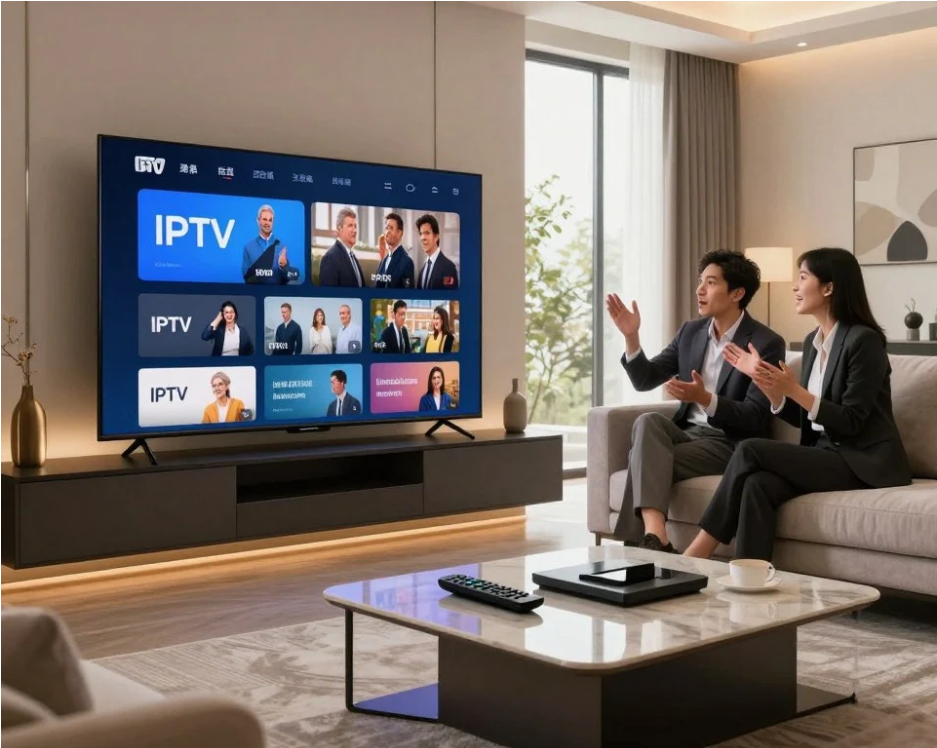
Tivio IPTV gives UK viewers a choice between shorter commitments and longer-term savings, with 3-month, 6-month, 12-month and 24-month options currently available. Choosing the right IPTV Subscription comes down to how confident you are in your setup, how regularly you watch, and whether flexibility matters more to you than the lower monthly-equivalent cost that usually comes with a longer plan. For a first-time user, a shorter term can make sense; for a household already happy with its devices, broadband and viewing routine, an annual plan may offer better long-term value.
There is no universally “best” subscription length.
Someone trying IPTV for the first time has a very different decision to make from a family that already knows which television, player and broadband connection it will use every evening.
That is why picking a plan should feel less like hunting for the biggest discount and more like deciding how much commitment actually suits your home.
A Short Plan Buys You Something Longer Plans Cannot: Flexibility
Longer plans naturally attract attention because the monthly-equivalent price usually drops.
But a shorter subscription gives you something valuable too.
Room to change your mind.
If you are completely new to IPTV, you may still have questions that no sales page can answer properly.
Does the service feel comfortable on your television?
Does your preferred player behave well?
Is the Wi-Fi strong enough in the room where you actually watch?
Do you use the programme guide as much as you expected?
Does the household need one connection or several?
A three-month plan gives you enough time to answer those questions through normal use rather than making a long commitment based on expectations.
That flexibility has real value.
Tivio Currently Starts With a Three-Month Option
Tivio's shortest current subscription period is three months.
The Standard three-month plan is listed at £24.99, while Premium currently costs £32.99 for the same period.
That makes the three-month option the natural starting point for someone who wants more than a brief trial but is not ready to commit for a year or two.
It gives you time to live with the service.
Not just test it for an afternoon.
You can see what happens on a busy Saturday night.
You can try it when several people are using the internet.
You can use it on the devices that actually matter to you.
That paints a much more useful picture than judging everything during the first few hours.
Six Months Sits in the Middle
Not everyone wants the shortest or longest option.
Six months can be the comfortable middle ground.
Tivio currently prices six months of Standard at £34.99 and Premium at £47.99. The site lists the Standard plan at an effective £5.83 per month and Premium at roughly £8 per month across the term.
For someone already fairly confident about IPTV but not ready for a full year, this can make sense.
Perhaps you have used similar services before.
You know your Fire TV Stick or Smart TV works well.
Your broadband is stable.
You understand how the player works.
You simply do not want to lock yourself into a longer period yet.
Six months gives you more breathing room than the starter plan without jumping immediately into annual territory.
Annual Plans Start to Make Sense Once the Setup Is Proven
The 12-month plan is where the value calculation changes.
Tivio currently lists Standard at £49.99 for one year, which works out at about £4.17 per month across the subscription period.
Premium is currently £62.99 for 12 months, or roughly £5.25 per month.
Compared with the shorter plans, the monthly-equivalent cost is noticeably lower.
That is attractive.
But annual value only matters if you are comfortable using the service for a full year.
This is why an annual IPTV Subscription usually makes more sense after you have confirmed the basics:
your device works well,
your player suits you,
your broadband handles the streams,
the household uses the service regularly,
and the connection allowance matches how many people actually watch.
Current UK IPTV buying guides make a similar point, commonly advising people to confirm devices and network performance before choosing a longer commitment.
Lower Monthly Cost Does Not Always Mean Better Value
This is where subscription comparisons can become misleading.
A longer plan can have the lowest monthly-equivalent cost and still be the wrong purchase.
Imagine paying for a year because the price looked excellent.
Two weeks later, you realise the player you prefer does not work particularly well on your main television.
Or you discover the bedroom Wi-Fi struggles.
Or your household really needed two simultaneous connections instead of one.
Suddenly, the cheaper monthly rate does not feel so clever.
Good value is not the smallest number after the pound sign.
It is paying for something you are comfortable using throughout the period you bought.
The 24-Month Plan Is for People Who Already Know What They Want
Tivio also offers a two-year option.
The current 24-month Standard price is £79.99, listed at an effective £3.33 per month.
Premium currently costs £117.99 for 24 months, or roughly £4.92 per month across the term.
Those are Tivio's lowest monthly-equivalent figures.
They also represent the longest commitment.
That distinction matters.
Two years can make sense for someone who already knows the service fits their viewing habits and plans to keep using it.
For someone who is still experimenting with devices, players or connection numbers, jumping directly to the longest plan may be unnecessary.
The biggest discount is most useful when confidence is already high.
Your Television Should Influence the Subscription Decision
Plan length is not the only choice being made.
You are also deciding which level of service makes sense.
Tivio Standard currently includes Full HD viewing on supported content, an EPG, sports and PPV coverage, installation guidance, device compatibility and UK-based support.
Premium adds supported 4K Ultra HD, a larger content catalogue, additional premium sports coverage, priority streaming, up to four days of catch-up on supported programmes, premium player activation and priority 24/7 support.
If your main television is Full HD and you rarely use catch-up, Standard may be perfectly suitable.
If you own a large 4K screen and regularly follow sport, Premium might fit better.
Choose the package first.
Then choose how long you want it.
That order usually leads to a better decision.
Do Not Commit Annually Before Checking Device Compatibility
This sounds obvious.
It still catches people out.
“Works on Smart TVs” does not mean every Smart TV runs the same apps.
Tivio currently lists support for compatible Smart TVs, Fire TV Stick devices, Android phones, iPhones, iPads, laptops, Roku and MAG boxes through suitable players.
Different devices can provide noticeably different experiences.
A recent Fire TV Stick may feel quick and responsive.
An older television's built-in operating system may feel slower.
A player available on Android may not be offered on another platform.
Current UK device guidance similarly recommends checking the exact app, operating-system version and device compatibility rather than assuming broad platform support guarantees the same experience everywhere.
This is precisely where a shorter subscription can be useful.
Test the service where you will actually watch it.
Your Broadband Deserves a Test Period Too
A speed test can tell you plenty.
It cannot completely predict how IPTV will behave in your home every evening.
Wi-Fi changes from room to room.
Network congestion changes during the day.
Other people start downloading files, gaming or making video calls.
Tivio suggests a stable 10 Mbps of available bandwidth per HD stream and around 25 Mbps or more per 4K stream as practical starting points. It also recommends allowing additional capacity when other devices share the connection.
That becomes more important when several people use IPTV at once.
A short plan gives you time to see whether the home network performs reliably under real conditions.
Not ideal conditions.
Real ones.
That difference matters.
Multiple Screens Can Change Which Subscription Feels Right
Suppose you buy an annual plan for one connection.
Then the household discovers that two televisions regularly need IPTV at the same time.
The subscription length was not necessarily wrong.
The connection choice was.
Tivio currently allows customers to select options up to four connections at checkout. Simultaneous viewing depends on the connection allowance purchased.
This is worth working out before making a long commitment.
Count active screens, not devices owned.
A family might have six compatible devices but only ever use two at once.
Another household may have just three TVs and regularly use all three.
Subscription planning becomes much easier when you think about actual evening behaviour.
Short-Term Plans Can Suit Seasonal Viewing
Not everyone watches television in the same way all year.
Sport is a good example.
Someone may use IPTV heavily during a particular part of the sporting calendar and much less afterwards.
Another viewer might want extra entertainment during winter when evenings are spent indoors.
A household may even be living somewhere temporarily.
In situations like these, an annual plan may not be necessary just because it offers a lower monthly figure.
A defined three or six-month IPTV Subscription can better match a defined period of heavier viewing.
That is a legitimate form of value.
Pay for the time you expect to use.
Annual Plans Suit Stable Viewing Habits
Now consider the opposite situation.
Your household watches television every evening.
The main device is settled.
The broadband is reliable.
You already know which channels, films and features matter.
Nobody expects that routine to change much over the next year.
This is where annual pricing becomes attractive.
You are no longer paying for flexibility you are unlikely to use.
Instead, the lower monthly-equivalent cost starts to matter more.
Current 2026 UK IPTV comparison pages generally frame annual subscriptions in this way: better suited once compatibility, catalogue and household requirements have already been established.
That is a sensible way to think about Tivio too.
One-Time Payment Changes the Commitment
Tivio's plans are currently sold as one-time payments for the chosen period.
They do not automatically renew.
This is important when comparing short and long terms.
If you buy three months, another three-month payment is not automatically taken when the period ends.
If you buy a year, the subscription does not silently roll into another year.
You make the renewal decision again.
For viewers who dislike keeping track of recurring entertainment payments, that can make longer plans feel easier to manage.
The commitment has a fixed end date.
Manual Renewal Gives You a Natural Review Point
Automatic subscriptions are convenient because you can forget about them.
That is also their weakness.
Manual renewal makes you stop and reassess.
Did you really use Premium?
Did you need three connections?
Would Standard now be enough?
Has someone in the household moved out?
Did you buy a 4K television?
Is catch-up now something you use every week?
Each subscription end becomes a chance to adjust.
That is particularly useful with a service whose plans and household needs can change over time.
Annual Does Not Mean Paying Monthly
This is another detail worth making clear.
When a plan is described as costing the equivalent of £4.17 per month, that does not mean Tivio charges £4.17 every month.
The current 12-month Standard price is £49.99 paid upfront for the full subscription period.
Likewise, the £5.25 monthly-equivalent Premium figure represents a £62.99 upfront annual payment.
Monthly equivalents are useful for comparing value.
Total price tells you what actually leaves your account.
Always look at both.
The Refund Window Matters More With Longer Plans
The longer the commitment, the more important it becomes to understand refund terms.
Tivio currently advertises a 14-day money-back guarantee. Customers are told to contact support within 14 days of purchase with their order details when requesting a refund, subject to the full refund policy.
Read those terms before buying.
Especially before buying 12 or 24 months.
A large “money-back guarantee” badge is reassuring, but the conditions underneath it are what actually matter.
Premium Features May Justify a Longer Plan for Some Viewers
Imagine someone who follows live sport every weekend.
They own a 4K television.
They regularly rely on catch-up.
They want premium player activation and value quicker support.
For them, Tivio Premium contains features that may be used constantly rather than occasionally.
Once that viewing pattern is established, a longer Premium subscription can make more sense than repeatedly choosing shorter periods.
Now imagine someone who mostly watches Full HD entertainment a few nights a week.
That person may be perfectly happy with Standard.
The point is not to buy the longest plan available.
It is to buy longer only when you already know which package fits.
A Short Plan Is Not “Wasting Money”
People sometimes look at the higher monthly-equivalent cost and assume shorter subscriptions are poor value.
That is too simplistic.
Flexibility itself has value.
A shorter plan limits your commitment while you learn.
It lets you test the service during normal household use.
It gives you an easier exit if your circumstances change.
A small premium for flexibility can be sensible when there is still uncertainty.
Think of it like booking a flexible ticket.
You are not necessarily paying more for the same thing.
You are paying for fewer restrictions.
An Annual Plan Is Not Automatically a Risk Either
The opposite assumption can be just as misleading.
An annual subscription is not inherently a bad decision simply because it lasts longer.
When you already know a service well, the longer term can be straightforward.
You pay once.
Your effective monthly cost is lower.
You do not have to think about renewing every few months.
And because Tivio does not currently auto-renew, the subscription still ends unless you actively buy another one.
For an established setup, that can be wonderfully uncomplicated.
Try Thinking in Terms of Confidence
There is a simple way to make the decision.
How confident are you?
Not in IPTV generally.
In your specific setup.
If you are still asking whether the player works well on your television, confidence is low.
A shorter term makes sense.
If you already know the device, broadband, plan and connection count all suit your household, confidence is much higher.
That is when annual pricing becomes more attractive.
Subscription duration should increase with certainty.
That is a far better rule than simply buying whichever card has the largest “SAVE” label.
What About Two Years?
Twenty-four months sits beyond the normal annual comparison.
It makes most sense when very little uncertainty remains.
Tivio currently describes its 24-month plans as the maximum-savings options, with Standard listed at £79.99 and Premium at £117.99.
For an established viewer, that may offer attractive long-term value.
For a first-time customer, two years is a substantial period to commit before experiencing the service properly.
There is no prize for choosing the longest plan on day one.
The smartest purchase is the one you remain comfortable with afterwards.
Short-Term or Annual IPTV Plans: Which Fits You?
Choose a shorter Tivio term when you are still learning what works.
It makes sense when IPTV is new to your household, when you are testing a device or player, when your viewing is seasonal or when you simply value flexibility.
An annual plan becomes more appealing once your setup is settled.
If the service works reliably, your broadband handles it comfortably, the household uses it throughout the year and you know which plan features matter, the lower monthly-equivalent cost becomes much more meaningful.
That is the real choice behind an IPTV Subscription.
Short-term plans buy flexibility.
Annual plans reward confidence.
Tivio currently gives viewers both routes, along with six and 24-month alternatives for people who sit somewhere in between.
Do not choose the longest plan because the saving looks impressive.
And do not automatically avoid it because it feels like a bigger commitment.
Choose the period that matches how certain you are that the service fits your home.
That usually leads to the better decision.
Frequently Asked Questions
Is a 3-Month or 12-Month IPTV Subscription Better?
A three-month subscription is better suited to viewers who want a lower commitment while testing their device, broadband and viewing habits. A 12-month plan usually offers a lower monthly-equivalent cost and can make more sense once you already know the service works well for your household.
How Much Does a 12-Month Tivio IPTV Subscription Cost?
Tivio currently lists its 12-month Standard plan at £49.99 and its 12-month Premium plan at £62.99. These are upfront payments for the full year rather than monthly recurring charges. Prices can change, so check Tivio.uk before purchasing.
Does Tivio IPTV Automatically Renew After My Plan Ends?
No. Tivio currently states that its subscriptions use one-time payments with no automatic billing. When your 3, 6, 12 or 24-month period ends, you decide whether you want to purchase another subscription.
Can I Change From a Short-Term IPTV Plan to an Annual Plan Later?
You can choose a different subscription length when purchasing or renewing, subject to the plans available at that time. Starting with a shorter term can therefore be a practical way to test your setup before deciding whether a longer plan suits you.
Is an Annual IPTV Subscription Cheaper Than Paying Short Term?
On Tivio's current pricing, annual plans have a lower monthly-equivalent cost than the three-month options. Standard falls from about £8.33 per month on three months to about £4.17 across 12 months, while Premium falls from about £11 to £5.25 per month. The annual plan requires the full amount upfront, so lower monthly-equivalent cost should be balanced against the longer commitment.
0m - Sep 28, 2026 - Guerrilla Chargeback Hosts Hackathon, Awards Winner With Cash Prize and Job Opportunity
Guerrilla Chargeback, a company focused on chargeback management and financial dispute solutions, has announced the successful completion of its latest hackathon, bringing together talented developers and technology enthusiasts to compete in a practical, innovation-focused challenge.
The hackathon was designed to give participants an opportunity to demonstrate their technical skills, develop creative solutions to real-world challenges, and gain exposure to the rapidly evolving financial technology sector.
Following the competition, the winning participant was recognized for delivering a standout solution and received a cash prize from Guerrilla Chargeback. In addition to the financial award, the winner was also presented with an opportunity to pursue a job with the company, creating a potential pathway from competition success to professional employment.
The initiative reflects the growing role of technology and innovation in the financial services industry. As businesses continue to rely on digital payment systems, effective chargeback management and dispute resolution have become increasingly important areas for technology-driven solutions.
The hackathon also provided participants with an environment to test their abilities under competitive conditions while gaining experience in solving problems related to the broader digital finance ecosystem.
As financial technology continues to evolve, companies operating in the sector are increasingly looking for professionals who can combine technical expertise with practical problem-solving skills. Events such as hackathons can provide businesses with an effective way to engage with that talent pool while encouraging innovation.
By awarding both a cash prize and a potential job opportunity, Guerrilla Chargeback has positioned the hackathon as more than a one-time competition. The initiative provided participants with the opportunity to gain recognition for their work while potentially opening the door to a longer-term professional relationship with the company.
The company said initiatives focused on technology, innovation, and talent development can play an important role in supporting the continued evolution of the digital financial services industry.
The successful completion of the hackathon marks another step in Guerrilla Chargeback's efforts to engage with technology professionals and encourage practical innovation in an increasingly digital business environment.
About Guerrilla Chargeback
Guerrilla Chargeback is a company focused on chargeback management and financial dispute solutions, helping businesses navigate challenges associated with payment disputes and chargeback processes. Through technology, industry expertise, and practical solutions, the company works to support businesses dealing with the complexities of digital payments.
0m - Sep 27, 2026 - How GoEnhance AI Helps Podcasters Bring Static Cover Art to Life
A podcast cover has a difficult job. It has to identify a show at a glance, often on a phone screen, while competing with dozens of other covers. When I plan a social post for a new episode, I usually want that same artwork to do one more job: introduce the episode in a short video without losing the look listeners already recognize.
GoEnhance AI is a browser-based platform for creating and editing AI images and videos. Its AI image to video generator gives me a way to start with existing artwork and describe the motion I want to explore. I treat the result as a separate promotional asset. The podcast cover displayed in listening apps can remain a still image.
Decide What Should Move
The most useful question comes before the prompt: which part of the cover tells the listener what this episode is about?
For an interview show, that might be a guest portrait. For a history podcast, it could be a photograph or illustration tied to the story. I would give that element a small amount of motion—a change in camera position, light moving across the background, or a detail coming into focus. The show title should still be easy to read when the video is paused.
This matters because cover art already has to work at a small size. Apple Podcasts’ show-cover guidance emphasizes legibility across different devices. I apply the same test to a motion version: I watch it on my phone at its ordinary feed size, rather than judging it only in a large editing window.

Make an Episode Announcement From the Cover
I would build a new-episode clip around one visual change and one piece of information. A slow move toward the guest’s face, for instance, can lead into the episode title and release date. There is no need to make the entire cover shift at once.
Text needs special attention. If a title is baked into the source image, generated motion may bend its letters or make them harder to read. My preferred approach is to work from a clean version of the artwork where possible, review the moving background, and add essential episode text afterward. That gives me control over what the viewer actually reads.
The video also needs a destination. A striking animation with no show name, episode context or listening cue may attract attention without helping anyone find the conversation. I keep the visual hook brief, then make the episode information unmistakable.
Try a Quieter Version for the Show Itself
An episode announcement can carry more energy than a general introduction to the podcast. When I need a clip that represents the show for longer than one release cycle, I would animate a picture with gentler motion: a slight push-in, a subtle background shift, or movement confined to one illustrated element.
The difference is editorial. An episode teaser can point to a particular guest or topic; an evergreen clip needs to communicate the show’s identity. I would avoid putting a release date into that second version, and I would check that the movement still suits older episodes as well as the newest one.
Fit the Clip Around the Audio
Pocket Casts has described how sharing podcast clips can help listeners pass along moments from a show in its post about clipping and sharing. A moving cover can support that kind of promotion, but I would let the audio remain the reason to listen. If I have a strong spoken moment, the artwork should frame it rather than distract from it.
I would watch the finished clip twice: once with sound and once muted. The silent viewing tells me whether the show and episode are identifiable in a feed. The version with sound tells me whether movement, captions and speech are working together. If they compete, I simplify the visual before adding anything else.
A podcast cover does not need an elaborate transformation to become useful in video. For me, the strongest result keeps the show recognizable, gives one element a reason to move, and makes the next step—listening to the episode—clear.
0m - Sep 27, 2026 - Why Growing Medical Practices Need a Fractional CFO Before Hiring Full-Time

A growing medical practice usually needs senior financial leadership long before it can justify a full-time CFO salary. A fractional CFO fills that gap with part-time expertise, helping practices tighten the revenue cycle, forecast cash, evaluate payer contracts and plan expansion, at a fraction of the cost of an executive hire.
For many physician owners, the need shows up gradually. The practice adds a second location, brings on new providers or launches ancillary services, and the financial picture gets much harder to read. The bookkeeper is still reconciling accounts and the outside accountant still files the taxes, but nobody is answering the questions that shape the practice's future. Is the new location profitable? Why is cash tight when the schedule is full? Can the practice afford another provider next year?
This is where many owners turn to a fractional CFO for healthcare companies rather than committing to a six-figure executive hire. Firms such as K-38 Consulting, a Raleigh, North Carolina based finance partner for healthcare organizations and growing businesses, have built their model around this exact stage: bringing strategic financial thinking into a practice without adding a permanent cost it may not be ready to carry.
What Is a Fractional CFO in Healthcare?
Definition: A fractional CFO is an experienced Chief Financial Officer who works with an organization part-time, usually on a monthly retainer, handling strategic finance responsibilities such as forecasting, budgeting, cash flow management, financial reporting and growth planning.
In healthcare, the role goes beyond general finance. A good fractional CFO understands how reimbursement works, how payer mix affects margins, why denials and slow collections drain cash, and how regulatory requirements shape financial decisions. They work alongside the practice administrator, billing team and accountant, turning raw financial data into decisions leadership can act on.
The arrangement is flexible. Some practices need a few hours a month for reporting and planning. Others need deeper involvement during an expansion, an acquisition or a period of financial strain.
Why Do Growing Practices Outgrow Their Bookkeeper?
Bookkeepers and tax accountants are essential, but their work is mostly historical. They record what happened and make sure it is reported correctly. Growth creates a different need: someone who looks ahead.
Common signs a practice has reached that stage:
- Cash feels tight even when patient volume is strong. This often points to slow collections, rising denials or a mismatch between payroll timing and reimbursement timing.
- Financial reports arrive late or raise more questions than they answer. If the owner cannot see profitability by provider, service line or location, decisions are being made blind.
- Expansion decisions rely on instinct. Opening an office, buying equipment or adding a provider without a financial model is a serious risk.
- Payer contracts have not been reviewed in years. Rates that worked five years ago may no longer cover rising labor and supply costs.
- The owner spends evenings on spreadsheets. Physician time is the practice's most valuable resource.
If two or more of these sound familiar, the practice likely needs strategic financial support, not just more accounting hours.
What Does a Fractional CFO Actually Do for a Medical Practice?
Strengthening the Revenue Cycle
The revenue cycle is where many practices quietly lose money. A fractional CFO analyzes days in accounts receivable, denial rates, write-offs and collection trends, then works with the billing team to fix root causes such as coding errors, weak eligibility checks or slow follow-up on aging claims.
Building a Reliable Cash Flow Forecast
Reimbursements can lag weeks or months behind care delivered, while payroll, rent and supplies arrive on a fixed schedule. A rolling 13-week cash flow forecast shows shortfalls before they happen, so the practice can plan instead of scrambling.
Measuring Profitability the Right Way
A practice can look profitable overall while individual providers, locations or service lines lose money. Proper reporting reveals which parts of the business are carrying the rest.
Evaluating Payer Contracts and Pricing
Knowing what each payer actually pays, and what each service actually costs to deliver, strengthens the practice's position in renegotiations and plan decisions.
Planning Growth and Capital Decisions
For a new location, service line, major equipment purchase or partnership, a fractional CFO builds the model showing expected costs, break-even timing and cash impact.
Tracking the KPIs That Matter
Owners get a focused dashboard instead of a pile of reports: days in A/R, net collection rate, denial rate, revenue per visit, overhead ratio, provider productivity and cash on hand.
How K-38 Consulting Supports Healthcare Practices
K-38 Consulting is a good example of how this model works in practice. Rather than assigning a single freelancer, the firm pairs each client with a finance team that typically includes both a controller and a CFO. The controller keeps the books accurate, compliant and closed on time each month, while the CFO focuses on cash flow, profitability, budgeting and long-term strategy.
For medical practices, that team approach centers on the issues that matter most in healthcare: revenue cycle performance, practice profitability and dependable cash planning. The firm also uses web-based forecasting tools and modern accounting platforms such as QuickBooks and NetSuite, giving owners a clearer, near real-time view of performance. According to the firm, many businesses lose 10 to 15 hours a month to manual accounting work, and automation is a core part of how its team frees up that time.
The results show up in client feedback. Horizon Health Centers, one of the firm's healthcare clients, has credited K-38 Consulting with helping the organization increase profitability, improve cash flow and strengthen its revenue cycle, positioning the practice for long-term growth.
The firm is led by founder Dallas Alford IV, CPA, and works with clients across the country, including markets such as Raleigh, Charlotte, Atlanta, Tampa, Austin, New York City and Chicago. Beyond healthcare, its team supports SaaS, biotech, law firms, construction, real estate, CPG and ecommerce companies, which gives healthcare clients the benefit of broad financial experience alongside industry-specific knowledge.
When Is It Time to Hire a Full-Time CFO?
A full-time CFO starts to make sense when strategic finance work fills a full calendar. Common triggers include operating many locations or legal entities, preparing for a merger or private equity investment, managing significant debt or real estate, or building an internal finance department that needs daily leadership.
Even then, a fractional CFO often eases the transition by defining the role, setting up the systems and reporting a full-time hire will inherit, and sometimes helping evaluate candidates.
How Can a Practice Get the Most From a Fractional CFO?
Owners comparing providers of virtual CFO services should keep these steps in mind:
- Clarify the goal. Fixing cash flow, preparing for expansion and understanding profitability each shape the first 90 days differently.
- Share the right data. Accounting records, practice management and billing reports, payroll data and payer contracts.
- Involve the practice administrator early. They know where the operational bottlenecks are.
- Set a reporting rhythm. A monthly financial review turns reports into action.
- Ask about healthcare experience. Look for a partner who already understands reimbursement and revenue cycle management.
- Check the technology stack. Cloud accounting and automation reduce manual work and improve visibility.
- Start focused, then expand. Many practices begin with one priority and broaden the engagement once they see results.
Many firms make that first step easy. K-38 Consulting, for instance, offers a free 30-minute strategy session with its founder, giving practice owners a low-pressure way to discuss their financial challenges and whether outsourced support is the right fit.
A Quick Readiness Checklist
- Monthly financials arrive more than 15 days after month-end
- You cannot easily see profitability by provider or location
- Days in A/R or denial rates have risen over the past year
- You are planning an expansion, acquisition or major purchase
- There is no rolling cash flow forecast
- Payer contracts have not been analyzed recently
- The owner or lead physician spends significant time on financial tasks
If you checked three or more boxes, part-time financial leadership is worth exploring.
Frequently Asked Questions
How much does a fractional CFO cost for a medical practice?
It depends on scope and practice size. Most engagements use a monthly retainer that costs far less than a full-time CFO's total compensation.
Is a fractional CFO the same as an accountant?
No. An accountant focuses on transactions, compliance and tax filing. A fractional CFO focuses on strategy, forecasting, profitability and growth, often working alongside the existing accountant.
Can a fractional CFO help with revenue cycle problems?
Yes. Collections, denials and A/R trends are among the most common focus areas in healthcare engagements.
How quickly can a practice see results?
Many practices get clearer reporting within the first month or two, with cash flow and collection improvements following as process changes take hold.
The Bottom Line
Growth brings opportunity, but it also brings financial complexity most practices are not built to handle alone. A fractional CFO gives physician owners the insight to protect margins, strengthen cash flow and grow with confidence, without the cost of a full-time executive before the practice is ready. Partners like K-38 Consulting, with dedicated healthcare CFO support and a team-based model, make that step practical, so providers can keep their focus where it belongs: on patient care.
0m - Sep 27, 2026 - The New Look of Luxury Villas on the French Riviera
The architectural landscape of the French Riviera is going through something of a genuine renaissance, as contemporary design merges with classic Mediterranean motifs to produce a new aesthetic of understated coastal luxury. For anyone starting a Buyers Agent French Riviera search, the most noticeable trend is a move away from the heavier, more ornate villas of the past and toward light-filled, expansive structures built around the sea view. Architects are increasingly pairing glass and steel with local stone and reclaimed timber, producing buildings that feel rooted in the region's heritage while still looking unmistakably contemporary.
Interior design has followed a similar path, leaning toward a more minimalist, natural-material approach. The heavier, more traditional décor of earlier generations is giving way to neutral palettes, bespoke furnishings, and high-quality natural textures. Open-plan living spaces have become the heart of the home, often built around a seamless connection between the main salon and an outdoor terrace, with oversized windows framing the coastline like living artwork.
Sustainability plays a genuine role in the design process too. New villas are being built to rigorous eco-standards, with solar panels, geothermal heating where feasible, and high-level insulation that keeps the environmental footprint down despite the Mediterranean climate. These technical elements are worked into the design from the outset rather than added on afterwards, so the pursuit of luxury doesn't come at the expense of the coastline that makes the region so desirable in the first place.
As the luxury French Riviera property market keeps maturing, these architectural shifts are quietly redefining what it means to own on the coast — a lifestyle that's authentic, contemporary, and genuinely tied to the Mediterranean setting. Because so many of the best examples of this new wave of design change hands quietly, through private networks rather than public listings, buyers hoping to find one are usually best served by proper buyer representation rather than a purely independent property search.
0m - Sep 27, 2026 - How GoEnhance AI Helps Podcasters Bring Static Cover Art to Life

A podcast cover has a difficult job. It has to identify a show at a glance, often on a phone screen, while competing with dozens of other covers. When I plan a social post for a new episode, I usually want that same artwork to do one more job: introduce the episode in a short video without losing the look listeners already recognize.
GoEnhance AI is a browser-based platform for creating and editing AI images and videos. Its AI image to video generator gives me a way to start with existing artwork and describe the motion I want to explore. I treat the result as a separate promotional asset. The podcast cover displayed in listening apps can remain a still image.
Decide What Should Move
The most useful question comes before the prompt: which part of the cover tells the listener what this episode is about?
For an interview show, that might be a guest portrait. For a history podcast, it could be a photograph or illustration tied to the story. I would give that element a small amount of motion—a change in camera position, light moving across the background, or a detail coming into focus. The show title should still be easy to read when the video is paused.
This matters because cover art already has to work at a small size. Apple Podcasts’ show-cover guidance emphasizes legibility across different devices. I apply the same test to a motion version: I watch it on my phone at its ordinary feed size, rather than judging it only in a large editing window.
Make an Episode Announcement From the Cover
I would build a new-episode clip around one visual change and one piece of information. A slow move toward the guest’s face, for instance, can lead into the episode title and release date. There is no need to make the entire cover shift at once.
Text needs special attention. If a title is baked into the source image, generated motion may bend its letters or make them harder to read. My preferred approach is to work from a clean version of the artwork where possible, review the moving background, and add essential episode text afterward. That gives me control over what the viewer actually reads.
The video also needs a destination. A striking animation with no show name, episode context or listening cue may attract attention without helping anyone find the conversation. I keep the visual hook brief, then make the episode information unmistakable.
Try a Quieter Version for the Show Itself
An episode announcement can carry more energy than a general introduction to the podcast. When I need a clip that represents the show for longer than one release cycle, I would animate a picture with gentler motion: a slight push-in, a subtle background shift, or movement confined to one illustrated element.
The difference is editorial. An episode teaser can point to a particular guest or topic; an evergreen clip needs to communicate the show’s identity. I would avoid putting a release date into that second version, and I would check that the movement still suits older episodes as well as the newest one.
Fit the Clip Around the Audio
Pocket Casts has described how sharing podcast clips can help listeners pass along moments from a show in its post about clipping and sharing. A moving cover can support that kind of promotion, but I would let the audio remain the reason to listen. If I have a strong spoken moment, the artwork should frame it rather than distract from it.
I would watch the finished clip twice: once with sound and once muted. The silent viewing tells me whether the show and episode are identifiable in a feed. The version with sound tells me whether movement, captions and speech are working together. If they compete, I simplify the visual before adding anything else.
A podcast cover does not need an elaborate transformation to become useful in video. For me, the strongest result keeps the show recognizable, gives one element a reason to move, and makes the next step—listening to the episode—clear.
0m - Sep 27, 2026