Electric Wheelchair vs. Mobility Scooter: How to Choose for Everyday Mobility
0m | Oct 8, 2026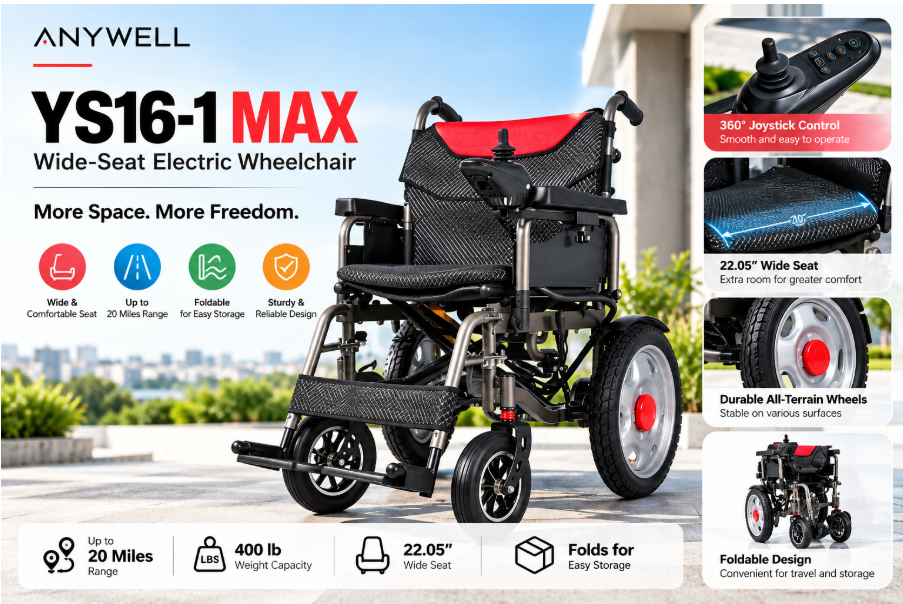
Choosing between the wide-seat power wheelchair and the wide-seat mobility scooter comes down less to headline range and more to how you actually sit, steer, transfer, and move through your day.
People comparing mobility devices often start with battery range, speed, or weight capacity. A better starting point is the routine the device needs to support. Anywell offers both electric wheelchairs and mobility scooters, so the useful comparison is not simply which model has the bigger specification, but which type of device fits the rider, the home, the vehicle, and the routes used most often.
Two devices can have similar range figures and still feel completely different in everyday use. One may be easier to operate from a seated position for long periods. The other may suit someone who can transfer comfortably and wants a more conventional scooter setup for errands, shopping trips, and paved outdoor routes.
The right choice starts with your body, your home, your vehicle, and the places you visit most often.
Start with how you need to control the device
A power wheelchair and a mobility scooter solve similar mobility problems in different ways.
A power wheelchair typically uses a joystick mounted near one armrest. The user stays in the seating position while steering, accelerating, slowing down, and turning. That can make sense for someone who expects the device to function as their primary seated mobility system during much of the day.
A mobility scooter normally uses a tiller positioned in front of the rider. That setup assumes the rider can sit upright, reach the controls, steer with their hands, and usually transfer on and off the seat safely.
This distinction matters more than motor wattage or top speed.
The YS16-1 MAX uses joystick control and has a 22.05-inch usable seat width. The 20Ah version is rated for up to 20 miles of range, although actual distance depends on rider load, terrain, slopes, temperature, battery condition, and driving style.
The X-024 takes the scooter approach. It has a 19.7-inch seat, a 350W motor, a 24V 20Ah battery, approximately 5 mph top speed, and a rated range of up to 20 miles. Its rated weight capacity is 400 lb.
Those specifications sound comparable on paper. The experience of using them is not.
Seat width is only one measurement
People shopping for a wide-seat electric wheelchair or mobility scooter often focus on seat width first. That makes sense, but seat width alone can be misleading.
A chair can have a comfortable seat while still being too wide for the narrowest doorway in the house. A scooter may offer generous room between the armrests while having a smaller actual seat cushion. Those are different measurements.
The YS16-1 MAX lists a 22.05-inch usable seat width. A buyer should therefore measure more than their seated hip width. Bedroom doors, bathroom access, hallways, elevators, ramps, and the path between furniture all matter.
The X-024 has a 19.7-inch seat cushion, while its adjustable armrests can provide additional clearance around the rider. Anywell specifically distinguishes the cushion width from the space between the armrests.
That distinction is worth remembering whenever you compare mobility products online. “Wide seat,” “inside armrest width,” and “overall device width” answer separate questions.
One tells you how much seating surface you have. Another tells you how much room your body has between the armrests. The third tells you whether the machine itself fits through the places you need to go.
Electric wheelchair vs. mobility scooter for everyday use
Imagine two people who both want help covering longer distances.
The first person wants to move around the house, go outside, visit stores, and remain seated while controlling the device with one hand. Transferring on and off a scooter several times during the day would be inconvenient.
A joystick-controlled power wheelchair is likely the more natural format.
The second person can transfer independently and is comfortable sitting upright behind a tiller. Most of their use will involve grocery stores, sidewalks, larger indoor spaces, community areas, and paved outdoor routes.
A four-wheel mobility scooter may fit that routine better.
Neither format is automatically superior. The better device is the one that requires fewer compromises during the activities you actually perform.
This is also why choosing solely by range can lead to the wrong purchase. Both of these Anywell models offer configurations rated for up to 20 miles, but they are built around different ways of moving.
Think about transportation before you order
A common mistake is assuming that a mobility device will be easy to put into a car because some components fold or come apart.
Weight still matters.
The YS16-1 MAX is a wide-seat power wheelchair intended more for seat room and daily route reserve than frequent solo lifting.
The X-024 weighs approximately 106 lb assembled. Its seat and battery can be removed for vehicle loading, but the remaining base still weighs about 61 lb.
This is one of the most useful checks you can make before buying: measure the cargo opening of the actual vehicle that will carry the device and decide who will physically load it.
Do not treat “portable” as a substitute for checking the weight of the part you actually have to lift.
A removable scooter base may still require two people, a ramp, or another loading solution. A full-size power wheelchair can create the same issue.
Route planning matters more than maximum range
“Up to 20 miles” sounds simple until real-world conditions enter the picture.
Anywell Battery range changes with rider weight, hills, repeated starts and stops, temperature, tire condition, battery health, and terrain. Anywell notes that actual range varies according to operating conditions.
A better way to think about range is to start with your normal day.
If your longest outing is a two-mile trip through a shopping center, maximum range may not be the deciding factor. Seat comfort, turning space, transfers, storage, and charging access may matter more.
If you expect longer outdoor routes, battery reserve becomes more important. Even then, planning around the maximum advertised figure leaves little margin for changing conditions.
The practical question is not simply, “Can the device theoretically complete my route?”
It is, “Can I complete that route comfortably without worrying about the battery the entire time?”
Doorways and turning space can decide the purchase
Large seats are attractive, but every extra inch affects where a mobility device can go.
The YS16-1 MAX is aimed at buyers who want more sitting room, with a listed 22.05-inch usable seat.
Before ordering a wide-seat power wheelchair, measure the narrowest point on the entire route rather than only the easiest doorway.
That might be a bathroom entrance, a hallway turn, the gap between a bed and wall, an elevator door, or a vehicle ramp.
Scooters create a different space problem. The front tiller and longer body shape can require more room to maneuver than someone expects from looking at the seat dimensions alone.
This is one reason a device can work extremely well outdoors yet feel awkward inside a small apartment.
Your home layout should influence the purchase just as much as the specification sheet.
Think about transfers honestly
For many people, the choice becomes much clearer after asking one question: how easy is it for me to transfer?
A mobility scooter works well when the rider can approach the seat, transfer safely, sit upright, and control the tiller. Anywell describes the X-024 as a fit for riders who can safely transfer to the swivel seat and operate the tiller.
A power wheelchair can make more sense when the user expects to stay seated in the mobility device for longer periods and wants joystick control rather than a scooter tiller.
That difference can become more important than specifications that look impressive in a comparison chart.
Someone who shops for an hour may not care much about one transfer. Someone using the device throughout an entire day may care a great deal about repeated transfers.
Which format makes more sense?
Choose the format around the part of mobility that is hardest for you now.
A wide-seat power wheelchair makes more sense when seated control, joystick operation, indoor movement, and staying in the mobility device are central to the routine.
A wide-seat four-wheel scooter makes more sense when the rider can transfer comfortably, prefers tiller steering, and expects much of the use to happen on everyday paved routes, in stores, parks, or community spaces.
Transport can overturn either decision. If nobody in the household can safely handle the device's lifting requirements, you may need a ramp, carrier, or lift regardless of which model looks better online.
Space can overturn the decision too. A comfortable device that cannot clear the places you use every day will not become more practical because it has good range.
The most useful electric wheelchair vs. mobility scooter comparison is therefore not a list of which machine has the larger number. It is a map of your actual day: where you sit, how you transfer, what you can lift, where you drive, which doors you pass through, and how far you realistically travel.
Get those decisions right first. The specifications then become much easier to interpret.