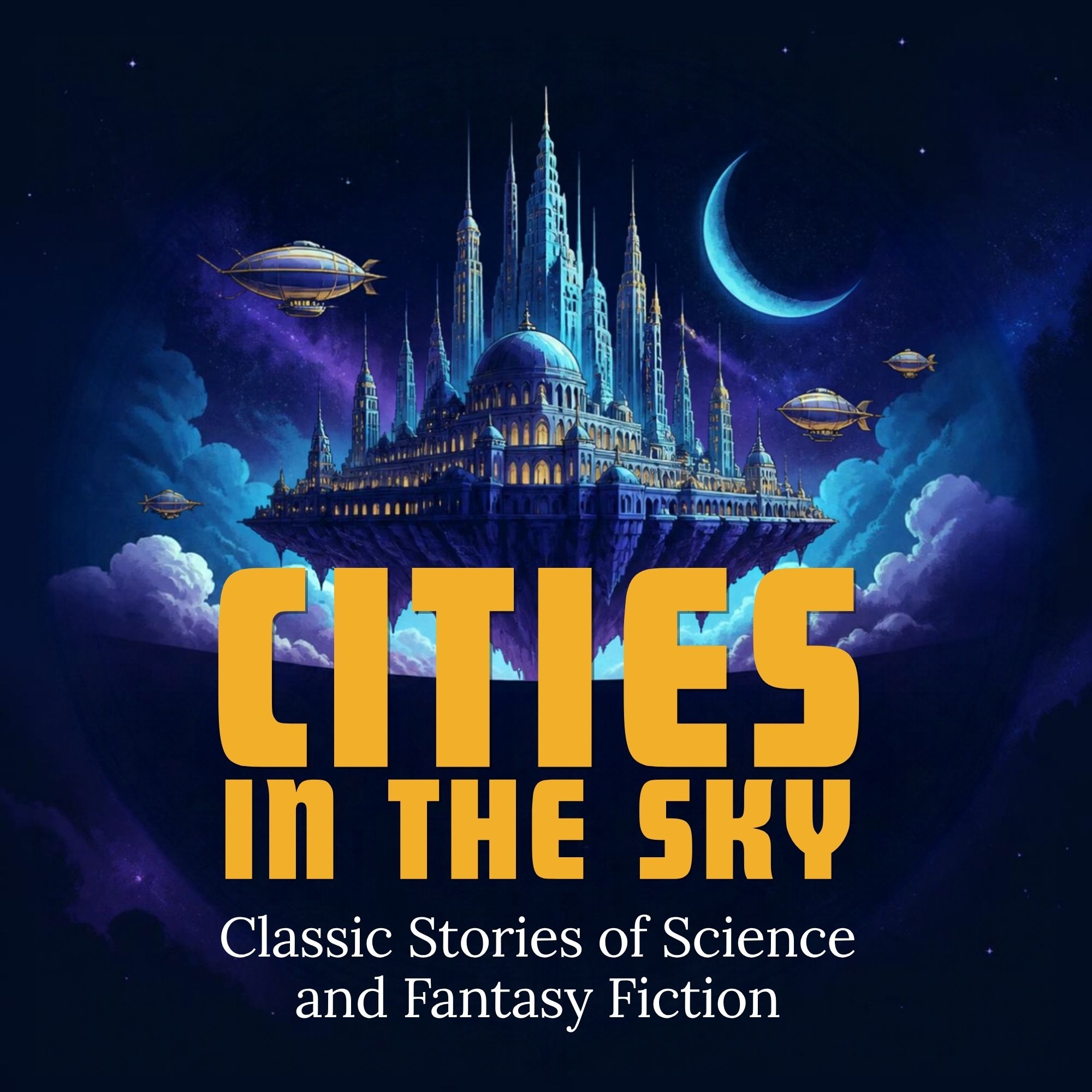
Classic Stories of Science and Fantasy Fiction.
Science fiction and fantasy stories have captivated audiences for as long as stories have been told. The Epic of Gilgamesh, written around 2000 BCE, is often cited as one of the earliest science fiction, or fantasy fiction, stories, depending who you talk to.
Speculative fiction began to take shape prior to and during the European Enlightenment, encouraged by the new scientific discoveries being made. Thomas More's 1516 book, "Utopia", describes an island nation whose inhabitants have developed a seemingly perfect society. Several books from this period deal with voyages to, or societies living on, the moon; Johannes Kepler's "Somnium", 1634, Francis Godwin's "The Man in the Moone", 1638, and Cyrano de Bergerac's "Comical History of the States and Empires of the Moon", 1656. Voltaire's "Micromégas", 1752, suggests that people of other worlds may be more advanced than those of Earth.
Mary Shelley's classic novel "Frankenstein; or, The Modern Prometheus", published in 1818, contains the archetypal 'mad scientist' experimenting with advanced technology. Another of her novels, "The Last Man", in 1826, is cited as the first Dystopian story.
Alexander Veltman's novel "The forebears of Kalimeros: Alexander, son of Philip of Macedon", 1836, was the first Russian science fiction novel and the first novel to use time travel, although via a magical hippogriff rather than technological means.
Samuel Butler's 1872 novel "Erewhon" describes machines that could become sentient and replace humans. Edward Everett Hale's "The Brick Moon", published serially in 1869 in The Atlantic Monthly, was the first story to describe an artificial satellite. "The Case of Summerfield" written by William Henry Rhodes and published in 1871 in the Sacramento Union newspaper, introduces the first 'weapon of mass destruction' used by a 'mad scientist' to blackmail the world. Edward Page Mitchell published science fiction short stories in The Sun for more than a decade, from 1874 onwards, dealing with invisibility, faster than light travel, teleportation, time travel, cryogenics, mind transfer, mutants, cyborgs and mechanical brains.
In the 19th Century, Jules Verne and H G Wells represented divergent styles of speculative fiction. Verne's mix of accurate technology and daring romantic adventures could be considered the earliest 'hard' science fiction. Well's more didactic approach skipped over much of the science and technology in order to critique Victorian society, and could be considered the first 'soft' science fiction. Both were commercially successful, and showed that a comfortable living could made writing such stories.
American author L. Frank Baum's book "Tik-Tok of Oz", 1914, contains the first literary appearance of handheld wireless communicators. Jack London's science fiction short stories "The Unparalleled Invasion", published in McClure's in 1910, and "The Red One", published in Cosmopolitan in 1918, contain germ wafare and extraterrestrials, respectively.
Then came the so-called golden age of science fiction from around the mid-1920s to the mid-1940s. Pulp magazines such as Astounding Stories, Amazing Stories, Wonder Stories, Galaxy, If Magazine, and Weird Tales filled newstands and helped launch the writing careers of many of the giants of science fiction; household names such as Isaac Asimov, Arthur C. Clarke, Robert Heinlein, Philip K. Dick, Ray Bradbury, Leigh Brackett, and Frank Herbert. The rich heritage upon which they drew, and to which they contributed, continues to influence modern science fiction and fantasy writers, and will undoubtedly do so far into the future.
Please note that performance of a story is not a condoning, endorsement, or promotion of attitudes, prejudices, biases or opinions therein—particularly of gender and gender roles, ethnicity, disability, and sexuality—that an inhabitant of modern times would find distasteful.
If there's a story that you'd like me to narrate, let me know at citiesinthesky@proton.me.